
Disclosure: This article contains affiliate links. As an Amazon Associate, we earn from qualifying purchases. If you buy through these links, we may earn a small commission at no extra cost to you.
A table runner is one of the cheapest ways to make an ordinary dining table look finished. The best budget table runners add colour, texture and a sense of occasion to everyday meals, and they cost far less than a new tablecloth or a full table setting. Whether your table is a scratched second-hand find or a plain flat-pack, the right runner can pull the whole room together in seconds.
This guide compares the best budget table runners for everyday dining, based on their specs, features and customer feedback, with honest pros and cons for each style. Prices are rough ranges only — check the current price before buying.
What to Look for in a Table Runner
Before you pick a style, check four things that decide whether a runner will actually work for daily use.
Size. A runner should hang about 15–30 cm (6–12 inches) over each end of the table. Measure your table first: a standard 6-seater table needs roughly a 180 cm runner, while a small 4-seater suits 120–140 cm. Too short looks stingy; too long drags on chairs and laps.
Material. Cotton and linen-look fabrics feel soft and drape well, but stain more easily. Jute and burlap add rustic texture but can feel rough and shed fibres. Polyester and vinyl-backed runners wipe clean in seconds, which matters if you eat at the table every day.
Washability. For everyday dining, machine-washable is almost essential. Check the care label before you buy: some linen and jute runners are dry-clean only, which gets expensive fast when spaghetti sauce is involved.
Style. The runner should suit your table and your room, not fight them. A plain wooden table takes almost any runner, while a patterned or glass table looks better with a solid colour or a very simple print. For more ideas on pulling a dining space together, see our affordable dining room decor guide (link to https://somedecor.com/affordable-dining-room-decor/).
5 Best Budget Table Runners for Everyday Dining
These five styles stood out for fabric, drape and value, based on their listed specs, features and customer feedback.
1. Classic Cotton Table Runner
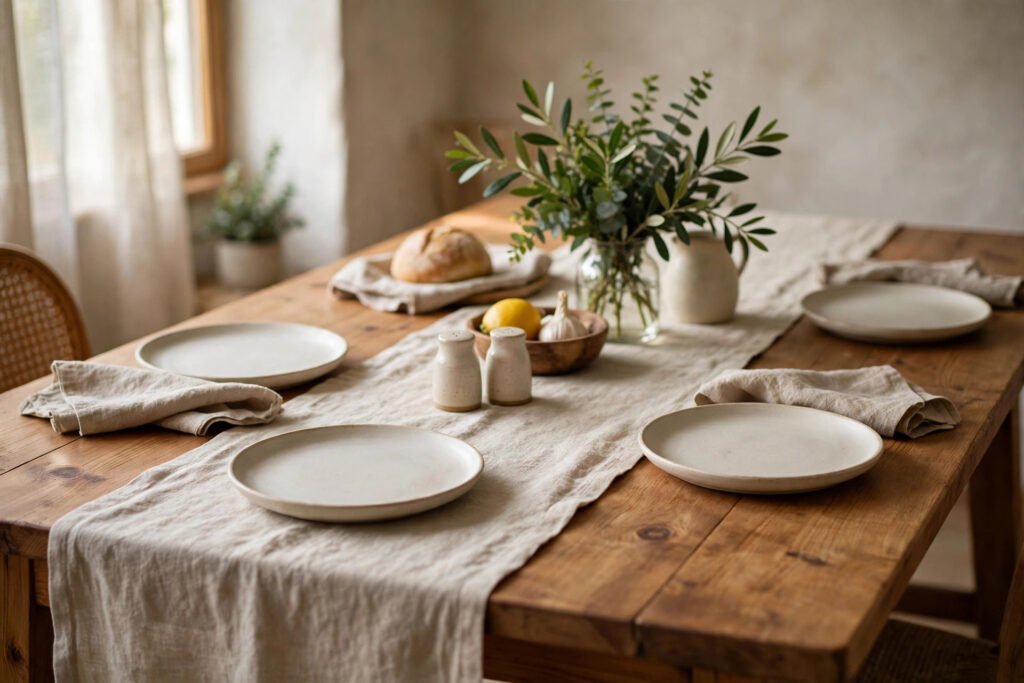
A plain cotton runner is the safest everyday choice. It comes in dozens of colours, washes well, and suits almost any dining room, from farmhouse to modern.
Pros: soft to the touch, machine-washable, widely available, and usually the cheapest option at roughly $8–$15. Cons: wrinkles easily after washing, thin cotton can look limp on a large table, and light colours show stains quickly.
2. Linen-Look Table Runner
Linen-look runners use a cotton-polyester blend woven to mimic real linen, with the same slightly slubbed texture but far less fuss. They look more expensive than they are and work beautifully for both weekday dinners and weekend guests.
Pros: elegant texture, good drape, less wrinkling than pure linen, and available in muted neutrals that suit most rooms. Cons: typically $12–$25, so a little dearer than cotton; pale shades still stain; some cheaper blends feel stiff until washed a few times.
3. Jute and Burlap Table Runner
A jute runner brings instant rustic warmth and works brilliantly with wooden tables, farmhouse decor and outdoor dining. Its rough, natural texture contrasts nicely with smooth plates and glassware.
Pros: strong natural look, durable, and cheap at roughly $10–$20. Cons: sheds loose fibres at first, feels rough under plates and elbows, and most jute runners are spot-clean only, so they are a poor choice if you have small children or messy eaters.
4. Washable Polyester Runner
If your table sees daily use, a polyester runner is the practical pick. Modern versions look far better than the shiny polyester of years ago, with matte weaves and woven patterns that pass for natural fabric at a glance.
Pros: stain-resistant, machine-washable, dries quickly, and holds its shape without ironing; usually $10–$20. Cons: can look flat or slightly plasticky up close, may feel less luxurious than cotton or linen, and some cheaper versions are too thin to drape properly.
5. Patterned and Printed Runner
A printed runner — stripes, checks, botanicals or a simple geometric pattern — is the easiest way to add personality to a plain table. It works best when the rest of the room is fairly plain, so the runner becomes the focal point.
Pros: instant colour and character, hides small stains well, and widely available from roughly $10–$22. Cons: bold patterns clash with patterned plates or busy placemats, trends change quickly, and cheap prints can fade after repeated washing. Pair it with plain crockery to keep the look calm. Our dining table decor guide (link to https://somedecor.com/dining-table-decor-budget/) shows how to balance a statement runner with the rest of the table.
How to Style a Table Runner for Everyday Dining
A runner should look good at breakfast on a Tuesday, not just at a dinner party. Keep it simple: lay the runner down the centre of the table and leave it there. Add a small centrepiece — a vase with fresh flowers, a bowl of fruit, or a couple of candles — and you are done.
For everyday meals, skip the formal place settings. Placemats on top of the runner protect it from spills and add a second layer of colour. If your table is small, a runner plus two placemats can be all you need; a large table takes a longer runner with a centrepiece in the middle.
Match the runner to your room, not just the table. A neutral runner in cream, grey or sage suits a farmhouse kitchen (link to https://somedecor.com/affordable-farmhouse-kitchen-decor/) and will not clash with seasonal changes. A bolder colour works if your walls and chairs are plain. If you change your table decor with the seasons, keep two runners — one light, one dark — and swap them around.
Care Tips and Common Mistakes
A budget runner lasts far longer with a little care. Shake it out after meals and wash it before stains set; most cotton and polyester runners survive a gentle machine wash, but check the label first. Iron cotton runners while slightly damp for a crisp finish, and store a spare runner rolled rather than folded to avoid creases.
Avoid the common mistakes: buying without measuring the table, choosing a white runner for a household with toddlers, and picking a dry-clean-only fabric for everyday use. Also avoid a runner that is wider than a third of the table — it should frame the table, not cover it. For more everyday dining inspiration, see our affordable dining table centrepiece ideas (link to https://somedecor.com/affordable-dining-table-centerpieces/).
Final Thoughts
The best budget table runners prove that everyday dining does not need a big budget to look considered. A cotton runner is the practical all-rounder, a linen-look runner adds instant elegance, jute suits rustic rooms, polyester wins on easy cleaning, and a printed runner adds personality for very little money. Measure your table, pick a fabric you can wash, and choose a colour that suits your room — then leave it out and enjoy it every day.
FAQs
What size table runner do I need?
Measure your table length and add 30–60 cm so the runner hangs 15–30 cm over each end. A 6-seater table usually needs around 180 cm; a 4-seater suits 120–140 cm. The runner should be about a third of the table’s width.
What is the best material for an everyday table runner?
Cotton and polyester are the best everyday choices because they are machine-washable and affordable. Linen-look blends are a good middle ground — they look smarter than cotton but need a little more care. Jute looks lovely but is harder to clean.
Can I put a table runner on a round table?
Yes. Lay it across the centre so it hangs evenly over two sides, or use a short runner as a centre strip under a vase or candle arrangement. A runner that is too long will look awkward on a round table, so measure first.
How do I keep a table runner clean with daily use?
Use placemats on top of the runner to catch spills, shake it out after meals, and wash it as soon as a stain appears. Choose a machine-washable fabric for everyday dining and keep a second runner as a spare while one is in the wash.
Should a table runner match the curtains or chairs?
It does not need to match exactly, but it should coordinate. Pick a runner in a colour already present in the room — a cushion, a curtain or the wall colour — so the table feels connected to the rest of the space rather than standing apart.