
How to Make Your Home Look Expensive on a Budget
Learning how to make home look expensive budget style is easier than most people think. Expensive-looking rooms are rarely about spending more money — they are about a few smart choices repeated well: good light, tidy surfaces, a consistent colour palette and a handful of details that look considered rather than accidental. Here are twelve tricks that cost little but make a real difference.
1. Declutter First — It Costs Nothing
Nothing makes a home look cheap faster than clutter. Before you buy a single thing, clear every surface: kitchen counters, coffee tables, shelves and bedside tables. Put away the things you use every day but do not need on display, and be honest about what you actually use.
A clear room looks bigger, calmer and far more expensive, because expensive homes are photographed with almost nothing on show. Aim for one or two objects per surface and keep the rest behind closed doors.
2. Paint in One Cohesive Palette
A home that looks expensive usually sticks to a calm, limited palette. Pick two or three colours — for example warm white, soft greige and a deep accent such as charcoal or forest green — and repeat them from room to room. The repetition makes separate rooms feel like one designed home.
Paint is the cheapest way to change a room completely: a fresh coat in warm white makes tired walls look new, and painting an old piece of furniture in the same palette ties it into the room.
3. Hang Curtains High and Wide
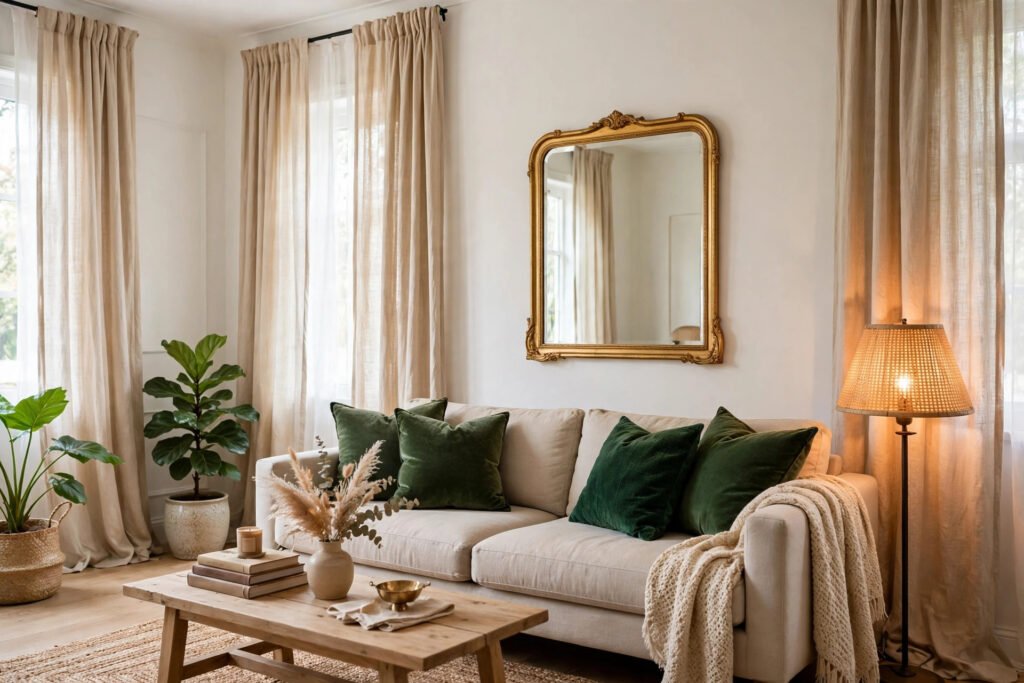
Curtains hung just above the window frame make a room look small. Mount the rod 10–15 cm above the frame — or close to the ceiling — and extend it 15–20 cm past each side of the window. The window looks taller and wider, and the whole room feels grander.
Choose curtains in a solid colour that reaches the floor, and let them pool very slightly or just skim the floor. Linen-look and cotton fabrics in neutral tones read far more expensive than shiny polyester. Our roundup of the best budget curtains (https://somedecor.com/best-budget-curtains/) has affordable options that hang well.
4. Layer Your Lighting
Expensive rooms almost never rely on one ceiling light. They layer light: a main light, a table or floor lamp, and a small accent such as a picture light or a candle. Three light sources at different heights make a room feel warm and finished, while a single harsh bulb flattens everything.
Swap cold white bulbs for warm ones (around 2700K) and add a lamp to a dark corner. A floor lamp beside the sofa or a small lamp on a console table costs roughly $20–$40 and changes the mood of a whole room in an evening.
5. Add a Large Mirror
A big mirror is one of the best value buys in home decor. It bounces light around the room, makes the space feel larger and adds a reflective, polished surface that reads as luxury. One large mirror on a living room wall does far more than several small decorative ones scattered about.
Hang it opposite a window or near a lamp so it catches light, and choose a simple frame in black, gold or natural wood. Plain framed mirrors cost roughly $20–$50 depending on size.
6. Use Texture, Not More Stuff
Luxury is a feeling, and texture creates it. A room full of flat, smooth surfaces looks plain; a room that mixes soft and rough textures feels rich. Layer a chunky knit throw over a smooth sofa, add a woven basket, a velvet cushion or two, and a soft rug underfoot.
A faux-fur throw, linen-look cushion covers and a jute rug each cost roughly $15–$30, and together they give a room the layered look of a designer space. Keep the colours in your palette and let the textures do the talking.
7. Style Surfaces in Odd Numbers
Designers style surfaces in groups of three or five, and it works because odd numbers look natural to the eye. On a coffee table, try a stack of two books, a small vase and a candle. On a shelf, group a tall item, a medium one and a small one, with space around them.
The trick is restraint: leave breathing room between groups. A crowded shelf looks like a shop; a shelf with three well-chosen objects looks curated. For a full walkthrough, see our guide on how to style a coffee table on a budget (https://somedecor.com/style-coffee-table-budget/).
8. Upgrade Small Hardware
Handles, knobs and tap fittings are the jewellery of a room, and swapping them is one of the cheapest upgrades there is. Brushed brass or matte black handles on kitchen cupboards, a new set of drawer pulls on a tired dresser, or a modern door handle can make old furniture look new.
A pack of matching handles costs roughly $10–$25, and fitting them takes a screwdriver and half an hour. Match the finish across a room — brass in the kitchen, black in the bathroom — and the whole space looks deliberately finished.
9. Frame Your Art Properly
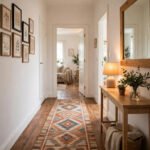
Cheap-looking art is usually badly framed art. A simple, matching set of frames transforms even free printable art into something that looks gallery-worthy. Use one frame colour throughout a room — black, white or natural wood — and add a mount (the white border inside the frame) so the picture has room to breathe.
A gallery wall of matching frames on one wall makes a bigger statement than pictures scattered randomly around the house. Our budget-friendly gallery wall ideas (https://somedecor.com/gallery-wall-ideas-budget/) show how to plan the layout before you drill a single hole.
10. Bring in Greenery
A plant makes a room feel alive and cared for, and nothing says “expensive hotel” quite like a healthy plant in a good pot. A tall snake plant or fiddle-leaf fig in a corner fills empty space, while a small pothos on a shelf softens hard edges.
The pot matters as much as the plant: a simple ceramic or woven basket pot looks far more expensive than a plastic nursery pot. Low-light plants such as snake plants and pothos cost roughly $10–$25 and forgive being forgotten for a week.
11. Hide the Wires
Visible cables and cluttered power strips quietly undo every other improvement in a room. Tuck cables behind furniture, use a cable tidy box for the TV area, and run a charging cable through a drawer or behind a bedside table.
A cable box or a few clips cost only a few dollars, but a room with no visible wires looks instantly calmer and more considered. This is one of those details visitors notice without knowing why the room feels so good.
12. Keep One Focal Point per Room
Every expensive-looking room has one thing your eye lands on: a piece of art above the sofa, a statement lamp, a beautiful mirror or a styled fireplace. Everything else supports it. When every object competes for attention, the room feels noisy and cheap.
Choose the focal point first, then arrange the room around it. If your sofa wall is the focus, hang one large piece of art there — for ideas, see our guide on how to decorate above a sofa (https://somedecor.com/decorate-above-sofa/) — and keep the rest of the room quiet and simple.
FAQs
How can I make my home look expensive on a small budget?
Start with a declutter, then paint in a calm, consistent palette, hang curtains high and wide, and layer your lighting. These four changes cost very little and make the biggest visible difference.
What is the cheapest way to make a living room look luxurious?
Clear the surfaces, add a large mirror and a floor lamp, and layer textures with a throw and a couple of cushions. A rug that is the right size for the room also makes it feel far more finished.
Do expensive-looking homes need matching furniture?
No — they need a matching colour palette and consistent finishes. Mismatched furniture in the same palette looks collected and interesting; matching furniture in clashing colours looks like a showroom.
What colours make a home look expensive?
Warm whites, soft greys, deep greens, navy and charcoal read as expensive because they are calm and timeless. Avoid too many bright colours in one room, and repeat your palette from room to room.
How do I make a small home look expensive?
Use one palette throughout, hang curtains high, add a large mirror and keep surfaces clear. One focal point per room and matching hardware finishes make even a small space feel considered.
Making a home look expensive is mostly about editing: fewer things, better light and one clear palette. Start with the free steps — decluttering and hiding wires — then add one trick at a time, and check the current price before buying anything new.