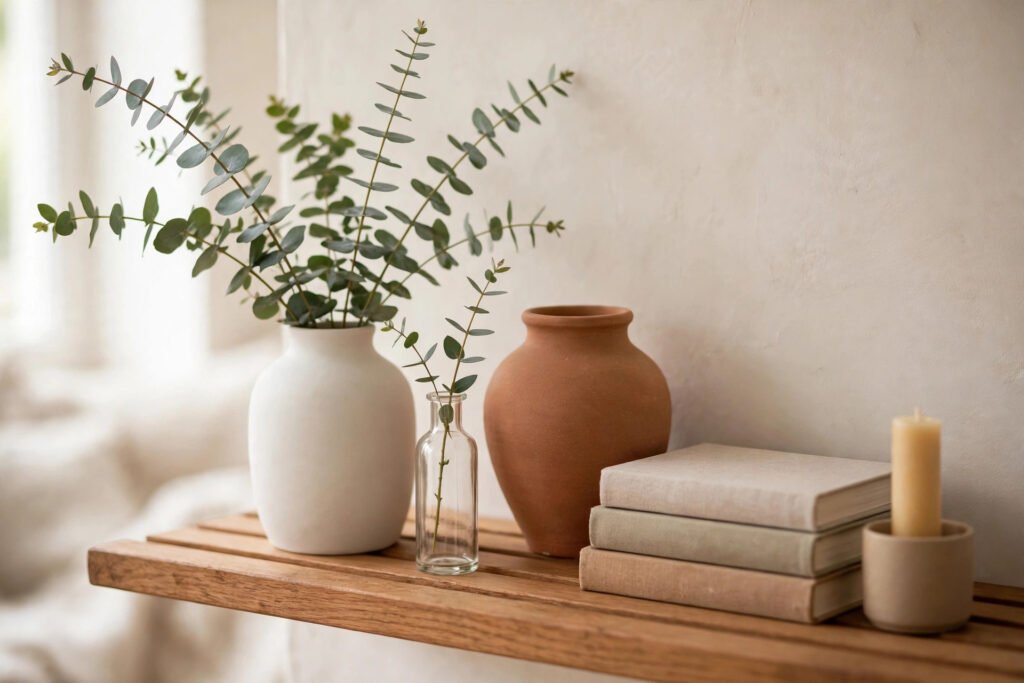

Best Affordable Vases for Styling Shelves and Tables
Disclosure: This article contains affiliate links. As an Amazon Associate, we earn from qualifying purchases. If you buy through these links, we may earn a small commission at no extra cost to you.
The best affordable vases are the easiest shortcut to shelves and tables that look styled rather than stuffed. A good vase does three jobs at once: it adds height, it adds a material your room might be missing — glass, ceramic, stone — and it gives you a reason to bring in greenery or a few stems. You do not need to spend much. Most of the vases worth buying cost roughly $8–$30, and the best-looking ones are often the simplest shapes in the most honest materials.
We picked these vases based on their specs, features and customer feedback — their size, material, finish and how easy they are to style — not on lab testing. Prices change often, so check the current price before buying.
1. Classic Ceramic Vase in Matte White
A plain matte white ceramic vase is the hardest-working vase you can own. It suits almost any shelf, it never fights with the books or objects around it, and it makes even a few supermarket stems look deliberate. Choose one around 20–25 cm tall for a shelf or console table, and one taller — 30 cm or more — for the floor or the end of a sideboard.
Matte finishes look more expensive than glossy ones at this price, because gloss shows every fingerprint and every tiny flaw in the glaze. A slightly uneven, handmade-looking glaze is a plus, not a problem. Ceramic vases in this style usually cost roughly $10–$20.
Style it with three or four stems of eucalyptus or pampas grass, or leave it empty — a good ceramic vase holds its own with nothing in it. Pair it with a small stack of books on a coffee table; our guide on how to style a coffee table on a budget shows how a vase and a book stack work together as one group.
2. Clear Glass Bud Vase Set
If you like fresh flowers but never know what to do with a single stem, a set of small glass bud vases solves the problem. Each vase holds one or two stems, so you can spread them along a shelf, group three together on a dining table, or place one on a bedside table and one in the bathroom.
Look for a set of three in different heights — roughly 12 cm, 16 cm and 20 cm — with thick glass and a narrow neck, which keeps stems upright instead of flopping over. Sets like this usually cost roughly $12–$18 for three, which makes them one of the cheapest ways to make a room feel finished.
3. Textured Stoneware Vase in a Warm Neutral
Stoneware vases in warm neutrals — sand, terracotta, warm grey — add the earthy texture that makes a styled shelf feel collected rather than decorated. The slightly rough, speckled surface catches light in a way smooth ceramic does not, and the warm colour works with wood, rattan and linen, which are the materials most budget homes already have.
Choose a wide, rounded shape rather than a tall narrow one if you want it to read as a statement piece on its own. A stoneware vase around 18–22 cm tall sits comfortably on a bookshelf between books, and it is heavy enough that it will not tip over when you reach past it. Expect to pay roughly $15–$25. It also looks wonderful on a console table; see our guide on how to style a console table.
4. Tall Statement Vase for Floor or Sideboard
Every room needs one tall object, and a statement vase is the cheapest way to get one. A tall vase — 40 cm or higher — fills an empty corner, anchors the end of a sideboard, and gives a room the vertical line that makes it feel finished. At this height you do not need flowers at all: a few tall pampas stems, or nothing, both work.
Look for a simple silhouette — a gentle taper or a soft curve — in one solid colour. Black, cream and terracotta are the safest choices, because they work with almost any palette. Avoid fussy patterns and fake crackle finishes, which tend to look cheap up close. A tall statement vase usually costs roughly $20–$30, and it is worth spending slightly more here than on small vases, because it is a focal point. It also works as the tall anchor a bookshelf needs; see how to style a bookshelf like a designer.
5. Small Sculptural Vase as an Object
Some vases are worth buying for their shape alone. A small sculptural vase — a donut shape, an arch, a wave — works as a decorative object even when it holds nothing, and it is the kind of piece that makes a shelf look considered. These are best bought small, around 12–18 cm, so they read as an accent rather than a centrepiece.
Sculptural shapes are where budget vases can look surprisingly expensive, because the shape does the talking and the material just needs to be clean and matte. A cream or black sculptural vase costs roughly $10–$20 and instantly lifts a plain shelf. The risk is overdoing it: one sculptural piece per shelf is plenty.
How to Choose the Right Vase
Before you buy, think about three things. First, the size: a vase should be roughly one-third to one-half the height of the shelf or surface it sits on, with breathing room on both sides. A vase that is too small disappears; one that is too big crowds everything else.
Second, the material. Ceramic and stoneware suit warm, lived-in rooms. Clear glass suits small or dark rooms, because it does not block light. Metal vases — brass or matte black — suit modern rooms, but they show water marks, so they are better for dried stems than fresh flowers.
Third, the colour. If your room already has a clear palette, pick a vase in one of those colours or in a neutral that sits alongside them.
How to Style Vases So Shelves Look Designer-Made
Styling a vase is mostly about grouping. Never place a vase on its own in the middle of a shelf — it will look lost. Group it with two other objects of different heights: a stack of books and a candle, a small plant and a framed photo, a box and a vase. Odd numbers look natural, so groups of three work better than pairs.
Vary the heights. If everything on a shelf is the same height, the shelf looks flat. A tall vase next to a low stack of books creates a stepped line that the eye enjoys following. Leave empty space around each group: a crowded shelf looks like storage, while a shelf with space between groups looks curated.
FAQs
What size vase should I buy for a shelf?
A vase around 15–25 cm tall suits most shelves. It should be roughly one-third to one-half the height of the shelf space, with room to spare on both sides so it does not look cramped.
Are cheap vases worth buying?
Yes, if you choose simple shapes in honest materials — matte ceramic, thick glass, stoneware. The vases that look cheap are usually the ones with fussy patterns, shiny plastic-looking finishes or fake distressing.
Can I use a vase without flowers?
Absolutely. A good vase holds its own empty, especially ceramic, stoneware and sculptural shapes. Dried stems such as pampas grass or eucalyptus are a low-maintenance middle ground.
How many vases should I have on one shelf?
One vase per shelf group is usually enough. A set of three small bud vases counts as one group. More than that, and the shelf starts to look like a vase collection rather than a styled display.
What is the best vase material for beginners?
Matte ceramic is the most forgiving: it suits almost any room, it hides dust and fingerprints, and it works with fresh flowers, dried stems or nothing at all. Start there, then add glass or stoneware once you know your style.
A vase is one of the smallest purchases in home decor, and one of the most useful. Start with a matte ceramic vase and a set of bud vases, style them in groups of three with different heights, and check the current price before buying — your shelves will look like someone designed them, for roughly the cost of a takeaway.