
How to Decorate a Small Study Corner on a Budget
Learning how to decorate small study corner budget setups is mostly about making a tiny spot feel intentional instead of improvised. You do not need a spare room, a new desk, or a big spend. A quiet corner, a small surface, and a few thoughtful touches are enough to build a place where you can actually concentrate.
A good study corner does three things: it gives you a clear surface to work on, light that does not strain your eyes, and just enough storage that clutter never takes over.
1. Pick the Corner With the Best Light
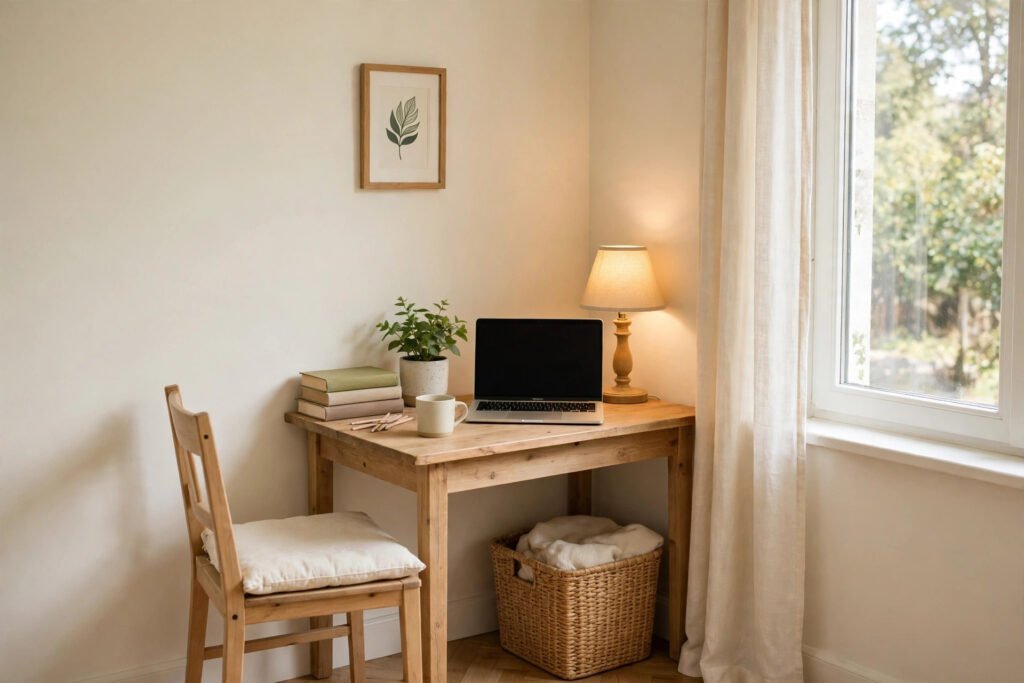
Start with the corner, not the furniture. The best spot in a small room is usually beside a window, where daylight does the heavy lifting for free. Natural light makes a tiny corner feel bigger, and it is far easier on the eyes than a dim overhead bulb.
If the only free corner is dark, do not write it off — a small desk lamp fixes it for very little money. Look for a lamp with a warm-white bulb and an adjustable neck, so you can aim the light at your work instead of into your eyes. See our guide to the best budget desk lamps for home offices for picks that work well in tight spaces.
2. Use a Small Desk or a Wall-Mounted Shelf
A compact desk around 80 to 100 cm wide is plenty for a laptop, a notebook, and a cup of tea. Second-hand desks, folding desks, and simple tabletop-and-legs combinations all work well, and they often cost very little.
If floor space is truly tight, a wall-mounted shelf at desk height does the same job with no legs at all. A sturdy floating shelf, fixed into studs or proper wall anchors, holds a laptop comfortably and leaves the floor clear, which makes the whole room feel bigger.
Whichever you choose, keep the desktop clear. A tidy surface is the single biggest difference between a corner that invites you to sit down and one that quietly collects clutter. Our budget home office organization ideas have more ways to keep a small workspace clear.
3. Add a Comfortable Chair You Already Own
You do not need to buy a new chair for a study corner. The chair you already have is fine, as long as it lets you sit with your feet flat and your screen at eye level. A cushion or a folded throw on the seat adds comfort for long sessions, and a small cushion behind your lower back helps with posture.
If you do buy one, look for a simple chair with a straight back rather than a bulky office chair. A dining chair, a slim folding chair, or a second-hand wooden chair all fit a small corner better, and they cost a fraction of a proper office chair.
The test is simple: sit at your desk for twenty minutes. If your shoulders ache or your feet dangle, adjust the chair height or add a footrest made from a sturdy box. Comfort matters more than looks here, because an uncomfortable corner is one you will avoid.
4. Define the Corner With Colour
A small corner becomes a real study spot when it looks different from the rest of the room. A single painted patch of wall, a piece of fabric hung behind the desk, or a large sheet of coloured paper pinned up all mark the space as yours.
If you rent, use removable options. Peel-and-stick wallpaper on one small section, a tapestry, or a cork board covered in fabric all define the corner without touching the paint. A calm colour works best for focus — soft green, warm cream, dusty blue, or pale grey. A defined corner tells your brain that this spot is for work, which makes it easier to sit down and start. For more wall ideas, see our affordable home office wall decor ideas.
5. Give Everything a Home With Cheap Storage
Clutter is the enemy of a small study corner. Without storage, papers, cables, and pens spread across the desk within a week, and the corner stops working.
You do not need matching storage boxes. A mug holds pens. A shoebox, covered in wrapping paper or fabric, holds notebooks. A small basket under the desk holds chargers and cables. A jam jar holds paper clips. The trick is that everything has a place, and that place is within arm’s reach.
A pegboard or a couple of small hooks on the wall above the desk hold headphones, a bag, and a calendar without taking up any desk space. A single tray on the desk catches the small things that otherwise scatter — keys, a phone, a pair of glasses.
6. Light It Like You Mean It
Good light is the difference between a corner you use and a corner you avoid. If your study corner gets daylight, you are most of the way there. For evenings, one good lamp beats three weak ones.
Place the lamp on the opposite side from your writing hand, so your hand does not cast a shadow over your work. If you use a laptop, angle the lamp so it lights the keyboard and your notes, not the screen — light bouncing off a glossy screen causes glare and tired eyes.
7. Add One Personal Touch, Not Ten
A study corner should feel like yours, but too much decoration in a tiny space quickly becomes clutter. Pick one or two personal touches and stop there.
A small plant is the classic choice, and for good reason — a little green softens a corner and costs almost nothing. A small succulent or a cutting in a jar needs little care and fits on a shelf without crowding your work. A framed photo, a favourite postcard, or a small piece of art on the wall above the desk does the same job.
Resist the urge to fill every surface. In a small corner, empty space is part of the design. Leave room on the desk for your work, and let the one personal touch do the talking.
8. Keep It Tidy With a Five-Minute Routine
The best-decorated study corner in the world stops working if it fills up with clutter. The fix is a short routine, not more storage.
At the end of each study session, take five minutes to clear the desk, file loose papers, and put pens and cables back where they belong. Once a week, wipe the surface and check that nothing new has crept in. That is all it takes.
FAQs
How much space do I need for a study corner?
You need far less than you think. A corner roughly 90 cm wide and 60 cm deep is enough for a small desk or a wall-mounted shelf, a chair, and a lamp. The key is choosing furniture that fits the space, not squeezing a full-sized desk into a small gap.
How can I decorate a study corner if I rent?
Use removable options: peel-and-stick wallpaper, a tapestry, command hooks, a freestanding shelf, and furniture that does not need fixing to the wall. Avoid paint and drilling, and choose pieces you can take with you when you move.
What is the cheapest way to make a study corner look good?
Define the space with one colour or a fabric panel, keep the desk clear, and add one plant or one framed picture. A tidy, well-lit corner with a clear purpose looks better than a corner full of expensive decor.
Do I need a desk, or will a shelf work?
A sturdy wall-mounted shelf at desk height works perfectly as a desk in a small corner, as long as it is fixed into studs or proper wall anchors and is deep enough for a laptop — around 45 to 50 cm. It saves floor space and costs less than a desk.
How do I stop my study corner from getting cluttered?
Give everything a home — a mug for pens, a box for papers, a tray for small items — and spend five minutes at the end of each session putting things back. A small space only stays tidy with a short, regular routine.
Final Thoughts
To decorate small study corner budget setups well, remember that the corner itself matters more than anything you buy for it. Good light, a clear surface, a comfortable chair, and a little colour will do more than a shopping list of new furniture.
Start with the corner you have, use what you already own, and add one thing at a time. A small, calm, tidy corner where you can actually focus is worth far more than a big desk in a cluttered room — and it costs almost nothing to build.