
Affordable Home Office Wall Decor Ideas
Affordable home office wall decor is the fastest way to turn a dull corner of your home into a workspace you actually enjoy sitting in. You do not need a designer budget or a full renovation — a few well-chosen pieces on the wall can add colour, personality and focus to the room where you spend most of your working day. The trick is choosing decor that earns its place: it should inspire you, keep useful things within reach, or simply make the space feel finished. These seven ideas all cost very little and work in small rooms and rented homes. Prices below are rough ranges only — check the current price before buying.
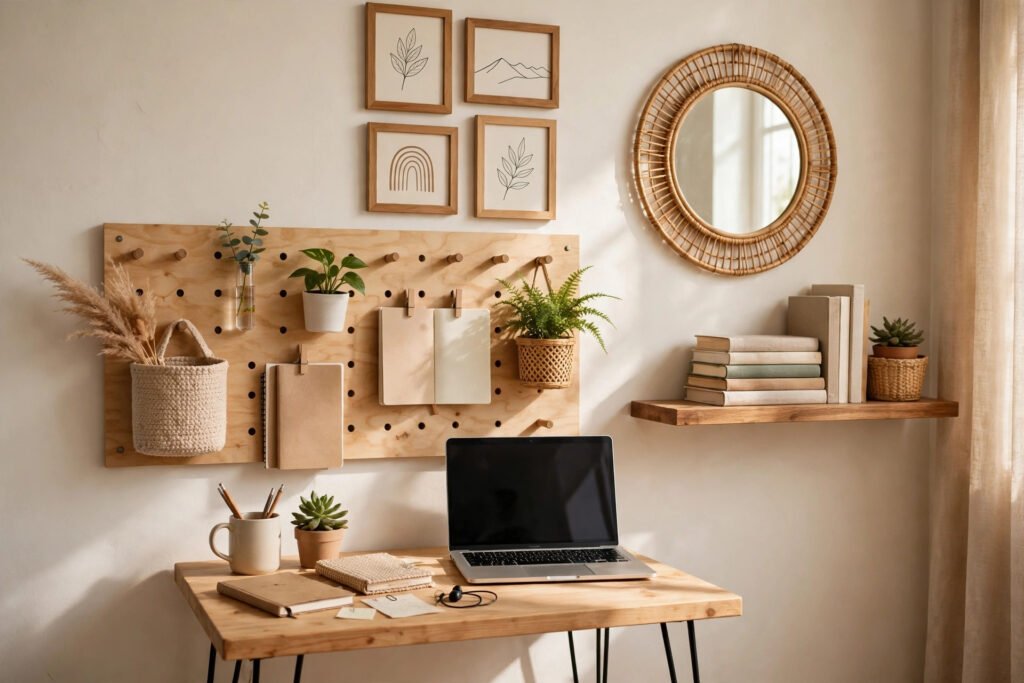
1. Build a Small Gallery Wall
A gallery wall is the classic home office upgrade because it fills a large blank wall with personality for very little money. You do not need matching frames or expensive art — mix framed prints with postcards, photos and pages from old magazines, and the variety is what makes it look intentional rather than random.
Start with three to five pieces in the rough range of $5 to $20 each, using inexpensive frames from a discount shop or thrift store. Keep the frames within a loose rectangle above your desk and leave a little space between each piece.
Why it works: it adds colour and character in one go, and you can swap pieces in and out as your taste changes. For more ideas, see our budget-friendly gallery wall ideas.
2. Add a Pegboard for Storage and Style
A pegboard is one of the hardest-working pieces of affordable home office wall decor because it is both decoration and storage. Hang one above or beside your desk and use hooks, small shelves and baskets to hold notebooks, headphones, cables, plants and stationery — everything visible and within reach.
A basic pegboard costs in the rough range of $15 to $40, and hooks and accessories usually add another $10 to $20. Paint it to match your wall colour for a calm, built-in look, or paint it a bold accent colour to make it a feature.
Why it works: it clears your desk surface, which makes the whole room feel bigger, and it turns everyday objects into part of the decor. Our guide to budget home office organization ideas has more ways to keep a small workspace tidy.
3. Hang a Large Calendar or Planner Board
A wall calendar or weekly planner board does double duty in a home office: it looks good and it keeps your deadlines visible. A large monthly calendar in a simple frame, a chalkboard or a whiteboard all work well, and each one costs very little.
Choose a design that suits how you work. A paper calendar with a nice print doubles as art. A whiteboard is better if your schedule changes often, because you can wipe it clean each week. A cork board with pinned notes adds texture and warmth.
Why it works: it fills wall space with something genuinely useful, and glancing up at your week keeps you focused without opening another app.
4. Use Floating Shelves as Display Space
Floating shelves are a simple way to decorate a home office wall while adding storage at the same time. Two short shelves above a desk can hold a small plant, a stack of books and a framed photo — a styled little scene that makes the whole room feel finished.
A pair of basic floating shelves costs in the rough range of $20 to $50, and installation takes under an hour with a spirit level and a drill. Keep the styling light: leave some empty space on each shelf and vary the heights of the objects.
Why it works: shelves draw the eye upward, which makes a small office feel taller, and they give you a place for the personal touches that make a workspace feel like yours. Our guide to how to style open shelves covers the same grouping basics.
5. Frame What You Already Have
Some of the best wall decor in a home office costs nothing at all, because it is already in your home. A beautiful map, a page from an old book, a concert ticket, a child’s drawing or a postcard from a trip — framed simply, any of these becomes personal art that no shop can sell you.
Look for inexpensive frames in matching colours to tie different pieces together, or paint mismatched thrift-store frames the same shade so the collection looks deliberate. Even a single large frame with a favourite print can anchor a whole wall.
Why it works: personal pieces make a workspace feel like yours rather than a generic office, and they cost next to nothing. If you need frames on a tight budget, our roundup of the best budget picture frames covers good options for gallery walls and single pieces.
6. Try Removable Wall Decals or Washi Tape Art
If you rent, or you simply like changing things often, removable wall decals and washi tape are ideal. Decals come in dots, arches, botanical shapes and quotes, cost in the rough range of $10 to $25 for a pack, and peel off without damaging paint. Washi tape is even cheaper and can be used to create geometric patterns or a border around your desk area.
Start small: a row of dots above your desk, or a simple arch shape behind your monitor, adds interest without overwhelming the room. The beauty of both options is that there is no commitment — if you get bored, peel it off and start again.
Why it works: it adds colour and pattern with zero holes in the wall, which makes it perfect for renters and for anyone who redecorates often.
7. Add a Mirror to Open Up the Room
A mirror is a smart piece of home office wall decor because it does two jobs at once: it looks good and it makes a small room feel larger and brighter. Place a mirror opposite a window and it bounces daylight around the room; hang one beside your desk and the space instantly feels less boxed in.
A simple round or arched mirror costs in the rough range of $25 to $60, and you do not need an ornate frame for it to work — a plain wood or black metal frame suits most home offices. Avoid hanging a mirror directly behind your monitor, where it can catch glare.
Why it works: light and the sense of space make long working days feel easier, and a mirror is one of the few decor pieces that genuinely changes how a room feels. For a full room makeover on the same budget, see home office decor on a budget.
How to Pull It All Together
The biggest mistake in home office wall decor is trying to do everything at once. Pick one idea from this list as your main feature — the gallery wall, the pegboard or the shelves — and then add one small supporting piece, like a calendar or a mirror.
Keep your colour palette tight. Choose two or three colours and repeat them across your frames, shelves and accessories, and the wall will look planned even if the pieces cost very little. And leave some wall empty: blank space is what lets the decor breathe.
Finally, decorate for the way you actually work. If you are easily distracted, keep the wall behind your monitor calm and simple. If you need inspiration, put the gallery wall where you can see it while you think.
FAQs
What is the cheapest way to decorate a home office wall?
Removable wall decals, washi tape art and framed items you already own are the cheapest options, often costing under $20 in total. A small gallery wall built from thrift-store frames and free printables is another low-cost way to fill a blank wall.
What should I put on the wall behind my desk?
A gallery wall, a pegboard or floating shelves work well behind a desk, as long as they do not distract you while you work. Keep the arrangement calm and avoid anything bright or busy directly in your line of sight.
How do I make a small home office feel bigger with wall decor?
Hang a mirror opposite a window to bounce light around the room, use floating shelves to draw the eye upward, and keep the colour palette light. Leaving some wall space empty also helps a small room feel less crowded.
Can a pegboard work in a small home office?
Yes. A small pegboard above or beside your desk adds storage without taking up floor space, and it keeps everyday items visible and within reach.
How much should I spend on home office wall decor?
A single wall can be transformed for roughly $30 to $80 using a mix of frames, a pegboard or shelves and a mirror. Start with one feature piece and add to it over time.