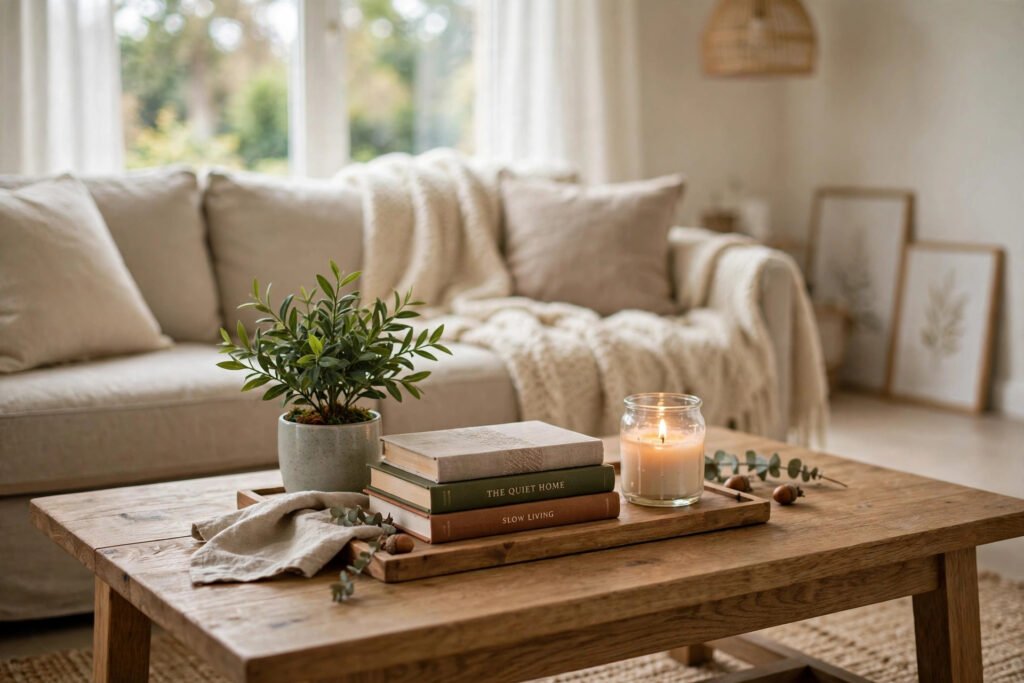

A tray is the easiest shortcut to a coffee table that looks styled rather than cluttered. It gathers small objects into one tidy group, protects the tabletop from rings and scratches, and gives you a single moveable vignette you can lift off when you need the space. The good news is that learning how to style tray coffee table budget setups costs almost nothing: the best looks usually use things you already own — a stack of books, a candle, a small plant — plus one affordable tray.
A tray also solves the most common coffee table problem: things drifting apart. Without a boundary, remotes, coasters and cups spread across the whole surface and the table never looks finished. A tray creates that boundary, and once you have it, styling becomes a simple matter of choosing three or four objects that vary in height, texture and shape.
1. Start With the Right Size Tray
A tray that is too small looks lost, while one that is too large swallows the table and leaves nowhere to set a drink down. As a rule, the tray should cover roughly a third to a half of the tabletop, leaving clear space on at least one side.
For a standard rectangular coffee table, a tray around 45 to 60 centimetres long works well. On a round table, a round tray about half the table’s diameter keeps the proportions balanced. If your table is very small, one compact tray is enough. Measure the table before you buy, and pick a tray with handles if you plan to lift it off often.
2. Follow the Rule of Three
Designers lean on odd numbers for a reason: three objects feel balanced and interesting, while two can look stiff and four can look crowded. Aim for three main pieces on the tray, plus a small filler if there is a gap.
A reliable trio is one tall item, one medium item and one low, flat item — for example, a small vase, a candle in a jar, and a stack of two or three books. This simple formula works with almost any style, and it stops you from overfilling the tray.
3. Layer Books Under Everything
Books are the cheapest styling tool you own, and they do double duty on a tray: they add height and they give smaller objects a platform. Stack two or three books with the largest at the bottom and the smallest on top, and choose spines in colours that suit the room rather than clashing with it.
Hardbacks work best because they are sturdy and their covers look good. If you do not have decorative books, use any books you already own and turn the spines inward for a neutral look. A candle or a small plant sitting on top of the stack instantly looks intentional.
4. Add Something Tall for Height
A flat tray looks flat. Height is what makes the arrangement feel styled, so include at least one tall element. A small vase with a few stems, a tall candlestick, or a slender decorative bottle all work, and none of them needs to cost much.
Keep the tall piece toward the back or one side of the tray, so it does not block the view across the room or get knocked over when someone reaches for a drink. If you have a low, wide tray, one tall piece is enough; on a larger tray you can use two, placed at opposite ends, to frame the middle.
5. Add Something Living
Greenery softens a tray in a way no object can. A small potted plant or a sprig of eucalyptus in a bud vase brings in colour and life, and stops the arrangement from looking like a shop display.
If you do not trust yourself with real plants, a small faux plant is a perfectly good budget option, and it will survive being forgotten for weeks. Keep the plant small — it should sit comfortably inside the tray without its leaves spilling over the edge. A plant in a plain ceramic or terracotta pot usually looks better than a plastic nursery pot.
6. Keep One Spot Practical
A styled tray should still work for everyday life. Leave room for a coaster or two, and keep the objects you actually use within reach. A purely decorative tray tends to get cleared away the first time someone wants to set down a laptop.
That is why coasters belong on the tray, not beside it. A small set of best budget coasters stacked neatly on the tray protects both the table and the tray, and they look like part of the styling rather than an afterthought. A small dish on the tray does the same job for remotes.
7. Match the Tray to Your Room
The tray itself is part of the look, so choose a material that suits the room. A wooden tray warms up a neutral living room; a mirrored or metallic tray adds a little shine to a plain table; a woven rattan tray suits relaxed, boho or coastal rooms; and a simple black or white tray disappears into a modern scheme.
You do not need to spend much. Thrift shops, discount stores and online marketplaces are full of trays for a fraction of retail prices, and a plain wooden tray can be painted or stained to match your decor for almost nothing. Check the current price before buying anything new — a basic tray often costs roughly $10–$20, and second-hand ones can be far less.
The Five-Minute Tray Styling Formula
If you want a method you can repeat whenever the tray starts to look messy, use this style tray coffee table budget routine, in this order:
- Clear the tray completely and wipe it down.
- Place the book stack first — it is your anchor and your platform.
- Add the tall item behind or beside the books.
- Put the candle or decorative box in the remaining space.
- Tuck the greenery into the last gap, and add coasters beside the books.
Step back and look from the sofa, not from above. The arrangement should look good from where you actually sit, and nothing should wobble when you lift the tray. If something looks off, remove one item — a tray that is slightly empty always looks better than one that is overfilled.
Common Tray Styling Mistakes to Avoid
The most common mistake is overfilling. A tray crammed with objects looks cluttered, not curated, and it becomes annoying to use. If you cannot lift the tray with one hand, take something off.
The second mistake is using objects that are all the same height. Without variation, the eye slides straight past the tray. Mix a tall vase, a medium candle and a low book stack, and the arrangement gains depth immediately.
The third mistake is ignoring the rest of the table. A beautifully styled tray on a table that is otherwise covered in clutter still looks messy. Keep the space around the tray mostly clear — a best throw blanket for a cosy living room draped over the sofa arm and a single best budget candle on the table are plenty alongside the tray.
FAQs
What size tray should I use on a coffee table?
The tray should cover about a third to a half of the tabletop. For a standard rectangular table, a tray around 45 to 60 centimetres long is a good fit; for a round table, choose one about half the table’s diameter.
What should I put on a tray on a coffee table?
Three items are enough: something tall like a vase, something medium like a candle, and something low like a stack of books. Add a small plant and a set of coasters to keep the tray practical.
How do I style a tray on a budget?
Use what you already own — books, a candle, a small plant — and spend only on the tray itself. Thrift shops and discount stores sell good trays for very little, and a plain wooden tray can be painted to match your room for almost nothing.
Should a tray match the coffee table?
It should complement the table, not match it exactly. Try a contrasting material — a metal or woven tray on wood, or a wooden tray on glass — for a more interesting result.
How do I keep a tray from looking cluttered?
Stick to three main objects, vary their heights, and leave some empty space on the tray. If you cannot lift the tray easily with one hand, remove one item. A tray that is slightly empty always looks more styled than one that is overfilled.