
Disclosure: This article contains affiliate links. As an Amazon Associate, we earn from qualifying purchases. If you buy through these links, we may earn a small commission at no extra cost to you.
If you have ever bought a beautiful houseplant only to watch it droop within a fortnight, you are not alone. The best indoor plants beginners can start with are the forgiving ones — plants that tolerate a missed watering, a dim corner and an owner who is still learning. Below are ten easy plants and affordable planters, with honest pros and cons. All prices are rough ranges only — check the current price before buying.
What Makes a Plant Beginner-Friendly?
A good first plant tolerates irregular watering, copes with average indoor light, and grows slowly. The best indoor plants beginners ask for most often tick at least two of those boxes, and cost roughly $5 to $25 for a small to medium pot. Before you buy, check the light in your spot, and keep pothos and peace lilies out of reach of pets and small children — both are mildly toxic if chewed.
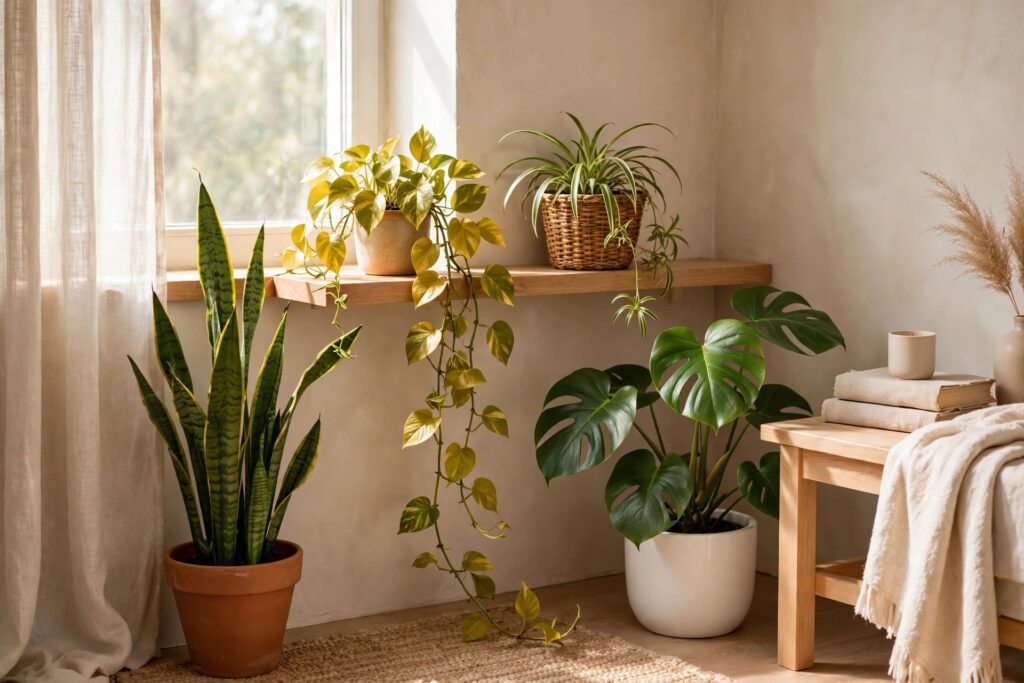
1. Snake Plant (Sansevieria)
The classic first plant: it thrives on neglect, storing water in its stiff leaves, and tolerates low light well.
Care: Water every 2–3 weeks, only when the soil is fully dry. Low light works.
Rough price: $10–$25 for a medium plant.
Pros: Extremely hard to kill; looks sculptural and modern.
Cons: Overwatering causes root rot. Slow grower.
2. Golden Pothos
A trailing vine with marbled, heart-shaped leaves. Snip a stem, pop it in water, and roots appear within weeks.
Care: Water when the top inch of soil dries out. Happy in low to bright indirect light.
Rough price: $5–$15 for a small pot.
Pros: Very cheap and fast-growing; great trailing from a shelf — see our guide to styling open shelves: https://somedecor.com/style-open-shelves-kitchen/
Cons: Toxic to pets if eaten — hang it high if you have cats or dogs.
3. ZZ Plant
Glossy dark leaves on thick, water-storing stems — very drought-tolerant. Great for offices and dim corners.
Care: Water every 2–4 weeks. Tolerates low light and fluorescent light well.
Rough price: $15–$30 for a medium plant.
Pros: Almost impossible to underwater; its waxy leaves look polished with zero effort.
Cons: Slow grower; dislikes overwatering. Its sap can irritate skin — wear gloves when repotting.
4. Spider Plant
Cheerful and striped — a healthy one produces baby “spiderettes” you can pot on as new plants.
Care: Water weekly in summer, less in winter. Prefers bright indirect light but copes with shade.
Rough price: $8–$18 for a small plant.
Pros: Non-toxic to pets, with free baby plants. Lovely in a hanging planter near a window.
Cons: Brown leaf tips are common with heavily treated tap water — try filtered water.
5. Monstera Deliciosa
The plant of the moment: split leaves bring instant style, yet it is surprisingly easy to keep happy.
Care: Water every 1–2 weeks. Needs bright indirect light to develop its signature splits.
Rough price: $15–$35 for a young plant.
Pros: Big visual impact and fast growth in good light. Pair it with a statement mirror: https://somedecor.com/best-budget-mirrors/ to make a room feel bigger.
Cons: Needs space — a mature monstera gets large and needs a moss pole or support as it climbs.
6. Peace Lily
One of the few easy plants that flowers indoors. It tells you when it is thirsty — it droops, then perks up within hours of watering.
Care: Keep soil lightly moist; water weekly. Prefers low to medium light.
Rough price: $12–$25 for a medium plant.
Pros: Flowers in low light; the droop is an unmissable watering reminder.
Cons: Toxic to pets if chewed; brown tips appear in very dry rooms.
7. Aloe Vera
Its gel is a classic remedy for minor burns, and it asks for very little in return.
Care: Water every 2–3 weeks, letting soil dry out fully. Needs bright light, ideally a sunny windowsill.
Rough price: $5–$12 for a small plant.
Pros: Cheap, useful, and very drought-tolerant.
Cons: Needs more light than the others here — it will struggle in a dark room. Overwatering turns the leaves mushy.
8. Heartleaf Philodendron
A trailing plant with soft, heart-shaped leaves — similar to pothos, but softer.
Care: Water when the top inch of soil is dry. Low to bright indirect light.
Rough price: $8–$18 for a small plant.
Pros: Very forgiving, trails beautifully, and propagates easily in water.
Cons: Toxic to pets if eaten, like pothos. Grows slowly in low light.
9. Rubber Plant
Big, glossy leaves on a sturdy stem — it can grow into a small indoor tree.
Care: Water every 1–2 weeks. Bright indirect light keeps the leaves large and glossy.
Rough price: $15–$30 for a young plant.
Pros: Bold, architectural look; grows steadily and can be pruned to shape.
Cons: Drops leaves if moved around too much or overwatered. Keep away from cold draughts.
10. Cast Iron Plant
It earned its name: it tolerates low light, irregular watering and neglect better than almost any other houseplant.
Care: Water every 2–3 weeks. Tolerates deep shade.
Rough price: $15–$30 for a medium plant.
Pros: The most shade-tolerant plant on this list; virtually indestructible.
Cons: Very slow growing, and less showy than a monstera or pothos.
Affordable Planters That Actually Look Good
The right planter makes a cheap plant look expensive. Here is what to look for:
- Terracotta pots ($3–$10): Classic, breathable and cheap. Porous clay helps soil dry out — ideal for snake plants and aloe.
- Ceramic planters ($8–$20): Available in every colour, from matte white to speckled glaze. Choose one with a drainage hole, or use it as an outer pot.
- Woven baskets ($10–$25): Seagrass and rattan baskets hide nursery pots beautifully and add texture. Line with a saucer to protect your floor.
- Hanging planters ($8–$18): Macramé hangers and ceramic hanging pots suit trailing plants like pothos. See our budget entryway decor ideas: https://somedecor.com/budget-entryway-decor-ideas/ for using height in a small space.
- Plant stands ($15–$30): A simple wooden or metal stand lifts a plant off the floor and turns it into a feature. A tall stand works well beside a sofa — our guide on choosing a sofa colour that won’t go out of style: https://somedecor.com/best-sofa-color/ helps the corner feel coordinated.
Drainage matters more than looks. If a pot has no hole, water can pool and rot the roots — drill a hole, use a cachepot with the nursery pot inside, or add pebbles and water sparingly.
Beginner Mistakes to Avoid
- Watering on a schedule instead of checking the soil. Stick your finger an inch in — if it feels damp, wait. Most beginner deaths come from overwatering.
- Repotting too soon. A new plant does not need a bigger pot on day one — wait until roots show at the drainage holes.
- Putting a low-light plant in a dark cupboard. “Low light” still means some daylight. A plant in a windowless bathroom will struggle without a grow light — our affordable bathroom decor ideas for renters: https://somedecor.com/affordable-bathroom-decor-renters/ include tips for windowless rooms.
- Buying ten plants at once. Start with two or three, learn their rhythm, then add more.
FAQs
What is the easiest indoor plant for a complete beginner?
The snake plant. It tolerates low light, needs watering only every two to three weeks, and survives neglect that would kill most other plants. Golden pothos is a close second.
How much do beginner indoor plants cost?
Most cost roughly $5 to $30 for a small to medium plant. Snake plants, pothos and aloe vera are usually cheapest; monstera and ZZ plants cost a little more. Prices vary by size and seller, so check the current price before buying.
Which indoor plants are safe for pets?
Spider plants and cast iron plants are non-toxic to cats and dogs. Pothos, peace lilies, ZZ plants and philodendrons are mildly toxic if chewed, so keep them on high shelves if you have pets.
Do indoor plants need direct sunlight?
Most prefer bright, indirect light — direct sun can scorch their leaves. Snake plants, ZZ plants and cast iron plants cope with low light, while aloe vera and monstera need brighter spots. A spot a few feet from a sunny window suits most on this list.
How often should I water indoor plants?
Most need watering every one to three weeks, depending on the plant, the pot and the season. Always check the soil first — water only when the top inch is dry. Overwatering is the most common beginner mistake, so when in doubt, wait a day.
Final Thoughts
Starting with plants need not be expensive or complicated. Pick one or two forgiving plants from this list, put them in a planter with drainage, and water only when the soil is dry. The best indoor plants beginners can grow are the ones that let you learn at your own pace.