
Disclosure: This article contains affiliate links. As an Amazon Associate, we earn from qualifying purchases. If you buy through these links, we may earn a small commission at no extra cost to you.
A storage ottoman is the hardest-working piece of furniture you can buy for a small home. It is a footrest, an extra seat, a coffee table and a hiding place for clutter — all in one. The best storage ottomans do all four jobs without making a small room feel cramped. All prices below are rough ranges only — check the current price before buying. Our picks are based on specs, features and customer feedback, not lab tests.
How to Pick the Right Storage Ottoman for a Small Space
Measure before you buy. A piece that looks compact online can swallow a small living room once it arrives.
Size first. In front of a sofa, an ottoman roughly two-thirds the width of the sofa seat works best. In front of an armchair, a 40 to 45 cm cube is usually enough.
Weight matters. If you will move it around — footrest to extra seat to side table — look for something under 5 kg. Heavier wooden-frame ottomans feel sturdier, but are harder to move.
Lid type. A lift-off lid is simple and cheap, but you need somewhere to put it while you rummage inside. A flip-top lid that doubles as a tray is the most versatile option.
What goes inside? Blankets need a deep, wide compartment. Remotes, chargers and magazines fit in almost anything.
1. The Classic Cube Ottoman — Best All-Rounder
The folding cube ottoman is the default choice for a reason: cheap, light and genuinely useful. Most measure around 40 x 40 x 40 cm, fold flat when not in use, and hold a surprising amount — a folded throw, a couple of magazines, a handful of remotes.
Look for a cube with a removable lid and a sturdy internal frame. The cheapest cubes sag in the middle after a few months, especially if anyone sits on them. A reinforced cube usually costs roughly $15 to $30.
Pros: very affordable; folds flat; light enough to move with one hand. Cons: small storage capacity; cheap versions sag.
A cube ottoman pairs well with a small sofa — see our guide to small living room ideas for more ways to make a compact room work harder.
2. The Rectangular Storage Bench — Best for Blankets
If your main problem is a pile of throws, cushions or kids’ toys, a rectangular storage bench is the better shape. At roughly 80 to 110 cm long, it holds two or three folded blankets and doubles as a bench at the foot of a bed.
Choose one with a hinged lid and a safety hinge that holds the lid open — cheap hinges slam shut on fingers. Fabric benches look softer; faux-leather versions wipe clean. Expect to pay roughly $35 to $80.
Pros: large storage capacity; doubles as a bench or window seat. Cons: takes up more floor space; faux leather can peel after a couple of years.
3. The Round Pouf Ottoman — Best for Tight Corners
Round ottomans have no sharp corners, which makes them ideal for narrow walkways and small rooms where you keep bumping into furniture. A woven or boucle pouf also adds texture, which small rooms often lack.
Storage poufs are smaller than cubes — around 45 cm across — so they suit remotes, chargers and a single throw. Add a small tray on top and you have somewhere to put a cup of tea. Prices usually run roughly $25 to $60.
Pros: no sharp corners; adds softness and texture; doubles as a side table with a tray. Cons: limited storage; lighter ones slide on hard floors.
4. The Flip-Top Ottoman with Tray — Best for Small Living Rooms
The flip-top ottoman is the cleverest design on this list. One side of the lid is padded for your feet; flip it over and the other side is a hard tray surface for drinks, books or a laptop. In a small living room without space for a coffee table, this single piece replaces two pieces of furniture.
These ottomans usually measure around 75 x 40 cm and cost roughly $40 to $90. Check that the tray side is genuinely flat and stable — some budget versions wobble when you put a mug down.
Pros: replaces a coffee table; tray side is genuinely useful. Cons: more expensive than a plain cube; hinges wear out first.
If you are styling a small living room around one, our guide to the best budget mirrors shows how to make the same room feel bigger for very little money.
5. The Ottoman with Wheels — Best for Multi-Use Rooms
Some rooms change jobs during the day: a living room becomes a workspace, a guest room becomes a playroom. An ottoman on castors follows you. The wheels let you roll it out of the way when you need floor space and roll it back when you want a footrest.
Wheeled ottomans usually have a wooden frame with a fabric or faux-leather top and cost roughly $50 to $100. Look for lockable castors — without a lock, the ottoman drifts every time you lean on it.
Pros: easy to move; lockable wheels keep it in place. Cons: wheels can mark hard floors; castors are the first thing to break.
6. The Storage Ottoman as a Nightstand — Best for Bedrooms
In a small bedroom, a storage ottoman at the foot of the bed replaces a blanket box, and a cube ottoman beside the bed can replace a nightstand. A cube with a flat, firm lid holds a book, a phone and a glass of water just fine, and the storage inside swallows chargers and spare bedding.
This is one of the cheapest bedroom upgrades there is — a pair of cubes usually costs roughly $30 to $60. For more small-bedroom ideas, see our roundup of the best budget nightstands.
Pros: replaces a nightstand or blanket box; very affordable. Cons: no drawer, so small items sink to the bottom.
What to Avoid When Buying a Storage Ottoman
- Buying too big. Measure twice. An ottoman that blocks the walkway will annoy you every single day.
- Choosing white fabric with pets or kids. Light fabric shows every mark. Mid-tones and textured fabrics hide wear far better.
- Ignoring the weight limit. Most folding cubes are rated for around 100 kg, but cheap ones sag well below that. If adults will sit on it regularly, pick a wooden-frame ottoman.
- Skipping the lid check. A lid that dips in the middle ruins the look and the comfort.
- Forgetting the floor. Hard plastic feet scratch wooden floors, so add felt pads for a few dollars.
How to Style a Storage Ottoman
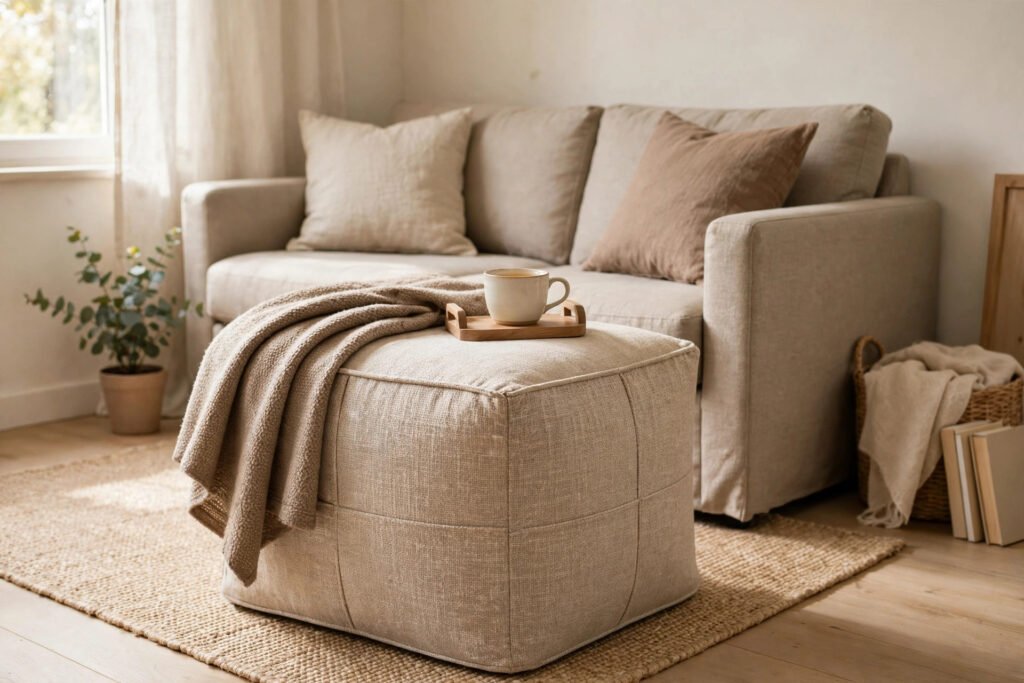
A storage ottoman should look like a design choice, not a storage box you gave up on. A folded throw draped over one corner makes it look inviting. A small tray on top turns it into a coffee table in seconds.
Colour matters too. In a small room, an ottoman in the same colour family as your sofa blends in and keeps the room calm. Our guide on how to mix patterns in home decor explains how to add a patterned piece without the room looking chaotic. A soft rug underneath ties it together — see our roundup of the best affordable area rugs under $100.
FAQs
What is the best storage ottoman for a small living room?
A flip-top ottoman around 75 cm wide is the best all-rounder: it stores blankets, works as a footrest, and the tray side replaces a coffee table.
How much storage does a storage ottoman hold?
A standard cube holds roughly 30 to 40 litres — enough for a folded throw, a few magazines and remote controls. A rectangular bench holds 80 to 120 litres.
Can you sit on a storage ottoman?
Yes, most are designed for sitting, but check the weight rating first. Wooden-frame ottomans usually support 100 kg or more; cheap folding cubes are better used as footrests.
Are storage ottomans worth it?
For small homes, yes. One piece replaces a footrest, an extra seat, a side table and a storage box.
How do I stop a storage ottoman from sliding on a hard floor?
Stick felt pads under hard feet, or place a non-slip rug pad underneath a lightweight ottoman.
Final Thoughts
The best storage ottomans are the ones that disappear into your daily routine: feet up in the evening, blankets hidden away, an extra seat when friends visit. Start with the size — measure your room and your sofa — then pick the shape that matches what you actually need to store. A cube is the cheapest way in, a flip-top is the most useful in a small living room, and a bench is the best choice if blankets are the problem.