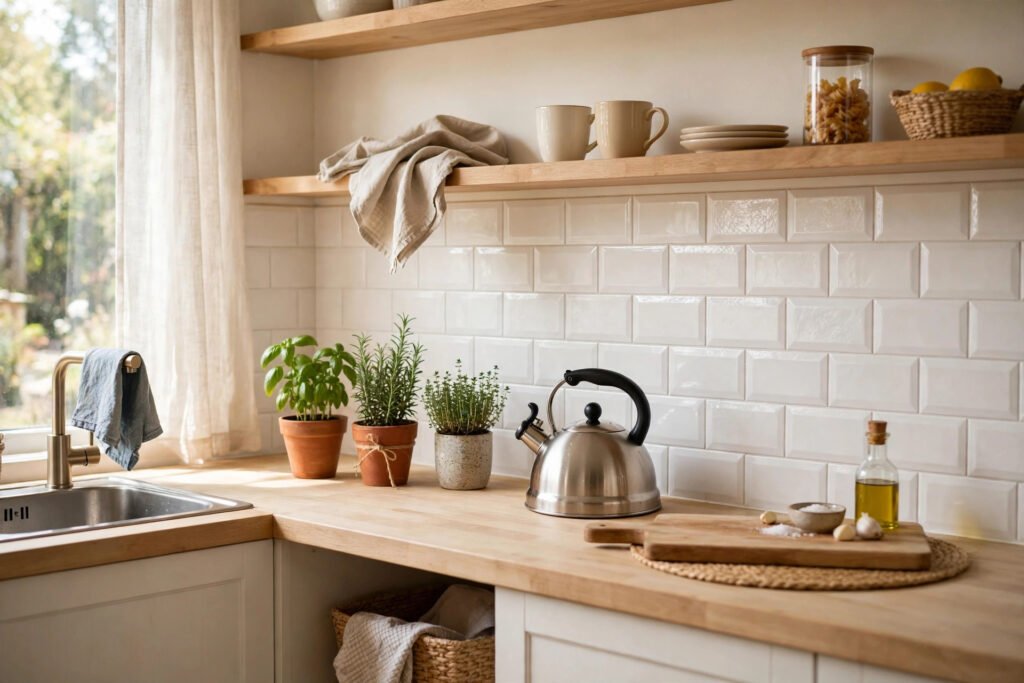

Affordable kitchen backsplash ideas for renters can change a tired kitchen in a single afternoon — no drilling, no grout and no awkward conversation with your landlord. The strip of wall between your worktop and your wall cabinets is usually the most dated part of a rental kitchen, and it is also the easiest to disguise. These ideas are all removable and cheap, so you can enjoy a smarter kitchen now and hand the flat back exactly as you found it.
Why Renters Need a Different Backsplash
A homeowner can tile, grout and seal a backsplash and forget about it for a decade. A renter cannot. Anything you stick, screw or paint onto a landlord’s wall has to come off cleanly when you leave, or it comes out of your deposit.
That rules out real tiles, cement and most adhesives. It does not rule out a good-looking backsplash. Choose materials made to be removed — peel-and-stick tiles, removable wallpaper, vinyl and freestanding panels — and prepare the wall first: wash it with warm soapy water, let it dry fully and test a small patch in a hidden corner. Most leases ban permanent changes but say nothing about removable decor; if unsure, a quick message to your landlord with a photo of the product usually gets a yes.
6 Affordable Kitchen Backsplash Ideas for Renters
1. Peel-and-stick tiles
Peel-and-stick tiles are the closest thing to a real tiled backsplash without any of the mess. They come as thin vinyl or gel-backed squares that look surprisingly like ceramic subway tiles, mosaic or stone, and cost roughly $10 to $25 for a pack that covers a small kitchen.
Measure first, then cut the sheets with a craft knife and a metal ruler. Start from the centre and work outwards so the pattern stays even, and press each tile firmly. Keep them a few millimetres from the hob and sink, where heat and splashing shorten their life. Most brands peel off cleanly with a hairdryer on a low setting.
2. Removable wallpaper
Removable wallpaper is the fastest way to cover a large backsplash area. A single roll, roughly $15 to $30, usually covers the whole strip behind a standard worktop, with patterns from faux marble and geometric prints to soft botanicals and linen-look textures.
Apply it in strips from top to bottom, smoothing out air bubbles with a plastic card or a clean cloth as you go. One continuous pattern looks calmer and more expensive than a patchwork of tiles, especially in a small kitchen. Choose a wipeable finish — a backsplash gets splashed with oil and tomato sauce far more often than a bedroom wall does.
3. Contact paper and vinyl sheets
If peel-and-stick tiles feel too fussy and wallpaper too patterned, plain vinyl contact paper is the budget option. A roll costs roughly $5 to $12 and comes in marble, wood, concrete and solid colours. It is thinner than tiles, so it suits flat, smooth walls best, and it wipes clean with a damp cloth.
Choose a subtle pattern and avoid anything glossy that shows every fingerprint, as cheap contact paper can look cheap up close. It is also the easiest option to replace: if one section gets stained or starts to lift, peel off just that strip and stick a fresh piece in its place.
4. A leaning backsplash panel
If you would rather stick nothing to the wall at all, use a leaning panel. A thin sheet of plywood, MDF or even a large chopping board can be painted, covered in vinyl or wallpaper, and simply leaned against the wall behind the hob or sink. It costs roughly $10 to $20 and comes down in seconds when you move out.
This is the safest option for your deposit because there is no adhesive anywhere near the wall, and you can change the look whenever you like. Make sure the panel sits flat and cannot slide: a small strip of non-slip matting underneath, or a couple of discreet adhesive hooks at the top, keeps it steady.
5. Styling that distracts from the wall
Sometimes the cheapest fix is not covering the backsplash at all but drawing the eye somewhere else. A row of open shelves, a rail with hanging utensils, a few jars of herbs or a simple picture ledge can make an ugly backsplash almost invisible. Our guide to styling open shelves in the kitchen shows how to arrange shelves so they look deliberate rather than cluttered.
This works well combined with one of the covering ideas above: clean peel-and-stick tiles plus a wooden shelf with two or three plants looks like a kitchen someone designed. Keep the styling simple — too many objects on a worktop just make a small kitchen feel smaller. For more small-kitchen tricks, see our small kitchen decor ideas on a budget.
6. Washable paint — with permission
If your landlord agrees, a coat of washable kitchen paint is one of the cheapest and most durable options. A small tin costs roughly $10 to $15 and covers the whole backsplash area twice over. Choose a satin or semi-gloss finish, which wipes clean far more easily than matte paint, and pick a colour that works with your cabinets: soft sage, warm white or a pale grey are safe choices most landlords accept.
Always get the permission in writing, even a short message, and keep the paint details so the next tenant can match it. If the landlord says no, do not paint — the removable options above give you almost the same result without the risk.
What to Avoid
Not every renter-friendly product is actually renter-friendly. Avoid strong double-sided foam tape, construction adhesive and anything labelled “permanent” — these will pull paint off the wall when you remove them. Avoid real grout, cement and tile adhesive entirely, and avoid covering the wall behind a gas hob with anything flammable, such as paper or thin plastic, unless it sits well clear of the flames.
Also be careful with very cheap peel-and-stick tiles from unknown sellers. Some use aggressive adhesive that damages paint, and some use thin vinyl that yellows in sunlight within months.
How Much Will It Cost?
A full renter-friendly backsplash usually costs between $15 and $40 in total, depending on the size of your kitchen and the material you choose. Peel-and-stick tiles and removable wallpaper sit at the top of that range, contact paper at the bottom, and a leaning panel costs little more than the board and a roll of vinyl.
Compare that with a professional tile job, which can run into hundreds, and the value is obvious. You are spending a small amount to make the room you use most look cared for — and because everything is removable, you can leave the wall exactly as you found it.
Removing It Without Losing Your Deposit
Removal is where renters usually get caught out, so plan for it from the start. When you move out, warm each section gently with a hairdryer on a low setting for 20 to 30 seconds, then peel slowly from one corner at a low angle. Never yank a large sheet off in one go — that is what pulls paint away.
Wipe away any sticky residue with warm soapy water or a little cooking oil on a cloth, then wash the wall and let it dry. If a small patch of paint does come off, touch it up with a matching sample pot rather than leaving it. For more renter-safe decorating ideas, see our guide on how to decorate a rental.
FAQs
What is the best backsplash for a rental kitchen?
Peel-and-stick tiles are usually the best all-round choice. They look like real tiles, cost roughly $10 to $25, install in an afternoon and peel off cleanly with gentle heat. Removable wallpaper is a close second for larger areas, and a leaning panel is the safest option if your landlord is strict.
Will peel-and-stick tiles damage the wall when removed?
They should not, if you prepare the wall first and remove them properly. Warm each tile with a hairdryer on a low setting, peel slowly at a low angle, and clean any residue with warm soapy water.
Can I put a backsplash behind a gas hob in a rental?
Yes, but keep flammable materials — paper, thin plastic and most vinyl — well clear of open flames. Peel-and-stick tiles and glass splash guards are the safer choices near a hob, and always leave a gap between the covering and the burner area. When in doubt, use a freestanding glass guard instead.
How do I clean a peel-and-stick tile backsplash?
Wipe it with a damp cloth and a little washing-up liquid, just as you would a real tiled wall. Avoid abrasive sponges and harsh chemical cleaners, which can scratch the vinyl surface or loosen the edges. Clean splashes promptly, especially oil and tomato sauce, so they do not stain.
Do I need my landlord’s permission for a removable backsplash?
Most leases only restrict permanent changes, and removable products are usually fine — but it is always worth checking. Read your lease, and if anything is unclear, send your landlord a quick message with a photo of the product.