
Disclosure: This article contains affiliate links. As an Amazon Associate, we earn from qualifying purchases. If you buy through these links, we may earn a small commission at no extra cost to you.
The best budget accent chairs do more than fill an empty corner. A good one adds an extra seat for guests, plus colour and texture to a plain living room. Magazine chairs often cost more than the sofa itself — but there are plenty of well-made accent chairs for well under $200, and the best of them look far more expensive than they are.
This roundup compares seven affordable styles. Our picks are based on specifications, features and customer feedback rather than lab testing, and prices below are rough ranges — check the current price before buying.
What to Look For in a Budget Accent Chair
Measure first. A typical accent chair is around 28 to 32 inches wide, but sizes vary widely. Leave a few inches of breathing room, and measure your doorway too.
Check the frame. Solid wood frames last longer than hollow plastic ones; look for a weight capacity of at least 250 pounds. Check customer feedback about assembly — wobbly legs are the most common complaint about cheap chairs.
Think about the fabric. Velvet looks luxurious but shows pet hair. Bouclé is fashionable and cosy but tricky to clean. Linen-look polyester is the safest all-rounder: natural-looking and more stain-resistant than real linen.
1. Best Overall: Classic Velvet Armchair
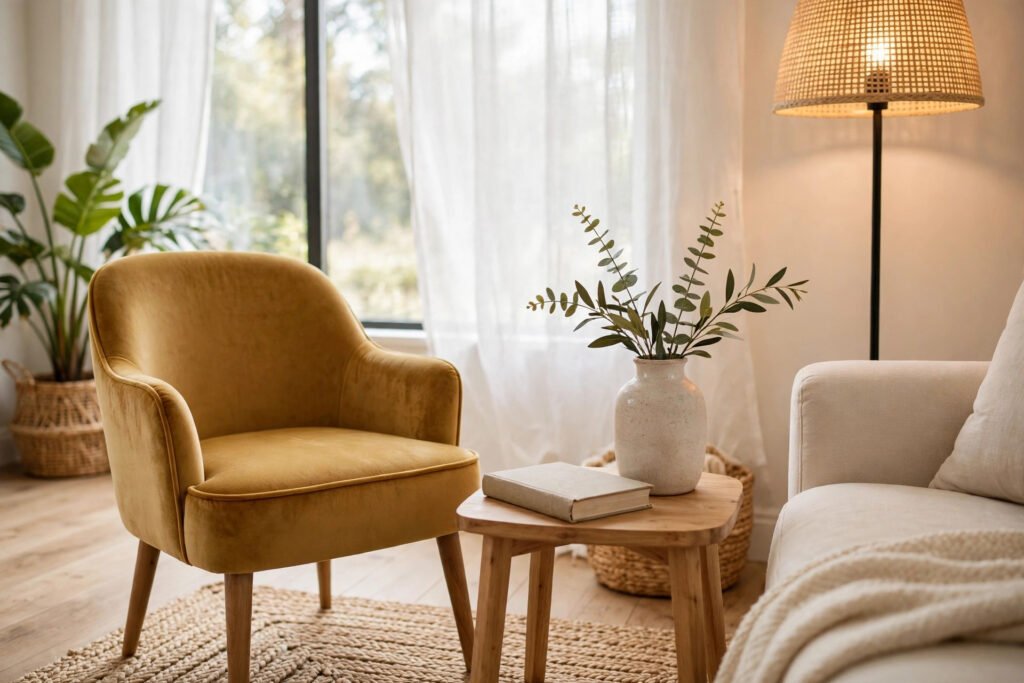
A velvet armchair is the safest first accent chair for most living rooms. The deep pile catches the light, so even a simple shape looks expensive. Most good options cost roughly $120 to $200. Velvet needs upkeep: it attracts pet hair, so a quick weekly brush keeps it fresh.
Pros: Luxurious look; comfortable; suits most styles.
Cons: Shows pet hair; light colours mark; thin padding on cheap versions.
2. Best Swivel Chair: Modern Swivel Accent Chair
A swivel chair is the most useful accent chair you can own. It turns to face the television, the conversation or the window — perfect for open-plan rooms. The mechanism matters more than the looks: the swivel base should turn smoothly and quietly, and the chair should feel stable when you lean back. Most budget swivel chairs cost roughly $130 to $200. Seat depth is the main compromise — it tends to be shallower than a fixed armchair, so check the measurements against your height.
Pros: Turns to face any direction; great for open-plan rooms; modern look.
Cons: Shallower seat than a fixed chair; swivel quality varies; often needs assembly.
3. Best for Small Spaces: Slipper Chair
If your living room is small, a slipper chair is the answer. With no arms and a low, slim profile, it takes up far less visual space than a full armchair, so the room feels bigger. It tucks beside a sofa and moves easily. With no arms it is less comfortable for long reading sessions, but ideal as an extra seat. Most cost roughly $80 to $150, the cheapest pick on this list. Look for a sturdy frame and a cushion at least a few inches thick — the thinnest models feel more like a stool.
Pros: Compact and light; fits tight corners; the most affordable style here.
Cons: No arms; thin cushions on the cheapest models.
4. Best Statement Piece: Barrel Chair
A barrel chair, with its curved back that wraps around you, is the easiest way to add drama to a plain living room. The shape is naturally cosy and looks far more designed than a square armchair. Most budget barrel chairs are upholstered in velvet or bouclé and cost roughly $140 to $200. The curved back takes up more floor space than it looks in photos, so measure carefully, and choose a colour you will love for years — they are hard to re-cover.
Pros: Distinctive, designer look; cosy, cocooning shape; softens sharp corners.
Cons: Takes up more floor space than it looks; hard to slipcover; can dominate a small room.
5. Best Traditional Style: Wingback Accent Chair
A wingback chair brings instant character to a living room, suiting traditional, farmhouse and even modern rooms in the right fabric. The high back and side wings make it feel private and sheltered. Budget wingbacks usually cost roughly $150 to $200, with frames often mixing wood and engineered wood rather than solid hardwood. That is fine for normal use, but check the weight capacity and reviews about the legs. The high back needs more wall clearance than a low chair, so measure the space behind it too.
Pros: Classic, timeless style; cosy and private to sit in; suits traditional rooms.
Cons: Needs more space behind it; heavier than other styles; rarely solid wood at this price.
6. Best for Comfort: Tufted Accent Chair
If comfort is your top priority, a tufted accent chair is hard to beat. The button-tufted back and thick cushion give it a plush, sink-in feel and a touch of vintage glamour. Tufted chairs look best in velvet. The trade-off is cleaning: dust collects in the tufting, so a quick vacuum is part of the routine. Most budget tufted chairs cost roughly $120 to $190. Check the buttons are firmly attached — loose buttons are the most common complaint for this style.
Pros: Very comfortable; the tufting adds visual interest; looks more expensive than it is.
Cons: Tufting traps dust and crumbs; buttons can loosen over time; heavier to move.
7. Best Modern Pick: Mid-Century Lounge Chair
A mid-century lounge chair, with its low profile, angled wooden legs and clean lines, is the modern classic. It suits almost any living room, and it pairs beautifully with a best budget side table and a floor lamp to make a reading corner. Budget versions usually cost roughly $110 to $180. The low seat height — often 16 to 17 inches — suits shorter people and relaxed lounging, but taller people may find it hard to get out of. For everyday use, look for a thicker seat cushion and a solid-feeling frame.
Pros: Timeless design that suits most rooms; pairs well with side tables; durable fabrics.
Cons: Low seat height is not for everyone; some versions have thin cushions.
How to Style Your Accent Chair
Give it a purpose. A chair floating in the middle of nowhere looks lost. Place it in a reading corner with a lamp and a small side table, angle it towards the sofa, or put it by a window. Our guide on how to make your home look expensive on a budget shows how one well-placed piece can lift a whole room.
Add a throw and a cushion. A folded throw over one arm and a single cushion in a contrasting colour make a new chair look styled rather than shop-fresh. Keep the cushion smaller than the chair back so the chair still shows.
Match the scale, not the set. Your accent chair does not need to match your sofa — a chair in a different fabric or colour usually looks better than a matching set. What should match is the scale: a chunky chair beside a slim sofa looks wrong, and a delicate chair beside a huge sectional disappears. Leave 30 inches of clear walkway around it.
Frequently Asked Questions
How much should I spend on a budget accent chair?
Most good budget accent chairs cost between $80 and $200. Below $80, frames and cushions tend to be flimsy; above $200, you are paying for brand names. The sweet spot is roughly $120 to $180.
What is the best fabric for an accent chair?
Linen-look polyester is the safest all-rounder: natural-looking and more stain-resistant than real linen. Velvet looks the most luxurious but shows pet hair, and bouclé is fashionable but harder to clean.
Can one accent chair work in a small living room?
Yes, and it often works better than a second sofa. A slipper chair or a compact barrel chair adds a seat without crowding the room. Choose visible legs rather than a skirt, and keep the colour close to your wall colour.
Do budget accent chairs last?
A well-chosen budget chair should last several years of everyday use. The frame matters most: solid wood or sturdy engineered wood, a weight capacity of at least 250 pounds, and positive feedback about stability.
Should my accent chair match my sofa?
No — it should complement it, not copy it. A chair in a different colour, pattern or fabric adds interest and makes the room feel designed.
Final Thoughts
The best budget accent chairs prove you do not need a designer budget to get a designer look. Start with the style that fits your room and habits — a swivel chair for an open-plan space, a slipper chair for a small room, a wingback for reading — then check the measurements, frame and fabric before you buy. Add a cushion and a throw, and a chair under $200 can become the seat everyone argues over.