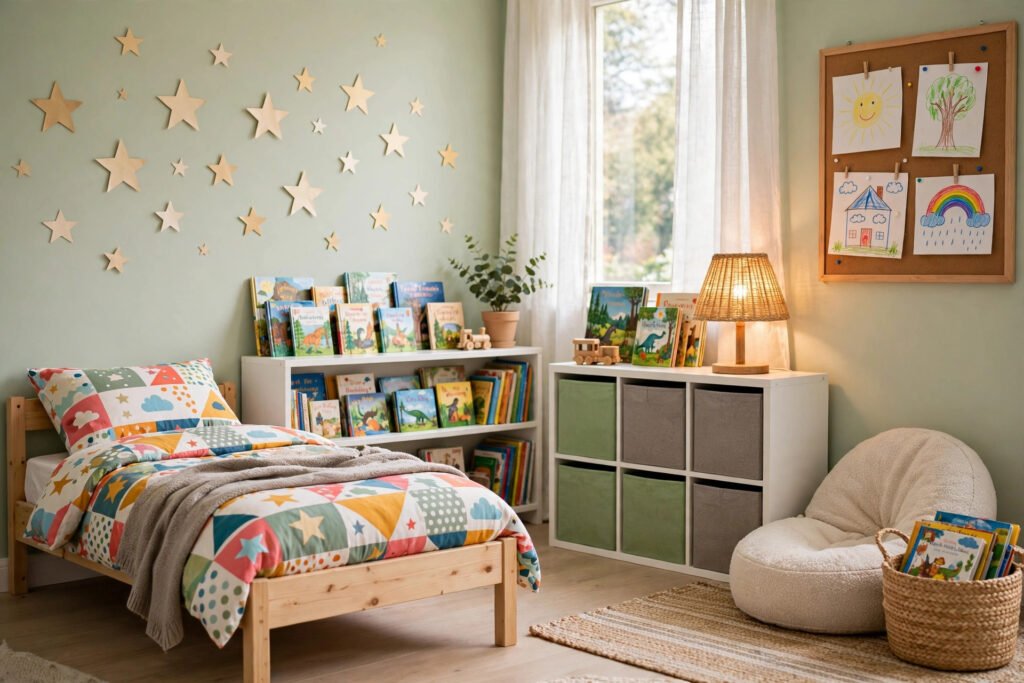

A child’s bedroom has to do more work than any other room in the house. It is a bedroom, a playroom, a homework corner and a hideout, all in one small space — and it has to survive toys, sticky fingers and tastes that change every few months. The good news is that great kids room decor ideas budget parents can actually afford do not require a full makeover or expensive themed furniture.
The ideas below focus on things that grow with your child, cost little, and can be changed easily when the dinosaur phase gives way to the space phase. Most of them cost under $50 in new purchases. Prices mentioned are rough ranges only — check the current price before buying.
1. Start With a Colour Scheme That Can Grow
The fastest way to waste money on a kids room is to decorate around a single character or theme. Children outgrow themes quickly, and themed bedding, curtains and wall stickers all need replacing at once. A colour scheme, on the other hand, can last for years.
If you want a feature wall, paint is the cheapest option by far. A single tin of paint costs roughly $15 to $25 and transforms a room in an afternoon. Let your child choose the colour from a short list of two or three you approve of — they get ownership of the room, and you avoid a neon pink ceiling.
2. Zone the Room So It Works Harder
A kids room works best when it is divided into zones, even if the room is small. Three zones are enough: sleep, play and study. You do not need walls or dividers to create them — a rug, a piece of furniture or a change in lighting is enough to signal that this corner is for one thing and that corner is for another.
Zoning also makes tidying easier for children. When every toy has a zone, “tidy your room” becomes a concrete job instead of a mystery. Low open shelves in the play zone mean toys can be put away without climbing or reaching. A rug under the play zone marks it clearly — our budget bedroom makeover ideas under $100 use the same trick.
3. Use Storage That Children Can Actually Reach
Expensive storage fails in a kids room when it is designed for adults. Tall wardrobes, high shelves and boxes with lids all look tidy in a shop and turn into chaos at home, because a child cannot reach them or will not bother opening them.
Under-bed storage is the secret weapon of small kids rooms. Flat boxes or rolling crates under the bed hold out-of-season clothes, spare bedding or the toys that only come out on rainy days. If the bed is too low, inexpensive bed risers (roughly $10 to $15 for a set of four) create a useful gap underneath without buying a new bed frame.
4. Make the Walls Fun Without Permanent Damage
Children’s rooms should feel playful, but anything you stick, paint or nail to the wall needs to survive a change of heart. Removable wall decals are the best compromise — they cost roughly $10 to $20 for a set, peel off without damaging paint, and can be moved around the room as often as your child changes their mind.
Give your child one area that is entirely theirs — a cork pinboard at their height for drawings, tickets and treasures. It costs roughly $8 to $15, changes constantly, and gives your child a sense of ownership that no amount of bought decoration can match. A gallery wall of your child’s own art costs almost nothing — our budget gallery wall ideas show how to arrange the frames.
5. Layer Lighting for Bedtime and Play
A single ceiling light is not enough for a room that needs to work for play, reading and sleep. Kids rooms need two light sources: a main light for playtime and a soft light for winding down.
A small bedside lamp with a warm bulb is the most important purchase in the room. It makes bedtime reading possible, gives a nervous child a gentle glow to fall asleep by, and costs roughly $10 to $20. Choose a lamp with a sturdy base that will not topple.
Fairy lights are the cheapest way to make a kids room feel magical. A string of battery-operated lights costs roughly $5 to $10, needs no wiring, and can be draped along a shelf or around a bed frame. Keep them out of reach of very small children and choose battery packs rather than mains plugs for safety.
6. Choose Bedding That Does the Decorating
Bedding is the biggest surface in a kids room, so it does more decorating work than almost anything else. A fun duvet set changes the whole look of the room for roughly $15 to $30 — far cheaper than new furniture or a repaint.
Buy two sets in the same colour family so you can rotate them through the wash without the room suddenly clashing. Let your child pick the pattern, but keep the sheet and pillowcases plain so the room does not become a visual shouting match.
Layer a soft throw across the foot of the bed. It adds colour, gives your child something to pull up on chilly nights, and costs roughly $10 to $15. Our guide to choosing bedding that looks expensive explains how simple layering makes even budget bedding look intentional.
7. Create a Reading Corner They Will Actually Use
A reading corner does not need a special chair or a built-in window seat. A floor cushion, a small basket of books and a lamp are enough — and children are far more likely to use a corner on the floor than a chair they have to climb into.
Floor cushions cost roughly $10 to $20 each and double as extra seating when friends come over. Stack two or three in a corner with a basket of books beside them, and you have a reading spot that takes up almost no space. A small bookshelf at floor level, with the books facing outwards so the covers show, encourages children to choose a book the way they would in a library.
Rotate the books every couple of weeks, swapping a few from a box stored elsewhere in the room. Fresh books in the corner feel like new books, and the rotation keeps the reading spot interesting.
Frequently Asked Questions
How much does it cost to decorate a kids room on a budget?
Most kids rooms can be transformed for under $150 if you reuse the bed and main furniture. Paint (roughly $15 to $25), storage cubes (roughly $5 to $10 each), a new duvet set (roughly $15 to $30) and a rug (roughly $20 to $40) are usually the biggest costs. Start with paint and storage, then add decoration slowly.
What colours work best for a kids room?
Soft, calm colours on the walls — pale green, warm grey, soft blue or gentle peach — suit sleep as well as play and last for years. Save bright colours for bedding, cushions and accessories that are cheap to change.
How do I organise toys in a small kids room?
Use low, open storage your child can reach: fabric cubes in a low shelf, baskets on the floor and flat boxes under the bed. Label each box with a picture as well as a word. Keep only the current favourites out and rotate the rest from a box stored elsewhere — fewer toys out means a tidier room and more play with each toy.
How can I decorate a kids room without damaging the walls?
Removable wall decals, washi tape, a cork pinboard hung from a single hook, and framed art are all wall-safe. Avoid stickers that are not labelled removable, and use adhesive hooks rather than nails for lightweight items. A fresh coat of paint covers almost any mistake when you eventually redecorate.
How often should I redecorate a kids room?
A full redecoration every three to four years is normal, as children move from toddler to school age to teenager. Between those big changes, swap the bedding, a few accessories and the art on the walls once or twice a year. Small, cheap changes keep the room feeling fresh without the cost of starting over.
Final Thoughts
The best kids room decor ideas budget families rely on all share the same approach: spend on the things that last, save on the things that change, and let your child have a say. A calm colour scheme, storage at their height and a cosy reading corner will do more than any themed furniture set — and it will still work when the theme changes next year.