
Affordable studio apartment decor is mostly about making one room do the work of three — bedroom, living room and kitchen — without it feeling crowded or chaotic. A small studio does not need a big budget to look good. It needs clear zones, furniture that earns its floor space, and a few simple tricks that make the room feel bigger than it is.
The ideas below cost little, need no renovation, and work in rented studios. Start with one or two, live with them for a week, then add the next.
1. Zone the Room With a Rug, Not a Wall
The cheapest way to split a studio into areas is a rug. A rug under the bed marks the sleeping zone, one under the sofa marks the living zone, and the gap between them reads as a walkway. No furniture needs to move, and nothing is fixed to the walls.
Pick rugs that fit the zone, not the whole room. A rug that is too small makes the area look cramped; one that is just wider than the bed or sofa pulls the furniture together and makes each zone feel deliberate. Low-pile rugs are easier to clean in a small space, and a flatweave or washable rug is a sensible choice if you eat near the living area. For more on sizing, see our guide to the best budget area rugs for bedrooms.
If you want a stronger divide, a low open shelf or a curtain on a tension rod works as a soft partition. Both let light through, so the studio still feels like one airy room instead of two cramped ones.
2. Choose Furniture That Does Two Jobs
In a studio, every piece of furniture should earn its place twice. A storage ottoman holds blankets and doubles as a coffee table or extra seat. A daybed works as a sofa by day and a bed by night. A drop-leaf table folds against the wall when you are not eating at it.
Before buying anything, measure the spot it will go in — and the door it has to come through. A sofa a few centimetres too long can block the only walkway to the kitchen. Look for slim legs, which let you see the floor underneath, and avoid heavy, dark furniture that eats light.
3. Use the Walls for Storage
Floor space is the scarcest thing in a studio, so move storage upward. A row of floating shelves above the desk holds books and plants, a peg rail by the door holds coats and bags, and hooks inside a cupboard door keep cleaning supplies out of sight.
Wall shelves work best when they are styled, not stuffed: leave a little empty space, mix a useful item with a decorative one, and keep heavy things low. Our guide to affordable wall shelves for small spaces has more ideas for making shelves look intentional rather than improvised.
If your landlord does not allow drilling, adhesive hooks and leaning shelves are the renter-friendly answer. A tall leaning shelf needs no screws, holds a surprising amount, and can be moved in minutes when you rearrange.
4. Keep One Light Colour on the Big Surfaces
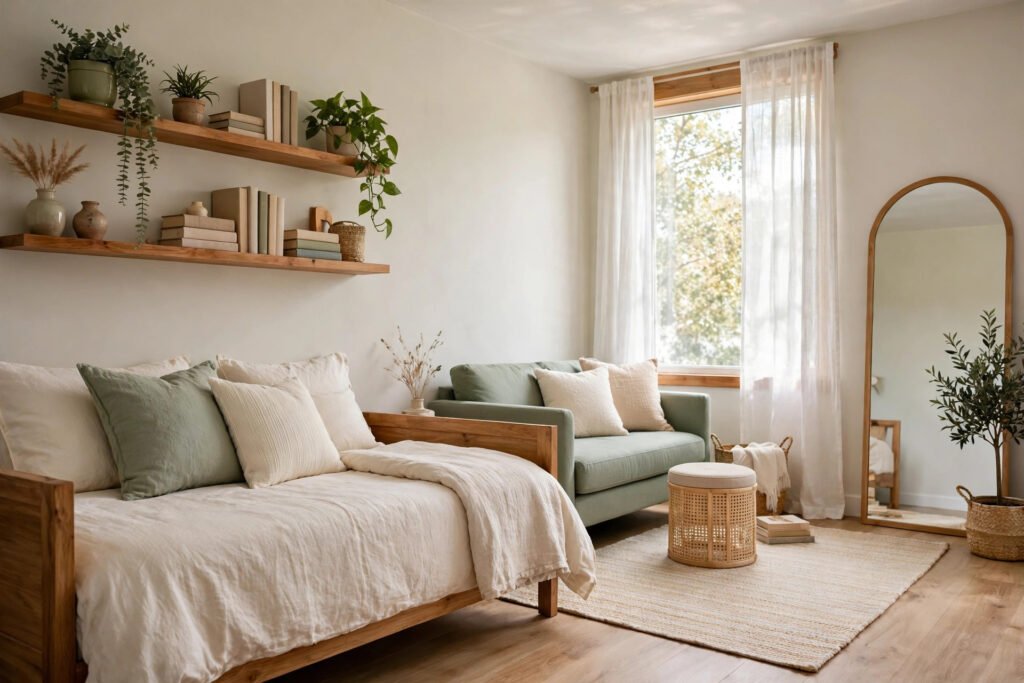
A studio looks bigger when the biggest surfaces — bedding, sofa cover, curtains — share one light, calm colour. White, cream, pale grey or soft sage all work. The room does not have to be monochrome; the colour comes from smaller things like cushions, a throw and a print or two, which are cheap to swap when you want a change.
Light colours bounce daylight around the room, which matters more in a studio than in a larger flat. If your studio has only one window, keep the curtains sheer or light so daylight reaches the far corner — a heavy dark curtain swallows the light at the room’s only source.
5. Make the Bed Look Like a Sofa by Day
The bed is usually the biggest object in a studio, and how it looks sets the tone of the whole room. Dress it like a sofa during the day: a neat bedspread in a plain colour, a row of cushions along the wall, and a folded throw at the foot. It takes two minutes in the morning and stops the room looking like a bedroom with a kitchen attached.
A simple fabric headboard, or even a large cushion propped against the wall, gives the bed a finished edge and separates it visually from the living area. Keep bedding in washable fabrics — everything in a studio sits close to the kitchen.
6. Add a Mirror Opposite the Window
A mirror opposite the window is the oldest small-space trick there is, and it works because it does two things at once: it reflects daylight deep into the room, and it gives the eye a second “window” to look through. A large mirror leaning against the wall is often cheaper and easier than hanging several small ones, and it needs no drilling if it is stable and secure.
Place the mirror so it reflects something pleasant — the window, a plant, a framed print — rather than the kitchen sink or the laundry pile. A full-length mirror by the door is practical too. For more on making a small room feel larger, see our guide on how to make a small living room feel bigger on a budget.
7. Hide the Clutter in Plain Sight
A studio has nowhere to hide mess, so the last idea is the most important: give everything a home. A basket by the door catches shoes, a tray on the table gathers keys and coins, and a lidded box on the shelf swallows chargers and cables. When clutter has a place, tidying takes five minutes instead of half an hour.
Keep surfaces mostly clear: a coffee table with one book and a small plant looks calm, while the same table covered in cups and papers makes the whole room feel smaller. Do a quick reset every evening — in a studio, that small habit is the difference between a home and a storage unit. Our budget bedroom makeover ideas under $100 show how far a small spend can go.
A Simple Order to Follow
If you are starting from an empty or messy studio, do the ideas in this order: rug zones first, then double-duty furniture, then wall storage, and finally the mirror and soft furnishings. Each step makes the next one easier.
You do not need to do everything at once: a studio decorated slowly usually looks better than one filled in a single weekend — and costs far less. For more inspiration, see our small apartment decor ideas on a budget.
FAQs
How do I divide a studio apartment without building a wall?
Use a rug to mark each zone, and add a low open shelf, a curtain on a tension rod, or a tall plant as a soft divider. These split the room visually without blocking light, and all of them are renter-friendly.
What furniture is best for a small studio apartment?
Furniture that does two jobs: a storage ottoman, a daybed, a drop-leaf table, or a bed with drawers underneath. Choose pieces with slim legs and measure both the spot and the doorway before buying.
How can I make a small studio apartment feel bigger?
Keep the big surfaces in one light colour, hang a mirror opposite the window, and keep floors visible by choosing furniture with legs. Clear surfaces and good lighting do more than any single piece of decor.
Can I decorate a rented studio apartment on a budget?
Yes. Focus on things you can take with you: rugs, cushions, mirrors, adhesive hooks, leaning shelves and plants. Avoid anything that needs drilling or painting unless your landlord agrees in writing.
How much should I budget for decorating a small studio apartment?
A thoughtful refresh can start from a very small spend — a rug, some cushions and a mirror are often enough to change how the room feels. Prices vary, so check the current price before buying, and add pieces one at a time.
Final Thoughts
Affordable studio apartment decor comes down to three habits: zone the room so every area has a purpose, choose furniture that works twice as hard, and keep clutter under control. A rug, a mirror, a few shelves and a tidy bed can turn a cramped single room into a proper home.
Start with the zone that bothers you most — usually the bed area or the lack of storage — fix that first, and let the rest follow. Small spaces reward patience more than spending.