
Disclosure: This article contains affiliate links. As an Amazon Associate, we earn from qualifying purchases. If you buy through these links, we may earn a small commission at no extra cost to you.
The best budget area rugs for bedrooms do more than cover bare floor: they make the first step out of bed warm and tie the whole room together. A good bedroom rug should feel soft under bare feet, sit flat without curling at the edges and survive regular vacuuming without shedding everywhere. The seven picks below are all affordable, chosen for softness, the right size, easy cleaning and a look that will not date in a year. This roundup is based on product specs, features and customer feedback rather than hands-on lab testing.
1. The Plush Shag Rug
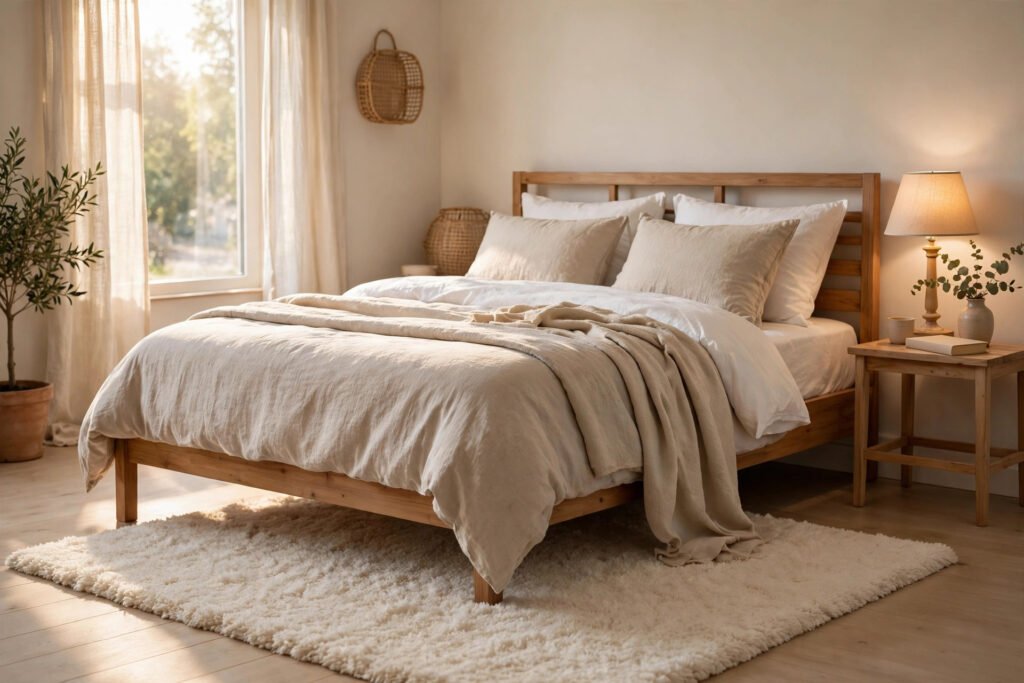
Nothing says cosy quite like a deep, soft shag rug beside the bed. Stepping onto a thick pile first thing in the morning is one of the small luxuries that makes a bedroom feel finished. Most budget shag rugs cost roughly $40–$90 for a 5×7 size, which suits a single or small double bed. They shed a little at first, so vacuum them on a low setting and skip the beater bar.
Pros: wonderfully soft underfoot, adds instant warmth and texture, hides minor floor imperfections.
Cons: sheds at first, traps dust and needs regular vacuuming, not ideal for allergy sufferers.
2. The Washable Low-Pile Rug
If you like the idea of a rug you can simply throw in the washing machine, a washable low-pile rug is the pick for you. These rugs are made from thin, flexible materials that fold easily, dry quickly and come back looking fresh. Washable rugs usually cost roughly $35–$80 depending on size, and many come with a non-slip backing so they stay put on wood or laminate floors. The pile is short, so the feel underfoot is smooth rather than plush.
Pros: machine washable, dries fast, non-slip backing included, easy to vacuum.
Cons: thin feel underfoot, less cushioning than a thick rug, patterns can fade after many washes.
3. The Classic Wool-Blend Rug
A wool-blend rug is the workhorse of bedroom flooring. Wool is naturally warm, resists stains better than many people expect and holds its shape for years, while the blend keeps the price well below a pure wool rug. Expect to pay roughly $60–$120 for a 5×7 wool-blend rug, with larger 8×10 sizes running higher. Choose a medium pile and a cotton or jute backing, which lasts longer than thin latex.
Pros: durable and long lasting, naturally warm, resists stains, suits any style.
Cons: more expensive than synthetic rugs, needs gentle cleaning, can shed in the first months.
4. The Patterned Vintage-Style Rug
A vintage-style rug with a faded, distressed pattern is one of the easiest ways to make a plain bedroom look styled. The soft, muted colours hide dust and footprints, so the rug looks good between cleans, and the pattern adds character without demanding a bold colour scheme in the rest of the room. These rugs are usually printed or machine-woven in synthetic fibres and cost roughly $40–$100 for a 5×7. Pick a palette that echoes your bedding — a rug that repeats one colour from your duvet or cushions ties the room together. Pair it with the soft layers in our guide to bedding that looks expensive for a pulled-together finish.
Pros: hides dust and stains, adds instant character, works with many colour schemes.
Cons: printed patterns can look flat up close, synthetic fibres feel less luxurious than wool.
5. The Natural Jute Rug
A jute rug brings texture and a relaxed, earthy feel to a bedroom, and it costs far less than most people expect. The woven fibres add warmth to pale floors and suit wooden furniture, linen bedding and neutral walls. Budget jute rugs cost roughly $45–$95 for a 5×7. The weave is firm underfoot rather than soft, so many people layer a smaller, softer rug on top beside the bed — the best of both worlds. Jute does not like damp, so keep it out of humid rooms, and vacuum it regularly because crumbs settle into the weave.
Pros: natural texture, affordable, suits neutral and wooden interiors, very durable.
Cons: firm underfoot, not ideal for damp rooms, crumbs hide in the weave.
6. The Soft Faux-Fur Accent Rug
If a full-size rug is out of budget, a faux-fur accent rug beside the bed gives you the softest landing for the least money. These small rugs — usually about 2×3 or 3×5 — sit exactly where your feet land in the morning, and they add a touch of luxury that belies their price. Most cost roughly $20–$45, making them the cheapest pick here. They need care: shake them out regularly, spot clean marks quickly and avoid high heat when washing, because heat can mat the fibres.
Pros: very cheap, extremely soft, instant luxury feel, easy to move.
Cons: only covers a small area, needs gentle cleaning, fibres can mat over time.
7. The Large 8×10 Rug That Anchors the Room
If your budget stretches to one bigger buy, an 8×10 rug is the size that truly anchors a bedroom. It slides under the bed and extends far enough on both sides that you step onto rug, not bare floor, wherever you get out of bed. Budget 8×10 rugs cost roughly $80–$150 in synthetic fibres or low-pile wool blends. Measure before you buy: the rug should extend at least 18 inches beyond each side of the bed and leave a gap of a few inches from the walls. A rug pad is essential at this size. Our guide to choosing the right rug size for a dining room explains the same measuring rules, which work just as well in a bedroom.
Pros: anchors the whole room, soft landing on both sides of the bed, makes the room look bigger.
Cons: the most expensive pick, heavy to move and clean, needs a rug pad.
How to Choose the Right Size
Size matters more than pattern. For a double or queen bed, a 5×7 works under the bottom two-thirds of the bed, while an 8×10 covers the bed and both sides properly. For a king bed, go 9×12 if the room allows it, or at least an 8×10. Leave at least 18 inches of rug showing on each side of the bed so your feet land on rug. If the rug is too small, it looks like a mat rather than a feature — when in doubt, size up.
How Much Should You Spend?
You can buy a good bedroom rug for roughly $35–$90 in the 5×7 size that suits most double beds. Accent rugs start around $20, washable rugs sit around $35–$80, and a large 8×10 in a decent material costs roughly $80–$150. Start with the size, then the feel: barefoot mornings call for a plush or faux-fur rug, while pets or allergies call for a washable low-pile rug. Check the current price before buying — one well-chosen rug beats two small ones that never quite fit. If you are refreshing the whole room, our budget bedroom makeover ideas under $100 show how a rug fits into a wider low-cost refresh, and our roundup of the best budget duvet covers that look luxe pairs well with any of the rugs above.
FAQs
What size area rug is best for a bedroom?
For a double or queen bed, a 5×7 works if it extends past the sides, but an 8×10 covers both sides fully. For a king bed, a 9×12 is ideal. Leave at least 18 inches of rug beyond each side of the bed.
Are washable rugs good for bedrooms?
Yes, washable rugs are a practical choice for bedrooms. They are easy to clean, dry quickly and usually come with a non-slip backing. Their pile is thinner than a plush rug, so they feel smooth rather than soft.
Should a bedroom rug go under the bed?
Yes, in most cases the rug should slide under the bottom two-thirds of the bed and extend out on both sides, so you step onto rug wherever you get out of bed. A rug pad underneath stops it from creeping.
What is the best rug material for a bedroom?
Wool blends are the most durable and warm, synthetic fibres are the most affordable and easiest to clean, and jute suits a natural look but feels firm underfoot. For softness, choose a plush pile or faux fur; for easy cleaning, choose a washable low-pile rug.
How do I stop a bedroom rug from sliding?
Use a rug pad underneath — it grips both the rug and the floor and adds cushioning. On hard floors, a non-slip rug pad or a rug with a built-in non-slip backing works best. Avoid double-sided tape on wooden floors, as it can damage the finish.