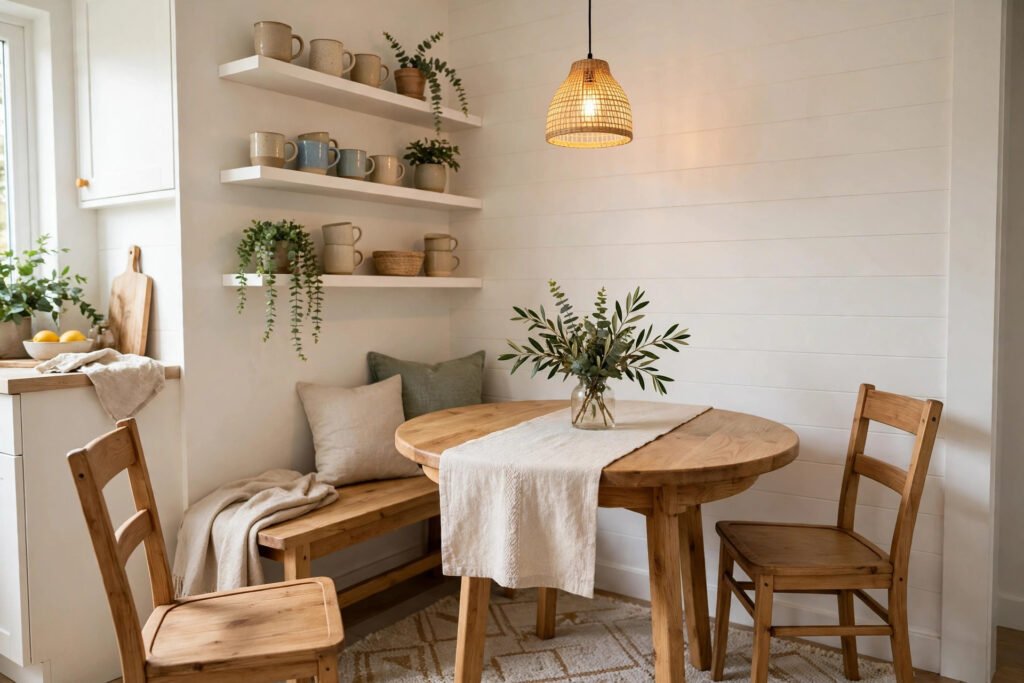

A dining nook is the smallest room that still has to do a proper job. It needs to seat two or three people comfortably, hold a plate, a glass and a bit of elbow room, and still feel like somewhere you actually want to sit — not a table squeezed into a gap by the kitchen door. The good news is that you can style small dining nook budget ideas around a few smart choices rather than a big spend. A round table, a bench against the wall, one good light and a rug underfoot can turn a forgotten corner into the most-used spot in the house.
1. Start With a Table That Fits the Corner
The table decides everything else, so choose it before anything else. A round or oval table is usually the best shape for a nook because there are no sharp corners to bump into, and it seats three people more comfortably than a square table of the same size. A small bistro table, roughly 60 to 75 cm across, seats two in comfort and three at a push.
If the nook doubles as a workspace or a homework spot, look for a drop-leaf or gate-leg table. It folds down against the wall on quiet days and opens up when friends come round. Expect a new budget bistro table to cost roughly $50 to $150, depending on the material; check the current price before buying.
2. Put a Bench Against the Wall
A bench is the single best space-saver in a small dining nook. It slides right up against the wall, so nobody needs room to pull a chair out, and it seats two people in the space one chair would normally take. When dinner is over, it tucks fully under the table and the floor is clear again.
A plain wooden bench costs little, and a cushion on top makes it far more comfortable for long meals. Choose a cushion in a wipe-clean fabric if children eat there, and add one or two throw pillows at the ends so the bench feels like a seat, not a perch. If you like the look, our guide to budget-friendly entryway bench ideas shows the same bench-first thinking applied to another tight space.
3. Mix Two Chairs Instead of a Matching Set
A full matching set of four chairs is usually too much furniture for a nook, and it costs more than you need to spend. Two chairs — one on each open side of the table, with the bench on the third — is enough for most households, and it leaves the nook feeling open rather than crowded.
Mixing chairs is also a chance to save money and add character. A pair of second-hand wooden chairs painted the same colour looks deliberate, not mismatched, and a single upholstered chair at one end adds comfort where it matters most.
4. Use the Wall Above and Beside the Table
In a nook, the wall is free storage and free decoration. A pair of floating shelves above the bench holds mugs, small plants and a stack of placemats, and it draws the eye upward, which makes the whole corner feel taller.
Hang one piece of art at eye level when seated, not standing — roughly 120 to 140 cm from the floor. A single large print works better than a cluster of small frames in a tight space, because it gives the eye one place to rest. If you want more ideas for that wall, our roundup of affordable dining table centerpiece ideas for everyday meals covers the tabletop side of the same problem.
5. Give the Nook Its Own Light
Lighting is what separates a dining nook from a table in a corridor. One small pendant hung low over the table — roughly 75 to 90 cm above the tabletop — creates a pool of warm light that makes even a weeknight supper feel intentional. If you cannot wire in a pendant, a plug-in pendant or a small wall sconce beside the table does the same job with no electrician needed.
Choose a warm bulb, around 2700K, and a dimmer if you can. Bright white light makes a small corner feel like an office; warm light makes it feel like a cafe. For more on choosing the right fitting, see our guide to affordable dining room lighting ideas.
6. Anchor the Corner With a Rug
A rug is the quickest way to tell the eye that this corner is a room of its own. It defines the dining area inside an open-plan kitchen or living room, softens the sound of chairs scraping, and catches the crumbs that would otherwise spread across the floor.
Size matters more than pattern here. The rug should be big enough that chairs stay on it even when pulled out — allow roughly 60 cm of rug beyond the table on each side. A flat-weave or low-pile rug is the practical choice, since it is easy to vacuum and does not trap food.
7. Dress the Table Simply, and Change It With the Seasons
A dressed table is what makes a nook feel finished rather than functional. You do not need much: a short runner down the middle, a small vase or a bowl of fruit, and two placemats are enough.
Keep the centrepiece low so people can see each other across the table — a jam jar of greenery beats a tall candlestick in a nook. Swap the runner and the placemats with the seasons for a fresh look at almost no cost; our roundup of the best budget table runners for everyday dining has options that cost less than a takeaway.
Putting It All Together on a Small Budget
Work in this order and the nook comes together without wasted spending: table first, then bench and chairs, then light, then rug, then the dressing. Buy the table and seating before the decor, because a beautiful runner cannot fix a table that is too big for the corner.
Set a rough budget before you start browsing — many people style a whole nook for roughly $150 to $300 using a mix of new and second-hand pieces — and buy the biggest items first. For more small-space thinking, our guide to how to decorate a small dining room on a budget applies the same ideas to a slightly larger room.
Frequently Asked Questions
What size table fits a small dining nook?
A round table 60 to 75 cm across suits two people, while a 90 cm round or a 120 by 75 cm rectangular table seats four in a tight space. Leave at least 75 cm behind each chair so people can stand up without hitting the wall.
Is a bench better than chairs in a dining nook?
Usually, yes. A bench takes up less floor space, seats more people, and slides under the table when not in use. Pair it with one or two chairs on the open sides so the nook still feels balanced and guests have a chair with a back.
How do I make a dining nook feel separate from the kitchen?
A rug under the table, a pendant light hung over it, and a different wall colour or a single piece of art all mark the nook as its own space. Even one of these is enough — you do not need a partition or a room divider.
Can I style a dining nook in a rented home?
Yes, and most of the ideas above are renter-friendly. Freestanding furniture, a rug, a plug-in pendant, and picture ledges hung on removable hooks or a single small nail all come with you when you move. Avoid anything that needs wiring or drilling into tiles.
What is the cheapest way to make a dining nook look good?
Start with light and textiles. A warm bulb in a pendant, a clean tablecloth or runner, and a small vase of greenery cost very little and change the feel of the corner more than any single piece of furniture. Add a cushion to the bench next, then a rug when the budget allows.
Final Thoughts
A small dining nook does not need a big budget or a big room — it needs the right table, seating that hugs the wall, and one warm light. Style small dining nook budget choices around those three things first, then add the rug, the shelves and the table dressing as you go. Done that way, the smallest corner in the house can become the place where everyone ends up sitting, morning and night.