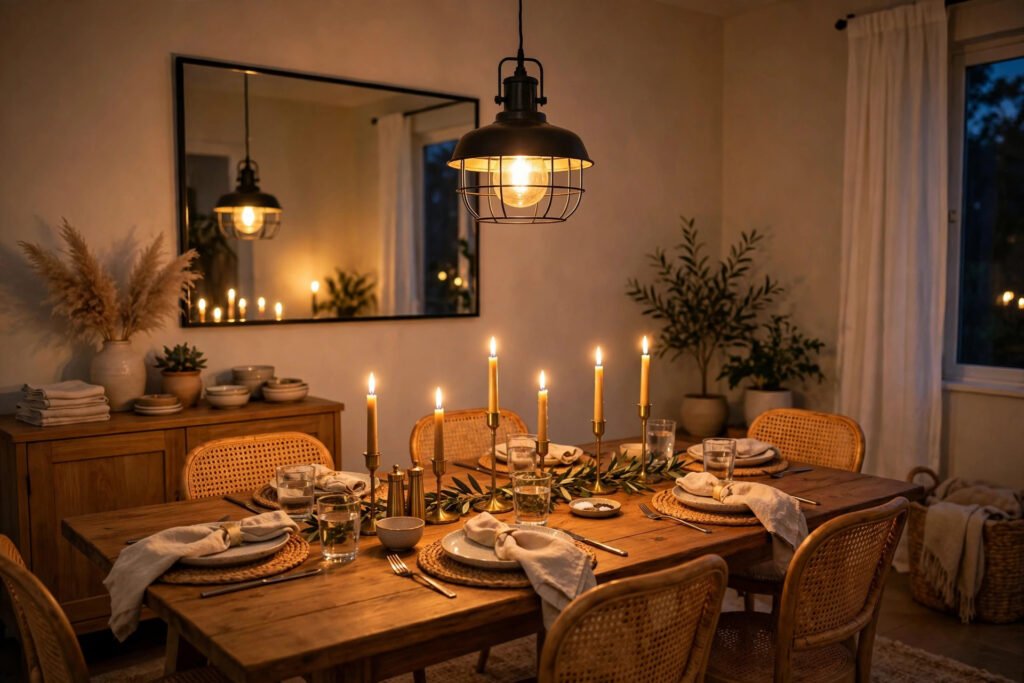

Affordable Dining Room Lighting Ideas
Affordable dining room lighting ideas can change the whole mood of a room for less than the cost of a takeaway dinner. The dining room is where you eat, talk, celebrate, and sometimes work, yet its lighting is often a single harsh ceiling bulb that flatters nobody and nothing. You do not need an electrician, a designer, or a big budget to fix it. A well-chosen pendant, a dimmer switch, a few candles, and some clever layering can make the same room feel warm and inviting every evening. These seven ideas work in rented flats and owned homes alike, and most cost less than a new set of dining chairs.
1. Hang One Statement Pendant Over the Table
One pendant light centred over the dining table is the single most effective change you can make. It pulls the eye to the table, creates a pool of warm light exactly where you eat, and makes the rest of the room feel calm by comparison. A single drum, dome, or globe pendant in black metal, rattan, or frosted glass usually costs roughly $30–$80, and many budget versions look far more expensive than they are. Check the current price before buying, as lighting goes on sale often.
Hang it so the bottom of the shade sits about 75–90 cm above the tabletop — low enough to feel intimate, high enough that nobody bumps their head. A plug-in pendant with a swag hook needs no wiring, which makes it renter-friendly. For more pendant inspiration, see our roundup of the best budget pendant lights for dining rooms (https://somedecor.com/best-budget-pendant-lights/).
2. Try a Budget Chandelier
A chandelier sounds expensive, but budget versions in black metal, wood beads, or simple crystal-look glass are widely available for roughly $60–$150. A small chandelier over a round table, or a linear one over a long rectangular table, makes weeknight dinners feel like an occasion. Wood-bead chandeliers are a good budget pick because they look handmade and warm, while simple black metal frames suit almost any style.
Size matters more than sparkle. A chandelier should be about one-half to two-thirds the width of your table — too small and it looks lost, too big and it crowds the room. Measure the table first, then shop. Renters can look for a plug-in chandelier that hangs from a ceiling hook, or simply enjoy the one they already have with a warmer bulb and a dimmer.
3. Add a Dimmer Switch
A dimmer is the cheapest luxury in home lighting. For roughly $10–$25, a dimmer switch (or a plug-in dimmer for lamps) lets you turn the same light from bright and practical for homework down to soft and golden for dinner.
If you own your home, swapping a standard switch for a dimmer is a simple job for anyone comfortable with basic wiring. Renters can get the same effect with smart bulbs, which dim from an app or a voice command and need no wiring at all. Use warm-white bulbs around 2700K for dining; cool white light makes food look flat and faces look tired.
4. Layer With Wall Sconces or a Floor Lamp
One ceiling light alone always leaves dark corners. Adding a second layer — a pair of wall sconces, a slim floor lamp in the corner, or a small table lamp on a sideboard — fills the room out and lets you light it softly from several directions instead of blasting it from above. Plug-in sconces that mount with a couple of screws (or even adhesive hooks for renters) cost roughly $20–$50 each.
Place sconces on the wall opposite the table, or flanking a sideboard or a mirror, so the light bounces gently around the room. A floor lamp with a fabric shade works just as well in a corner and moves with you when you rearrange.
5. Use Candles as Everyday Lighting
Candles are the oldest dining-room lighting trick, and still one of the best. A few pillar candles in simple glass holders, a pair of taper candles in brass candlesticks, or a cluster of LED flameless candles down the centre of the table adds a warm glow that no bulb quite matches. Real candles cost almost nothing; a set of three pillar candles in glass holders is usually roughly $10–$20.
Keep candles in the centre of the table, away from placemats and sleeves, and never leave them burning unattended. Flameless LED candles are the safer choice if you have children or pets. Our roundup of the best budget candles and candle holders for a cozy home (https://somedecor.com/best-budget-candles-candle-holders/) has plenty of affordable options that work beautifully on a dining table.
6. Swap the Bulbs Before You Swap the Fitting
Before you buy a single new light, try changing the bulbs. Many dining rooms feel cold and harsh simply because they have daylight-white bulbs, and a pack of warm-white LED bulbs costs roughly $8–$15. Choose 2700K for a warm, candle-like glow, and pick a bulb with a high colour-rendering index if you can — food looks better under it.
Try a larger, decorative bulb too. A big Edison-style globe bulb in an open pendant looks intentional and stylish, and it throws a softer, wider light than a small bulb hidden inside a shade. This is the fastest and cheapest of all the affordable dining room lighting ideas on this list, and it takes about five minutes.
7. Bounce Light With a Mirror
A mirror opposite a window or beside a light fitting doubles the light in a dining room without adding a single bulb. It reflects both daylight and lamplight, makes the room feel larger, and adds a decorative focal point at the same time. A large, simple mirror with a slim frame costs roughly $30–$70, and thrift shops are full of them for far less.
Hang the mirror so it reflects something worth seeing — a window, the pendant over the table, or a piece of art — rather than a blank wall or the kitchen door.
How to Get the Height and Size Right
Getting the height right matters more than the style you choose. A pendant or chandelier should hang with its lowest point about 75–90 cm above the table, and the fitting should be roughly one-half to two-thirds as wide as the table. If your ceilings are low, choose a flush or semi-flush fitting, or a pendant with a short drop, so nobody has to duck.
For a long table, two smaller pendants spread the light more evenly; for a round table, one central fitting is usually perfect. Our guide to affordable dining room decor ideas (https://somedecor.com/affordable-dining-room-decor/) has more tips on balancing the table, chairs, and lighting together.
Layering Light for Every Occasion
The secret to good dining room lighting is layering: one main light over the table, one softer light at the edges of the room, and one low, warm glow — candles or a small lamp — for atmosphere. Use all three for a dinner party, just the pendant for a family meal, and just the candles and a lamp for a quiet evening. A dimmer on the main light makes every combination adjustable.
Frequently Asked Questions
What is the best lighting for a dining room on a budget?
A single pendant or small chandelier over the table, warm-white bulbs, and a dimmer give the best result for the least money. Add candles on the table for atmosphere, and you have a complete dining room lighting setup for roughly $50–$100.
How low should a pendant light hang over a dining table?
The bottom of the pendant should sit about 75–90 cm above the tabletop. This is low enough to create an intimate pool of light over the meal, but high enough that it does not block the view across the table or get in anyone’s way.
Can I improve dining room lighting without an electrician?
Yes. Plug-in pendants, plug-in sconces, floor lamps, smart bulbs, and candles all need no wiring. Changing bulbs to warm white and adding a plug-in dimmer are also simple jobs that make a big difference without touching the electrics.
What colour temperature is best for a dining room?
Warm white, around 2700K, is best for a dining room. It makes food look appetising, skin look healthy, and the room feel cosy. Avoid cool white or daylight bulbs, which make a dining room feel like an office.
How many lights does a dining room need?
Most dining rooms need three layers: a main light over the table, a secondary light at the edges of the room such as a sconce or floor lamp, and a low glow from candles or a small lamp. You rarely need all three at full brightness at once — the layers give you options.