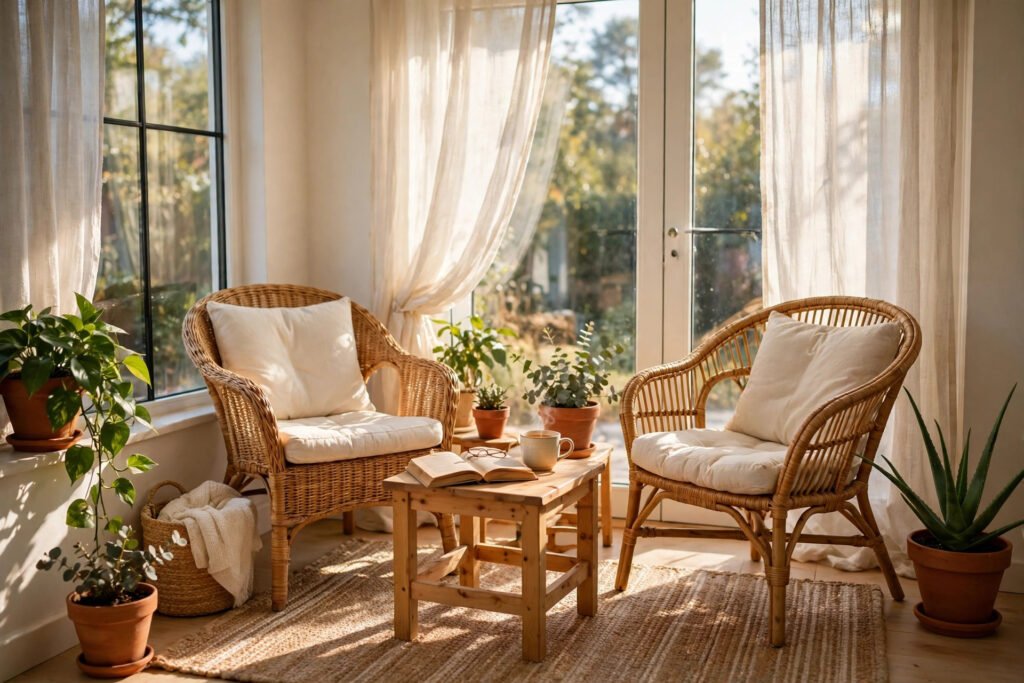

A sunroom is the brightest room in the house and often the hardest to decorate. The light that makes it lovely also fades fabrics, overheats the space by midday and makes cheap furniture look tired within a season. The good news is that a small sunroom needs very little to feel finished. These decorate small sunroom budget ideas work with the light instead of fighting it, and none of them needs a big spend or a single power tool.
1. Start With Shade You Can Control
Sun is the whole point of a sunroom, but too much of it makes the room unusable. Before you buy a single cushion, sort out the shade. Sheer linen-look curtains on a slim tension rod are the cheapest fix: they soften the glare without blocking the view, and a pair for a standard window usually costs a few pounds.
A roller blind is the tidier option if you prefer clean lines, and stick-on UV window film is the renter-friendly answer when you cannot put up rods — it cuts heat and glare, sticks with water, and peels off cleanly. Whichever you choose, make sure you can open and close it easily: a sunroom needs full sun in the morning and shade by mid-afternoon.
2. Choose Furniture That Can Take the Sun
Ordinary indoor furniture does not last here: dark leather cracks, painted wood peels and pale fabric fades unevenly. The safest choices are the ones made for the outdoors: wicker, rattan, powder-coated metal and teak-style wood all cope with heat and bright light far better than indoor pieces.
Look for a small two-seater, a pair of chairs or a compact bistro set, depending on how you want to use the room. Second-hand wicker chairs are easy to find for a few pounds and look better with age than most new budget furniture. Add seat pads rather than buying upholstered chairs — pads are cheap, washable and easy to swap when they fade. For more ideas on furnishing a small space without crowding it, see our small living room ideas.
3. Layer a Rug to Define the Space
A bare sunroom floor feels cold and echoey, even in summer. A rug fixes that instantly and gives the furniture something to sit on. Choose an indoor-outdoor rug in a flat weave: they handle sun and the odd splash, hose clean, and a small one usually costs roughly £20–£40 — check the current price before buying.
Keep the pattern simple. A soft stripe, a pale jute look or a faded vintage pattern all work, because the view outside is already doing the visual work. Size it so the front legs of every chair sit on the rug — that single rule is what makes a small seating area look intentional instead of scattered. If the rug slides on a smooth floor, a small piece of rug grip underneath costs almost nothing.
4. Fill It With Plants That Love the Light
Plants are the cheapest decoration you can buy, and a sunroom is where sun-lovers genuinely thrive. Citrus trees in pots, succulents, spider plants and trailing pothos all love bright light, and a small plant usually costs a few pounds at a garden centre or supermarket.
Group plants in threes at different heights: one tall plant in a floor pot, one medium plant on a stool or plant stand, and one small trailing plant on a shelf or hanging hook. Use matching pots in terracotta, white or a single colour so the group reads as a display rather than a jumble. Water sunroom plants more often than houseplants elsewhere — the heat dries the soil fast — and turn the pots every week so they grow evenly. For spots where real plants will not survive, our best affordable faux plants are realistic lookalikes.
5. Add Soft Furnishings in Washable Fabrics
A sunroom without soft furnishings feels like a greenhouse with chairs in it. Cushions, a throw and a small blanket are what turn it into a room you want to sit in — but only if the fabrics can cope. Choose covers you can take off and wash: cotton canvas, linen-look blends and outdoor-grade fabric all survive the sun far better than velvet or silk.
Stick to a palette of two or three colours and let one of them be warm. Pale walls and pale furniture can look washed out under strong light, so a terracotta, sage green or warm mustard cushion stops the room feeling clinical. A throw draped over one chair arm is enough. Buy cushion covers rather than whole cushions — covers cost a few pounds each, and you can change the look of the whole room next season for the price of a takeaway.
6. Use One Warm Anchor Against All That Light
Sunrooms are full of glass, pale walls and hard floors. One warm, natural element fixes that cold feeling: a wooden side table, a woven basket, a rattan tray or a terracotta pot. Wood and woven textures soften the glare in a way that glass and metal cannot.
A small wooden side table between two chairs is the most useful anchor — it holds a book, a cup of tea and a candle, and it costs very little second-hand. A large woven basket in the corner hides throws and magazines, so the room stays tidy without extra storage furniture. Keep it to one or two warm pieces; too many and the room starts to look cluttered.
7. Make It Usable After Dark
A sunroom that only works in daylight is half a room. A little evening light turns it into the best seat in the house after sunset, and it costs almost nothing. A string of warm-white fairy lights along the top of the windows is the cheapest option — battery-powered sets cost a few pounds and switch off with a timer.
A pair of lanterns with battery candles on the floor or the side table gives a softer glow, and a solar lantern charged on the sill during the day costs nothing to run. Choose warm light, around 2700K, and keep it low and soft rather than bright overhead light, which kills the mood instantly.
A Simple Sunroom Plan for One Weekend
You do not need to do all seven ideas at once. Start with shade, because nothing else works until the room is comfortable at midday. Then add the rug and one seating group, and let the plants and soft furnishings follow over the next few weekends. A small sunroom decorated this way costs very little, and because everything is washable, movable or replaceable, you can change the look whenever you like. If your sunroom opens onto a balcony or patio, our budget balcony furniture ideas carry the same sun-proof pieces outside.
Frequently Asked Questions
What is the best furniture for a small sunroom?
Wicker, rattan, powder-coated metal and teak-style wood cope best with heat and bright light. Avoid dark leather and pale upholstered furniture, which crack and fade fast in strong sun. Seat pads are better than fixed upholstery because they are cheap, washable and easy to replace.
How do I keep a sunroom cool in summer?
Start with shade you can control: sheer curtains, a roller blind or stick-on UV window film all cut heat and glare. Open windows on opposite sides for a cross-breeze, and avoid dark furniture and rugs, which absorb heat.
Can I use regular indoor furniture in a sunroom?
You can, but it will not last as long. Strong sun fades fabric unevenly, dries out wood and cracks leather. If you do use indoor pieces, keep them out of direct sun where possible, choose washable covers, and accept that cushions and throws will need replacing sooner.
How do I decorate a sunroom on a very small budget?
Start with the three cheapest changes: sheer curtains or window film for shade, a small indoor-outdoor rug to define the seating area, and three sun-loving plants in matching pots. Second-hand wicker chairs and washable cushion covers finish the look for very little.
What plants do best in a sunroom?
Sun-loving plants do best: citrus trees in pots, succulents, spider plants and trailing pothos all thrive in bright light. Water them more often than houseplants in other rooms, because the heat dries the soil quickly, and turn the pots weekly so they grow evenly.
A small sunroom does not need expensive furniture or a designer to feel like the best room in the house. Shade you can control, furniture that can take the sun, a rug under your feet and a few plants in matching pots are enough — and that is the whole point of these decorate small sunroom budget ideas: small, cheap changes that turn the brightest room in the house into the one you actually use.