
Best Affordable Doormats for Every Season
Disclosure: This article contains affiliate links. As an Amazon Associate, we earn from qualifying purchases. If you buy through these links, we may earn a small commission at no extra cost to you.
The best affordable doormats do more than welcome guests — they protect your floors from mud, rain, snow and grit all year round. A good doormat traps dirt before it reaches your hallway and can last for years without costing much. Most budget mats cost roughly $10 to $35, depending on size and material, so check the current price before buying.
This roundup is based on specs, features and customer feedback rather than lab testing. We compared the most popular affordable styles — coir, rubber, cotton, microfibre and scraper mats — and noted the honest pros and cons of each.
1. Classic Coir Doormat
A coir doormat, made from coconut husk fibres, is the classic choice and the one most homes start with. The stiff bristles scrape mud and grit off shoes, and the natural brown colour hides dirt well. Coir mats suit covered porches best, because heavy rain makes the fibres shed and break down faster.
Pick a mat around 45 by 75 centimetres for a standard front door, and choose a thick one — around 2 centimetres deep — so it traps more dirt.
Pros: excellent at scraping dirt, natural look, very affordable.
Cons: sheds fibres at first; not ideal in uncovered, rainy spots.
2. Heavy-Duty Rubber Doormat
Rubber doormats are the toughest option and the best choice for winter. They do not absorb water, they grip the ground, and they stand up to snow, salt and slush without falling apart. Many have raised patterns that channel water away from shoes, so the mat does not turn into a puddle.
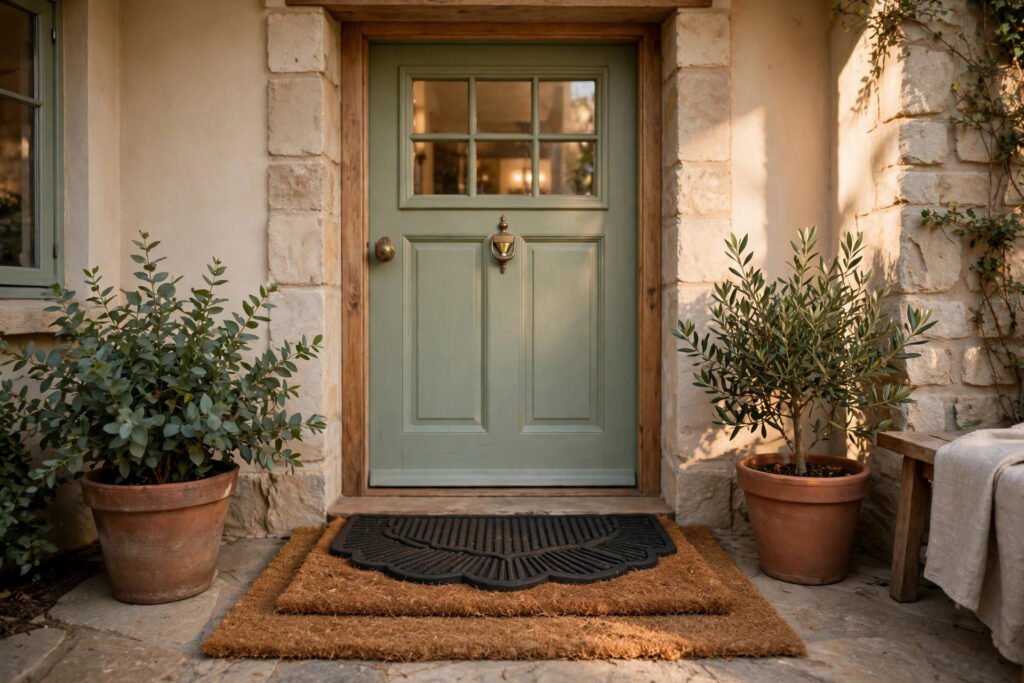
A rubber mat is also a good pick for a back door or a mudroom. The downside is the look — plain black rubber is practical but not pretty. If you want style as well, layer a smaller decorative mat on top: the rubber does the work and the top mat does the decorating. For more ideas on dressing up the space around your door, see our guide to budget entryway decor ideas.
Pros: weatherproof, non-slip, survives winter and salt.
Cons: plain appearance; can smell slightly when new.
3. Low-Profile Indoor-Outdoor Mat
Spring brings rain and mud, and a low-profile indoor-outdoor mat is the practical answer. These mats are usually made from woven polypropylene or a similar synthetic fibre, which dries quickly and resists mildew. Their low height — often under 1 centimetre — means doors swing over them without catching.
They come in the widest range of patterns and colours, so they add style to a doorway for very little money.
Pros: dries fast, door-friendly height, huge choice of colours and patterns.
Cons: thinner mats trap less dirt than coir; can slide on smooth floors without a backing.
4. Washable Cotton Doormat
Summer means dusty shoes, sandy feet and kids running in and out, so a washable cotton doormat earns its keep. Cotton mats are soft underfoot, absorbent, and — the key point — you can throw them in the washing machine when they get dirty. That makes them ideal for homes with pets or small children.
Cotton mats work best indoors, just inside the door, where they catch the fine dust that outdoor mats miss. They are not weatherproof, so keep them out of direct rain.
Pros: machine washable, soft and absorbent, great for pet owners.
Cons: indoor use only; can shrink if washed too hot.
5. Seasonal Doormat with Interchangeable Inserts
If you like decorating for the seasons, a doormat with interchangeable inserts is the smartest buy. The base is usually a rubber tray with a raised border, and the insert — a coir or fabric panel — swaps out in seconds. Buy one base and a few inserts for autumn, winter, spring and summer.
This works out cheaper than buying four separate mats, and the rubber tray keeps the insert in place while catching water underneath.
Pros: one base, many looks; easy to swap; festive and fun.
Cons: inserts sold separately add up; sizes are not standard across brands.
6. Scraper Mat with Drainage Holes
Autumn leaves, wet mud and fallen twigs call for a scraper mat with drainage holes. These mats — usually rubber or heavy-duty plastic — have raised nubs or a grid pattern that scrapes boots clean, while holes let water and mud drain through instead of pooling on the surface.
They are the best choice for a garden door, a side entrance or any doorway that gets heavy muddy traffic, and they are easy to clean: just hose them down. The trade-off is comfort — the raised nubs feel hard under bare feet, so keep this one outside and use a softer mat indoors. Our affordable front porch decor ideas show how to style a porch so a practical mat still looks welcoming.
Pros: drains water and mud, very durable, easy to hose clean.
Cons: hard under bare feet; best kept outdoors only.
7. Non-Slip Absorbent Microfibre Mat
Rainy days need a mat that soaks up water fast, and microfibre does that better than any other budget material. A microfibre doormat absorbs several times its weight in water, so wet shoes leave less puddle on the floor, and the fibres trap fine dust that coarser mats miss.
These mats are slim, soft and usually have a rubber backing so they stay put on hard floors. They are best used indoors, as the second mat in a two-mat setup: a coir or rubber mat outside, and a microfibre mat inside to finish the job.
Pros: very absorbent, traps fine dust, machine washable.
Cons: thin and lightweight; needs a heavier mat outside to do the scraping.
How to Choose the Right Doormat
Start with size. A doormat should be at least as wide as your door — ideally a little wider, so visitors naturally step on it. Measure the door before you order, and check the clearance underneath it: a thick mat can stop a door from opening.
Next, think about where the mat will live. An uncovered porch needs rubber or polypropylene, which shrug off rain. A covered porch can take coir. Indoors, cotton or microfibre are the comfortable choices. Many homes use two mats — one outside for scraping and one inside for absorbing — and that combination keeps floors cleaner than any single mat.
Common Doormat Mistakes to Avoid
The most common mistake is buying a mat that is too small. A mat narrower than the door looks wrong and misses half the dirt. Another is using an indoor mat outdoors — cotton and fabric mats soak up rain, go musty and wear out in weeks.
FAQs
What size doormat should I buy for a standard front door?
For a standard single door, a mat around 45 by 75 centimetres works well. For a double door, go wider — around 60 by 90 centimetres — so it spans the full doorway.
Are coir doormats good for rainy weather?
Coir doormats are good at scraping dirt but they absorb water and shed fibres when they stay wet. They work best on a covered porch. For an uncovered, rainy doorway, a rubber or polypropylene mat is a better choice.
How often should I replace a doormat?
A budget doormat usually lasts one to two years with regular use, depending on the material and the weather it faces. Replace it when the fibres are flat, the backing is cracked, or it no longer traps dirt.
Can I wash a doormat in the washing machine?
Cotton and microfibre doormats are usually machine washable — check the label and use a gentle cycle with cold water. Coir and rubber mats should not go in the machine; shake coir mats out and hose rubber mats down instead.
Should I use one doormat or two?
Two mats work best: a tough scraper mat outside the door and a softer absorbent mat inside. The outdoor mat removes mud and grit, while the indoor mat catches the moisture and fine dust that remain.
Final Thoughts
The best affordable doormats are the ones matched to your doorway and your weather, not the prettiest ones on the shelf. A coir mat for a covered porch, a rubber mat for winter, a washable cotton mat indoors and a scraper mat for muddy autumn days — each one does a different job, and most cost less than a takeaway. Start with one good mat outside and one absorbent mat inside, and your floors will stay cleaner all year. For more seasonal styling ideas, see our outdoor patio decor ideas and budget Christmas decor ideas.



Pingback: DIY Budget Wreath Ideas: 7 Front Door Wreaths Under $20