
Why Paint Colour Matters So Much in a Small Room
In a large room, paint is mostly decoration. In a small room, paint is structure. Your eye reads the walls, ceiling and trim as the boundaries of the space, and colour changes how those boundaries feel. Light colours reflect more light, which is why they make a room feel airy. Dark colours absorb light, which can feel cosy or cave-like.
Light is the other half of the equation. A north-facing room gets cool, bluish light all day, while a south-facing room gets warm, golden light — so the same tin of paint can look different in different rooms. Think about when you use the room: a bedroom seen mostly in the evening behaves differently from a kitchen used at midday.
The Best Paint Colours for Small Rooms
There is no single “correct” colour for a small room, but some shades consistently do the heavy lifting. These are the ones worth considering first.
1. Soft White
Not brilliant white, which can feel cold and clinical, but a soft white with a warm or neutral undertone. Soft white bounces light around the room, works with every style of furniture and makes the walls visually recede. For furnishing ideas to match, see our guide to small bedroom decor ideas on a budget: https://somedecor.com/small-bedroom-decor-ideas-budget/
2. Pale Grey
Light grey feels calm and grown-up, and it pairs beautifully with both warm wood and cool metal. Pick a warm-toned grey for a cold-feeling room, or a cooler grey for a room with warm afternoon sun. Keep it pale — once grey goes mid-tone, it starts to close a small room in.
3. Light Blue
Pale blue is one of the best tricks for small rooms because blue naturally reads as “far away” to the human eye — think of the sky and the sea. A soft, muted blue can make the room feel deeper than it is, and it works especially well in bedrooms and bathrooms. Avoid anything too bright; you want a whisper of blue, not a swimming pool.
4. Sage Green
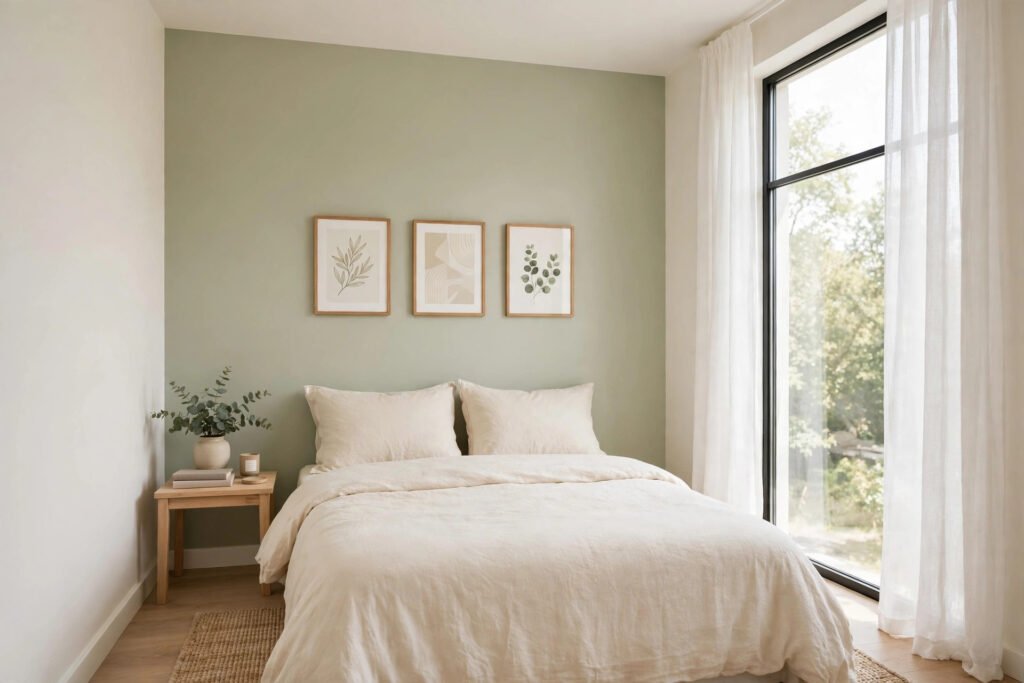
Sage is a soft, grey-green that feels fresh without being loud. It brings a touch of nature indoors, which suits small rooms that lack a view, and it works with wood, rattan, cream and black alike. It also hides scuffs better than white — a safe middle ground if you want colour without going bold.
5. Warm Greige
Greige — a blend of grey and beige — is what designers reach for when they want warmth without yellowness. Softer than grey and calmer than beige, it flatters a bedroom. A pale greige makes a small room feel warm and welcoming rather than stark, and it suits the ideas in our small living room ideas guide: https://somedecor.com/small-living-room-ideas/
6. Pale Blush
A very pale blush pink reads almost like a warm neutral on the wall, but it adds a gentle glow that white cannot. It suits bedrooms and nurseries, and pairs well with grey, navy and natural wood. Keep it light — a dusty or muted blush, never bubblegum.
Colours to Be Careful With
Very dark colours. Deep navy, charcoal and forest green can look stunning in a small room, but only with good natural light and full commitment. A dark colour on one wall with light everywhere else usually looks like a mistake. If you love them, use one accent wall in a room with a large window, and keep the ceiling and trim white.
Bright, saturated colours. Vivid red, bright yellow and electric blue demand attention, and in a small room there is nowhere for your eye to rest. Use bold colours in small doses — a painted piece of furniture, a door, or accessories — rather than all four walls.
Pure brilliant white. In a room with little natural light, brilliant white can look grey and dingy rather than bright. A soft white with a warm undertone usually looks cleaner and more inviting.
Finish Matters as Much as Colour
The finish — matt, eggshell, satin or gloss — changes how a colour looks and how practical it is. Matt hides wall imperfections beautifully, but it marks easily and is hard to clean; best for ceilings and low-traffic bedrooms. Eggshell is the sweet spot for most small rooms: a soft, low sheen that is wipeable without being shiny. Satin reflects a little more light, which can help a dark room feel brighter, and it stands up well to cleaning; Gloss is best kept for trim, doors and skirting boards, where its shine makes edges crisp and easy to wipe.
5 Tricks That Make Paint Work Harder in a Small Room
- Paint the ceiling the same colour — or white. A white ceiling reflects light downwards. Painting the ceiling the same pale colour as the walls blurs the line where wall meets ceiling, which can make the room feel taller.
- Keep the trim and walls close in colour. High-contrast trim chops a small room into pieces. When the skirting boards, door frames and walls are close in tone, the room reads as one continuous space and feels larger.
- Use one colour throughout. If your small room opens into a hallway or another small space, carrying the same colour through both makes the whole area feel bigger. Breaking a small home into many different paint colours has the opposite effect — too many competing colours is one of the common budget home decor mistakes to avoid: https://somedecor.com/budget-home-decor-mistakes/
- Let the paint work with your window treatments. A pale wall with curtains hung high and wide makes a window — and the room — feel much larger. Our guide on how to hang curtains the right way: https://somedecor.com/how-to-hang-curtains/ shows exactly where to place the rod for the biggest effect.
- Test in the real light. Never choose a colour from a tiny swatch under shop lighting. Buy sample pots of your top two or three choices and paint large patches — at least a metre square — on different walls, then live with them for two or three days. A patch test is far cheaper than repainting a whole room.
Mistakes to Avoid
- Choosing from a phone screen. Screens lie about colour. Always look at a physical swatch in your own room.
- Ignoring undertones. Every “white” has an undertone — pink, yellow, blue or green. Put your swatch next to a sheet of plain white paper to see it clearly.
- Painting a test patch too small. A tiny square tells you almost nothing.
- Forgetting the floor. Your paint needs to work with your flooring, not fight it. Warm wood floors suit warm whites and greige; cool grey floors suit cooler shades.
- Copying a colour from a photo. The room in the photo has different light, different windows and probably a filter. Use photos for inspiration only.
Choosing a paint colour for a small room is not about following a strict rulebook. It is about understanding how light, colour and finish work together, then testing your shortlist in the room itself. Start with a pale, warm neutral, test it properly and keep the trim and ceiling close in tone — then even the smallest room can feel bright, calm and surprisingly spacious, all for the price of a few tins of paint.
FAQs
What is the best paint color for small room spaces with no windows?
Soft white or pale warm grey in an eggshell or satin finish. Without natural light, you need a colour that reflects as much artificial light as possible. Add warm-toned bulbs and a mirror opposite the door to bounce light around.
Does dark paint really make a small room look smaller?
Usually, yes — dark colours absorb light and make walls feel closer. But with a large window and plenty of daylight, a dark colour can work if the ceiling and trim stay white.
Should I paint the ceiling white in a small room?
White is the safest choice because it reflects light down into the room. Painting the ceiling the same pale colour as the walls also works — it blurs the boundary and can make the ceiling feel higher.
What paint finish is best for a small bedroom?
Eggshell is usually the best all-rounder: it has a soft sheen that reflects a little light, hides minor wall flaws and wipes clean easily.
How do I choose between warm and cool paint colours?
Look at your room’s natural light and your flooring. North-facing rooms and grey-toned floors usually suit warm colours, which balance the cool light. South-facing rooms with warm wood floors often suit cooler colours. When in doubt, test a warm and a cool version side by side for two days.
Related reading: 15 Affordable Home Decor Ideas to Refresh Your Space: https://somedecor.com/15-affordable-home-decor-ideas-to-refresh-your-space/ — Home Decor Styles: Modern vs Farmhouse vs Boho: https://somedecor.com/home-decor-styles/



Pingback: Best Budget Mirrors to Make a Room Look Bigger
Pingback: Affordable Bathroom Decor Ideas for Renters