
How to Choose the Right Size Wall Art for a Room
Learning how to choose wall art size is one of the quickest ways to make a room look finished. Most people pick art they love and hang it wherever it fits — only to find it looks lost on a big wall or cramped above a sofa. Sizing art is not guesswork: a few simple rules, a tape measure and five minutes of planning will get you a result that looks like a designer chose it.
The Two-Thirds Rule: The One Rule to Remember
When art hangs above furniture — a sofa, a bed, a console table — the art (or the group of pieces, measured together) should be about two-thirds as wide as the furniture below it. If your sofa is 210 centimetres wide, look for art around 140 centimetres wide, either as one large piece or as two or three pieces grouped together. If your bed is 180 centimetres wide, aim for art around 120 centimetres wide above the headboard. This ratio feels balanced because the art is clearly connected to the furniture without competing with it. Our guide to budget-friendly gallery wall ideas shows how to group smaller pieces so the total width hits the two-thirds mark, which is often cheaper than buying one very large canvas.
Measure First: What You Actually Need
Before you buy anything, measure the width of the wall, the width of the furniture the art will hang above, and the height from the furniture to the ceiling. Write the numbers down on your phone so you have them in the shop or while browsing online. As a rough guide, art hanging on its own should cover about half to three-quarters of the wall width — on a 300-centimetre wall, that means art around 150–225 centimetres wide in total. Leave at least 15–20 centimetres of breathing room above the furniture and below the ceiling line. Finally, cut the shape out of newspaper and tape it to the wall to test the size before spending money.
Sizing Art Above a Sofa
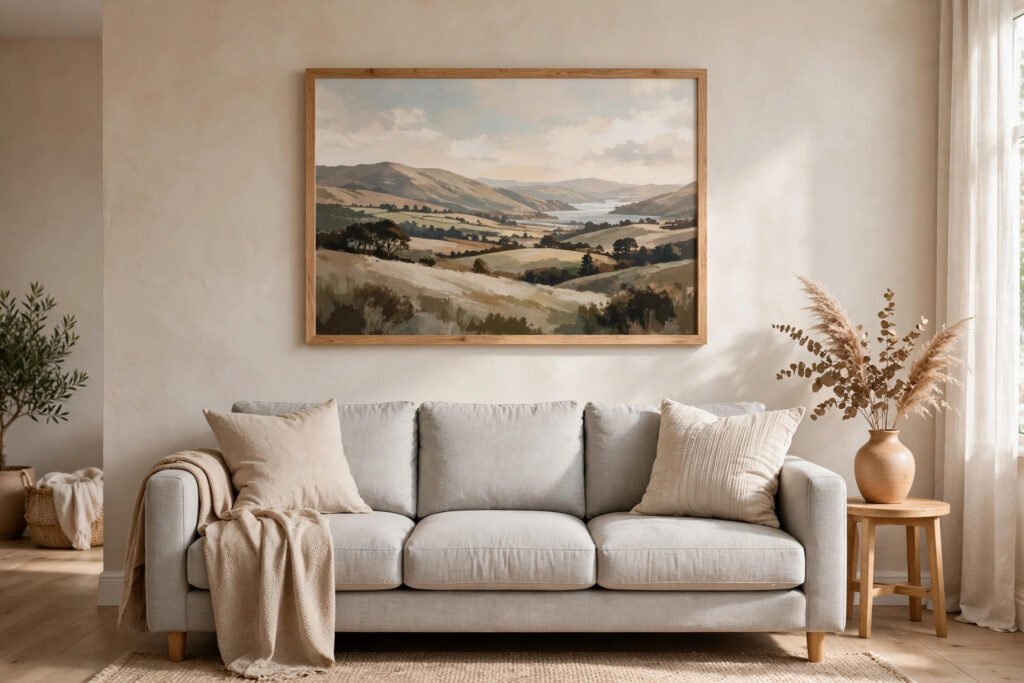
The wall above a sofa is the most common place for art, and the place where sizing mistakes show up most. A single small print centred over a three-seater looks lost, however beautiful it is. Aim for art two-thirds the width of the sofa, with the bottom edge about 15–20 centimetres above the sofa back. For a two-seater (around 160–180 centimetres wide), look for art around 105–120 centimetres wide; for a three-seater (around 200–230 centimetres), aim for 135–155 centimetres. If one piece that wide is too expensive, use two matching pieces side by side with a gap of about 5–8 centimetres — the total width is what counts. Avoid art wider than the sofa arms. When choosing between two sizes, pick the larger one: most people buy too small. Our guide on how to decorate above a sofa has more ideas for what to pair with the art once the size is right.
Sizing Art Above a Bed
Art above a bed follows the same two-thirds rule, measured against the bed or the headboard, whichever is wider. For a double bed (around 140–150 centimetres), art around 95–100 centimetres wide works well; for a king-size bed (around 180 centimetres), aim for about 120 centimetres. Keep the bottom of the art about 15–20 centimetres above the headboard, with at least 20–25 centimetres of clear wall above it so it does not crowd the ceiling. A horizontal, landscape-shaped piece usually suits the space above a bed better than a tall portrait one. If you prefer a portrait print, hang two side by side so the group reads as one wide shape. For affordable options, see our roundup of the best budget wall art for bedrooms.
Sizing Art Above a Console Table or Sideboard
Console tables and sideboards are narrower than sofas, so the art above them can be smaller — but the two-thirds rule still applies. A console table 120 centimetres wide suits art around 80 centimetres wide; a sideboard 150 centimetres wide suits art around 100 centimetres wide. Because these pieces often hold lamps, vases or books, leave about 20–25 centimetres between the top of the objects and the bottom of the art, or the two will compete and the wall will feel cluttered. Above a dining table, hang the bottom edge about 20–25 centimetres above the table surface, since people are seated and looking at it from below eye level.
Big Blank Walls: Go Large or Go Grouped
A large, empty wall is the hardest to get right, because small art disappears on it. You have two good options: one very large piece, or a group of pieces that together fill the space. A single statement piece should be at least 100 centimetres wide on a wall wider than 300 centimetres — anything smaller will look like a postage stamp. The grouped option is more budget-friendly: arrange three, four or six pieces in a grid, measuring the group as a whole so its total width is roughly two-thirds of the wall. Keep the gaps between pieces consistent — about 5–8 centimetres — so the group reads as one arrangement. Cheap frames in the same colour tie different prints together, and our roundup of the best budget picture frames for a gallery wall covers frames that look far more expensive than they are.
Small Rooms and Narrow Walls
Small rooms need the opposite thinking. On a narrow wall — a hallway, a small bathroom, the wall beside a door — a single medium piece beats a large one every time. Aim for art around half the width of the wall, and choose a vertical, portrait-shaped piece that suits the tall, narrow space. In a small bedroom or a compact living room, one well-sized piece above the bed or sofa is better than several small ones spread around — too many small frames make a small room feel busy. In a room with low ceilings, avoid very tall art, since it draws the eye up and makes the ceiling feel lower.
How High Should You Hang It?
Size and height work together. For art on a bare wall with no furniture beneath it, hang it so its centre sits at eye level — about 145–150 centimetres from the floor. When art hangs above furniture, the furniture sets the height instead: the bottom edge should sit 15–20 centimetres above the sofa back, headboard or tabletop. This usually puts the centre a little above eye level, which is fine — the furniture anchors the arrangement. For a gallery wall, treat the whole group as one piece and centre it at eye level, starting with the middle piece and building outwards.
Common Sizing Mistakes to Avoid
The most common mistake is buying art that is too small. Prints look bigger in a shop or on a screen than they do on your wall, so when in doubt, size up — a piece slightly too large looks confident, while a piece slightly too small looks like a mistake. The second mistake is hanging art too high: art hung near the ceiling feels disconnected from the furniture below it, so if there is a big gap between the sofa and the art, lower it. The third mistake is ignoring the frame — the measurements in this guide are for the whole framed piece, so measure the outside edge of the frame, including any mount.
Frequently Asked Questions
How do I choose wall art size for a living room?
Multiply the sofa width by two-thirds — that is the width your art should be, as one piece or a group. For a three-seater around 210 centimetres wide, aim for art around 140 centimetres wide.
What size wall art should go above a sofa?
Art above a sofa should be about two-thirds as wide as the sofa: roughly 105–120 centimetres for a two-seater, and 135–155 centimetres for a three-seater. Grouped smaller pieces count as one width if the gaps between them are small and even.
Is it better to buy one large piece or several small ones?
Both work. One large piece has more impact, while a group is usually cheaper and easier to rearrange. Either way, the total width should be about two-thirds the width of the furniture below it.
How high should wall art hang above a sofa or bed?
Hang art so the bottom edge sits 15–20 centimetres above the sofa back or headboard. On a bare wall, hang it so the centre is at eye level, about 145–150 centimetres from the floor.
What size art works on a big blank wall?
On a wall wider than 300 centimetres, a single piece should be at least 100 centimetres wide, or use a group whose total width is about two-thirds of the wall. Anything smaller will look lost.
Final Thoughts
How to choose wall art size comes down to two measurements and one rule: measure the wall and the furniture, and make the art about two-thirds the width of whatever sits beneath it. Hang it at the right height, test the size with paper first, and size up when you are torn between two options.