
Disclosure: This article contains affiliate links. As an Amazon Associate, we earn from qualifying purchases. If you buy through these links, we may earn a small commission at no extra cost to you.
How to Style Open Shelving in a Bathroom on a Budget
Learning how to style open shelving bathroom budget ideas is mostly about balance: a bathroom shelf has to look good and work hard at the same time. Unlike a living room shelf, it holds things you actually use every day — towels, toothbrushes, skincare — and it lives in steam and splashes. The good news is that you do not need expensive decor to make it look intentional. With a few cheap pieces and a little editing, open shelves can turn a plain bathroom wall into the best-looking spot in the room.
1. Start With a Clean, Empty Shelf
Before you style anything, take everything off the shelves and start from zero. Wipe the shelves down, then put back only what belongs there. Open shelving shows every item, so anything chipped, stained or half-empty will stand out more than it did inside a cupboard.
Group what is left into three piles: everyday essentials you reach for daily, pretty things that exist only to look nice, and clutter that belongs somewhere else. The everyday pile stays on the shelves, the pretty pile gets a supporting role, and the clutter goes into a drawer, a basket or the bin.
2. Roll Your Towels Like a Hotel
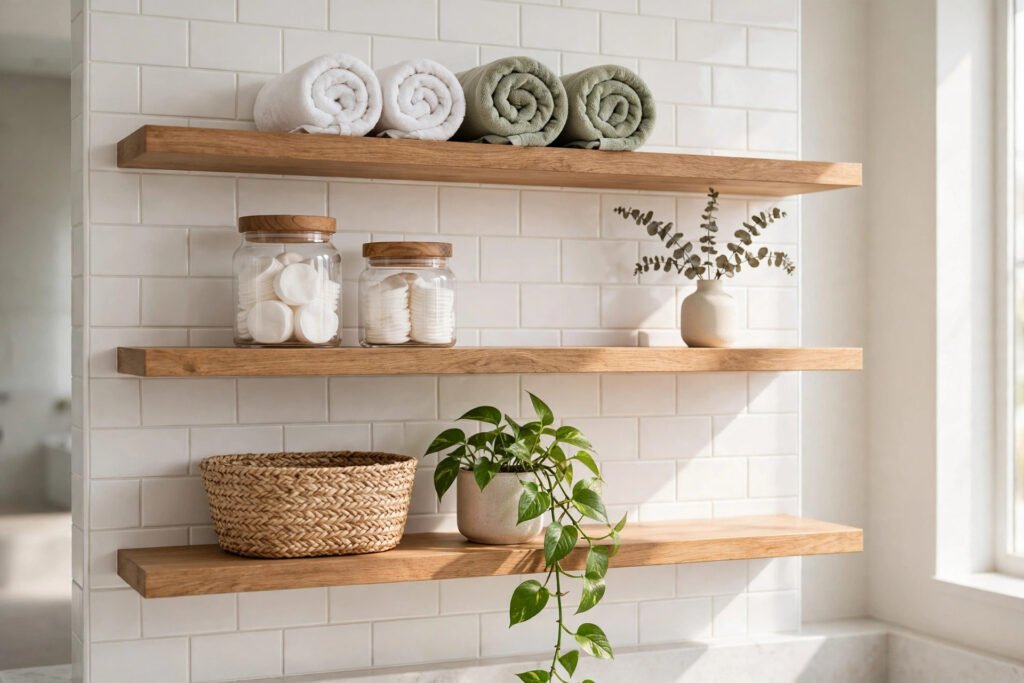
Rolled towels are the cheapest styling trick a bathroom shelf has. A stack of three or four rolled hand towels in one colour instantly makes a shelf look tidy and deliberate, and it costs nothing if you already own the towels. Roll them tightly so they hold their shape, and line them up with the folded edges facing the same way.
White towels look fresh and spa-like, but they show every mark, so a soft grey, sage or dusty blue is more forgiving in a busy family bathroom. Keep one colour per shelf — mixed towel colours read as laundry, not decor. If your towels are old and thin, roll them anyway and place a small plant or jar in front of the least perfect one. Our guide to affordable bathroom storage ideas has more ways to keep everyday items looking neat rather than messy.
3. Use Matching Jars for the Small Stuff
Cotton pads, cotton buds, hair ties and bath salts all look like clutter when they sit in their shop packaging. Decant them into matching glass jars and they become decor. Clear glass jars with wooden or bamboo lids cost very little — roughly $10–$20 for a set of three, check the current price before buying — and they let you see at a glance when something needs refilling.
Keep the jars to one style and one lid colour, and limit yourself to two or three per shelf. A row of five mismatched jars looks like a shop display; two matching jars next to a rolled towel looks like a styled shelf. Put the items you use most in the lowest, easiest-to-reach jar, and keep anything you rarely touch on the highest shelf.
4. Add One Plant That Likes Steam
A plant is the fastest way to make a bathroom shelf feel alive, and bathrooms are actually good homes for the right plants. Pothos, spider plants and ferns all enjoy humidity and low light, and a small pot costs very little at a garden centre or supermarket. Hang a trailing pothos from the top shelf so its leaves spill over the edge, or sit a small fern on the middle shelf next to your jars.
Choose a pot that matches the rest of the shelf — plain ceramic, terracotta or a simple woven basket cover — and avoid plastic pots with bright colours, which undo the calm look you are building. Water sparingly, because bathroom humidity does some of the work for you, and trim trailing stems before they reach the tap.
5. Hide the Ugly Stuff in a Basket
Every bathroom has things that are useful but not pretty: spare toilet rolls, cleaning cloths, medicines, hair tools. A basket solves this neatly. One woven basket or a fabric storage box per shelf hides all of it, and the basket itself becomes part of the styling. Seagrass, cotton rope and plain linen baskets all suit a bathroom and cost roughly $8–$15 each — check the current price before buying.
Avoid open wire baskets for this job: they show everything inside and defeat the purpose. A lidded basket is even better for medicines and anything you would rather guests did not see. For more small-space storage tricks, read our affordable bathroom storage ideas for small bathrooms.
6. Layer Heights and Leave Gaps
The difference between a styled shelf and a crowded shelf is height. On each shelf, mix one tall item, one medium item and one low item — for example, a tall vase with dried eucalyptus, a medium jar and a low stack of rolled washcloths. The eye moves across the shelf instead of getting stuck on a flat row of same-height objects.
Leave at least a third of each shelf empty. Empty space is what makes the styled items look chosen rather than crammed in, and it gives you somewhere to put a cup or a phone while you get ready. Spread the tallest items across different shelves, not all in one column, or the unit will look lopsided. Our budget bathroom vanity decor ideas use the same layering rule on a smaller surface, and it works just as well there.
7. Keep a Consistent Colour Palette
A shelf looks styled when its colours repeat. Pick two or three colours and stick to them across all the shelves: your towels, your jars, your baskets and your plant pots should share the same family. White, natural wood and one accent colour — sage green, soft blue or warm terracotta — is a combination that suits almost any bathroom and never looks dated.
If your bathroom already has a strong tile colour, let that be the accent and keep everything else neutral. The mistake to avoid is a different colour on every shelf, which makes even expensive items look random. Check every new buy against your palette first.
How to Keep Bathroom Shelves Tidy After Styling
Styling a shelf takes an afternoon; keeping it styled takes a two-minute habit. Put one thing back every time you take something out, and do a quick reset once a week: straighten the towels, wipe the shelf edges and remove anything that has crept on without permission. Choose items that survive a damp cloth — sealed wood, ceramic, glass and metal all cope well, while untreated wood and paper labels do not.
If a shelf keeps sliding back into clutter, it usually means you have too much on it. Remove one item from each shelf and see if the whole unit looks calmer. In most cases it will. And if you are styling a rented bathroom, remember that open shelves themselves can be renter-friendly: our guide to affordable bathroom decor ideas for renters covers damage-free ways to add shelving without drilling into tiles.
FAQs
What should I put on open bathroom shelves?
Put everyday essentials you use daily on open bathroom shelves — rolled towels, matching jars of cotton pads and bath salts, a plant and one basket for less pretty items. Keep medicines and cleaning products in a lidded basket or a closed cupboard instead of on display.
How do I stop open bathroom shelves looking cluttered?
Stop open bathroom shelves looking cluttered by leaving a third of each shelf empty, keeping to one colour palette and grouping small items into matching jars or baskets. Remove one item from each shelf if it still looks busy — fewer, larger pieces always look calmer than many small ones.
What plants are best for bathroom shelves?
Pothos, spider plants and ferns are best for bathroom shelves because they enjoy humidity and cope with low light. A trailing pothos looks especially good spilling over the top shelf. Water sparingly, since bathroom steam does some of the work, and avoid plants that need strong direct sunlight.
Can open shelving work in a small bathroom?
Yes, open shelving can work in a small bathroom, often better than a closed cabinet, because it does not jut out as far and it keeps everyday items within reach. Keep the shelves slim, style only two or three items per shelf and use the same colour palette as the rest of the room so the shelves blend in rather than dominate.
How do I protect wooden shelves from bathroom steam?
Protect wooden shelves from bathroom steam by choosing sealed or painted wood rather than raw timber, and by wiping the shelves dry once a week. Keep wet items like damp flannels off the shelf surface, and leave a small gap behind jars and baskets so air can circulate and moisture does not sit trapped against the wood.