
If you rent, your floors are probably the one thing you cannot stand — and the one thing you are not allowed to change. Scuffed laminate, stained carpet, or cold tiles in winter. The good news is that some of the best budget flooring ideas renters can use need no nails, no glue, and no awkward landlord conversation. They are removable, affordable, and genuinely good looking, and most can be undone in an afternoon when moving day comes.
Think in layers: you are not replacing the floor, just covering it so the original surface barely matters. Start with the room that bothers you most, measure it properly, and spend where your feet — and your eyes — spend the most time.
1. Large Area Rugs: The Fastest Fix of All
A big rug is the single easiest renter-friendly flooring fix, and it works in almost every room. It covers stains, adds warmth, quiets echo, and sets the colour scheme for the whole space. The most common mistake renters make is buying too small. Aim for a rug large enough that the front legs of your sofa or bed sit on it, with roughly 15 to 20 centimetres of bare floor showing around the edges.
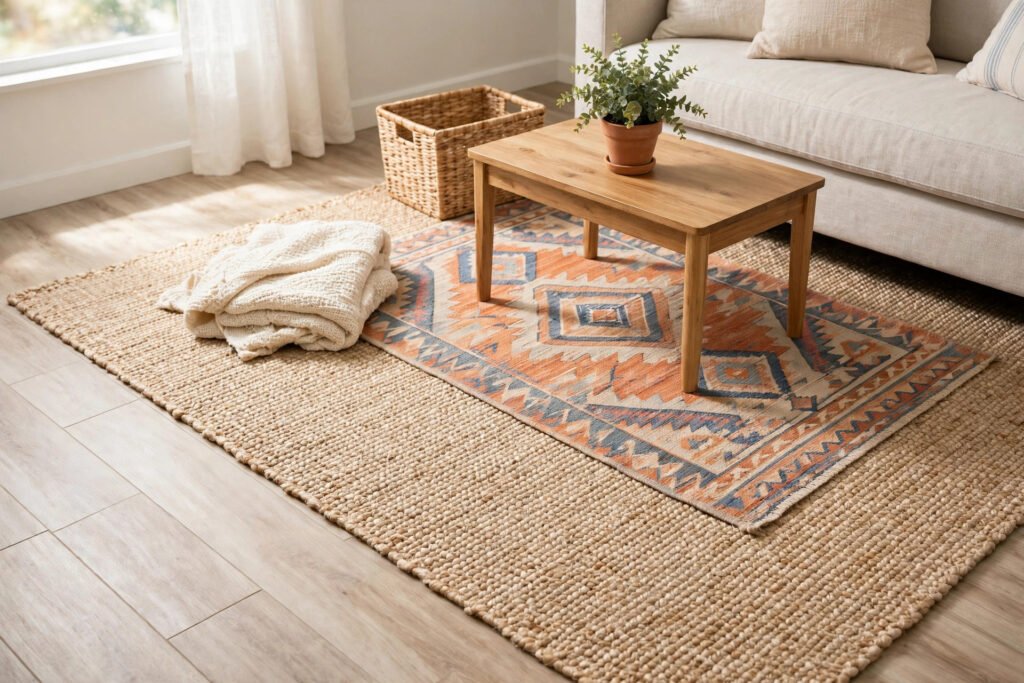
A plain, low-pile rug in a neutral tone is the cheapest and most forgiving option. Layer a smaller patterned rug on top for personality — far cheaper than one huge statement rug. Check the current price before buying — rug prices vary widely between sales. If you need help choosing the right size, our guide to affordable area rugs under $100 walks through sizing rules room by room. Add a cheap felt or rubber rug pad underneath: it stops the rug sliding around, protects the floor from scuffs, and adds a little cushion underfoot.
2. Peel-and-Stick Floor Tiles
Peel-and-stick vinyl tiles are the closest thing renters get to a real floor makeover. They come in wood-look planks, marble-look squares, and bold patterns, stick down firmly, and peel back up when you leave on a smooth, clean surface. A single box typically covers a small bathroom or kitchen, and the job takes an afternoon with a utility knife.
There are honest downsides. Cheap tiles can lift at the corners in humid rooms, and they will not hide a very uneven floor. Wash the floor and let it dry completely first, and read customer feedback before choosing a brand — adhesion varies a lot, and the difference between a tile that lasts two years and one that peels in two months is usually in the reviews. Our rental kitchen ideas guide has more ideas for rooms where peel-and-stick tiles shine.
3. Interlocking Foam Mats
Foam floor tiles — sold for home gyms and playrooms — are an underrated renter trick. They click together with no adhesive, in wood-effect, stone-effect, and plain colours far smarter than the rainbow puzzle mats of a decade ago. They suit home offices, where they protect the floor from a rolling chair, and bedrooms, where they take the chill off cold tiles.
The catch is thickness: foam mats are soft, so heavy furniture leaves dents and a chair with castors rolls poorly. Use them in walking areas and under desks with a hard chair mat on top, away from very heavy wardrobes.
4. Removable Vinyl Plank Flooring
Loose-lay vinyl planks are a step up from peel-and-stick tiles. They are thicker, look convincingly like real wood, and many need no glue at all: the planks grip each other through weight and friction, so the whole surface can be lifted and taken with you to the next flat. That makes them one of the best budget flooring ideas renters can invest in — you genuinely get to keep them.
They cost more than peel-and-stick tiles — a rough range of a few pounds or dollars per square foot, so check the current price before buying — but for a small room the total is still far less than a professional replacement. Measure twice, order a little extra for cuts and mistakes, and lay planks along the longest wall.
5. Layered Rugs and Textiles
If one rug is good, two layered together are often better — and cheaper than one enormous rug. Start with a large, inexpensive flat-weave rug in a neutral colour, then add a smaller, softer rug on top. The combination hides stains, adds texture, and lets you change a room just by swapping the top layer — a favourite trick in small flats where one huge rug would eat the whole budget.
Layering also fixes a rug that is slightly too small; keep colours in the same family so the layers feel intentional. If you are decorating a whole rental, our small apartment decor ideas show how flooring choices fit into a bigger room plan.
6. Floor Cloths and Painted Canvas Runners
A floor cloth is a piece of heavy canvas, painted and sealed, that lies flat like a rug but wipes clean like a floor. They are perfect for kitchens and hallways where a fabric rug would stain within a week. You can buy ready-made ones, or make your own with a drop cloth, sample pots of paint, and clear sealant — a cheap weekend project.
Painted canvas runners suit narrow hallways and galley kitchens, where a standard rug never quite fits. They lie flat, never trip anyone, and mop clean. If you make your own, seal both sides and the edges and use a non-slip pad underneath.
7. Cork and Rubber Roll-Out Mats
Cork tiles and rubber roll-out flooring are two practical options renters often overlook. Cork is warm, quiet, and naturally mould-resistant, and cork tiles with a peel-and-stick backing go down and come up like vinyl tiles. Rubber flooring, sold in rolls or interlocking tiles, is tough, waterproof, and ideal for entryways and home gyms.
The trade-off is appearance: neither looks like real wood or stone up close, so they suit utility areas better than a formal living room. But in the right spot, they solve a real problem — cold, hard, noisy floors — for very little.
8. The Right Rug Pad and Floor Protectors
Sometimes the best fix is protection for the floor you have. Felt pads under every chair leg, a clear chair mat under a desk, and a washable runner by the front door stop a mediocre floor getting worse — which matters when your deposit depends on it. Photograph the floor when you move in and use protectors from day one.
What to Avoid as a Renter
Not every budget flooring idea is renter-safe. Avoid anything needing glue, nails, or sanding, and skip real paint on floors unless your tenancy agreement allows it. Glossy self-adhesive tiles can trap moisture on wooden floors, so check the surface underneath before you commit to a whole room. And be wary of very cheap carpet tiles with weak adhesive: they shift underfoot and leave residue that costs more to clean than the tiles saved. Our rental bedroom ideas show how to refresh a room without touching the floor at all.
How Much Should You Budget?
For most renters, a single room can be transformed for well under a month’s rent. A good rug plus a pad is the cheapest route, peel-and-stick tiles sit in the middle, and loose-lay vinyl planks are the premium option — but one you can take with you. Work out the cost per room, start with the room you use most, and buy the best quality you can afford for daily-wear areas.
FAQs
Can renters change their flooring without permission?
It depends on your tenancy agreement, but removable options such as rugs, foam mats, and loose-lay vinyl planks usually need no permission because they leave the property unchanged. Anything involving glue, nails, or paint should be agreed with your landlord in writing first.
Will peel-and-stick tiles damage the floor underneath?
On smooth, sealed surfaces such as vinyl or laminate they generally peel off cleanly, especially if you warm them gently with a hairdryer first. On unsealed wood or old tiles they can lift finishes, so test one tile in a hidden corner first.
What is the cheapest renter-friendly flooring option?
A large area rug with a pad is usually the cheapest way to transform a room, and layered rugs cover even more floor for less than one huge rug. Foam mats are the cheapest hard-surface option, especially for bedrooms and home offices.
How do I cover ugly rental carpet?
A thick, low-pile rug over the top works well, with a pad underneath to stop it bunching. For a harder surface, foam tiles or loose-lay vinyl planks can sit on low-pile carpet, though very thick carpet is not a suitable base.
Can I take my new flooring with me when I move?
Yes — loose-lay vinyl planks, foam mats, rugs, and floor cloths all lift and move. Peel-and-stick tiles usually lose adhesion, so treat them as a one-tenancy investment.