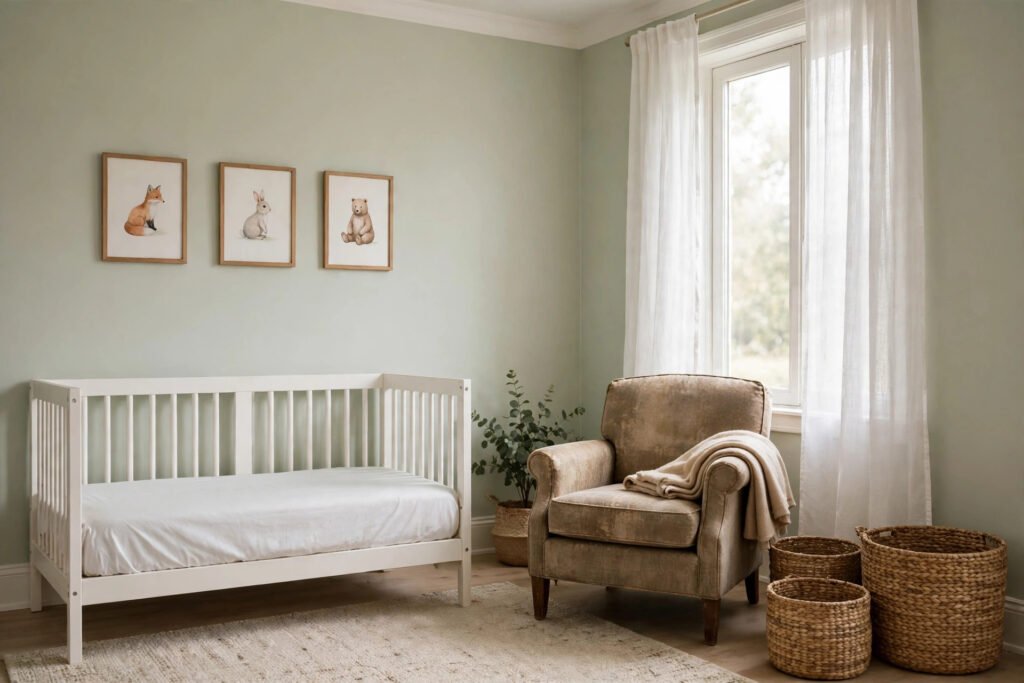

Budget Nursery Decor Ideas
A nursery does not need a designer budget to feel warm, calm and ready for a new baby. With a few thoughtful choices, these budget nursery decor ideas can turn an empty spare room — or a corner of your bedroom — into a soft, welcoming space without spending hundreds. Spend where it matters, save where it does not, and keep everything simple and safe.
1. Start With a Soft, Calm Colour Palette
The cheapest way to transform a nursery is paint. One tin of paint costs very little and changes the whole feeling of the room in an afternoon. Soft, pale colours work best — warm white, pale sage green, soft blush, light grey-blue or gentle butter yellow — and they make a small room feel bigger and brighter.
If you do not want to paint all four walls, paint just one accent wall behind the cot. A pale sage or dusty blue accent wall gives the room a focal point for the cost of a single small tin. If you are renting and cannot paint, removable peel-and-stick wallpaper or a large fabric wall hanging gives you the same soft colour.
2. Pick the Cot First, Then Decorate Around It
The cot is the biggest item in the room and the one worth spending the most on, so choose it before anything else. A simple, sturdy wooden cot in white or natural wood suits almost any colour scheme and lasts through the toddler years if it converts into a toddler bed.
Once the cot is in place, everything else gets easier. You can see how much floor space is left and which wall is free for storage. A plain white fitted sheet and a soft, light blanket are all the bedding a cot needs — skip the expensive matching sets.
If your budget is tight, look for a good second-hand cot from a trusted seller. Check that it meets current safety standards, that the slats are no more than 6cm apart, and that the mattress fits snugly with no gaps. A clean second-hand cot plus a brand-new mattress is a sensible, safe way to save.
3. Create a Cosy Reading Corner
Every nursery needs a comfortable spot for feeding, cuddling and reading stories. You do not need an expensive nursery glider — a second-hand armchair with good back support and wipe-clean fabric works just as well. A small footstool makes long feeds much more comfortable.
Place the chair near a window if you can, so you get natural light during the day. Add a soft throw blanket and a small cushion in a colour that matches the room. A little side table beside the chair holds a bottle, a phone or a glass of water. This corner quickly becomes the most-used spot in the room. For ideas on styling a similar corner elsewhere, see our cozy reading nook ideas on a budget (https://somedecor.com/reading-nook-ideas-budget/).
4. Use Wall Art and Prints to Add Personality
Bare walls make a nursery feel unfinished, but filling them does not have to cost much. Printable wall art is one of the best budget nursery decor ideas there is: download gentle animal prints or alphabet cards, print them at home or at a local print shop, and frame them cheaply. A row of three matching prints above the changing table costs very little and looks finished.
DIY art works too. A framed piece of pretty fabric, a pressed flower in a frame, or a simple hand-painted wooden name sign all add warmth. Keep the art simple and soft — gentle animals, stars, moons or a simple alphabet. For more wall inspiration, our DIY wall decor ideas on a budget (https://somedecor.com/diy-wall-decor-ideas-budget/) has plenty of cheap projects that suit a nursery, and our roundup of the best budget picture frames for a gallery wall (https://somedecor.com/best-budget-picture-frames/) shows frames that look far more expensive than they are.
5. Add Storage That Grows With Your Baby
Babies come with a surprising amount of stuff, and a nursery without storage gets messy fast. Buy storage that still works when the baby is a toddler: open baskets, fabric cubes and low shelves a toddler can reach.
A few practical options: woven baskets under the changing table for nappies and wipes, fabric cubes on a low shelf for clothes sorted by size, and a small bookcase or wall shelf for board books. A cheap changing basket on top of a low dresser works just as well as a dedicated changing table. Keep the floor clear — a tidy floor is safer for a crawling baby and makes the room feel bigger.
6. Layer Soft Textiles for Warmth
Textiles are the fastest way to make a nursery feel soft and finished. A washable, low-pile rug in a neutral colour beside the cot protects little feet from a cold floor and hides marks well.
Add a blackout curtain or a simple roller blind to help the baby nap. Blackout curtains do not have to be expensive, and they make a real difference to daytime sleep. A soft throw over the armchair and a couple of cushions complete the look. Stick to washable fabrics wherever you can. For curtain advice that applies just as well in a nursery, see our guide on how to hang curtains the right way (https://somedecor.com/how-to-hang-curtains/).
7. Light It Gently
A dimmable lamp or a small night light makes night feeds and nappy changes much easier — you can see what you are doing without waking the baby fully. A simple table lamp with a warm bulb on the dresser works well, and a plug-in night light in a soft amber tone costs very little. If the room has a ceiling light, swap the bulb for a warm white one rather than a bright cool white.
8. Keep It Safe and Simple
Safety costs nothing to get right. Keep the cot away from windows, cords and radiators. Do not put pillows, loose blankets, soft toys or cot bumpers in the cot — a firm mattress and a fitted sheet are enough. Anchor heavy furniture like dressers and bookcases to the wall so they cannot tip. Cover unused plug sockets and keep small objects, medicines and creams out of reach.
What a Budget Nursery Costs
Buy the big items second-hand and make the rest yourself. A realistic budget: a second-hand cot, roughly $50–$100; a new mattress, roughly $40–$70; a second-hand armchair, roughly $30–$60; paint for one wall, roughly $15–$25; a washable rug, roughly $20–$40; storage baskets and cubes, roughly $20–$35; printable wall art and frames, roughly $15–$25; and a lamp or night light, roughly $10–$20. That puts the whole room at roughly $200–$375. Prices are rough ranges only — check the current price before buying.
Mistakes to Avoid
The most common mistake is buying a matching nursery furniture set before the baby arrives. Sets look lovely in the shop, but they are expensive, and you may not need every piece. Buy the cot first, then see what the room actually needs.
Another mistake is over-decorating. Start simple, and add things only when you know you need them. If you are decorating a child’s room as they grow older, our affordable kids room decor ideas on a budget (https://somedecor.com/kids-room-decor-budget/) pick up where the nursery leaves off.
FAQs
How much does it cost to decorate a nursery on a budget?
A simple nursery can be set up for roughly $200–$375 if you buy the cot and armchair second-hand and make the wall art yourself. The biggest costs are the cot and a new mattress. Prices are rough ranges only — check the current price before buying.
What colour is best for a nursery?
Soft, pale colours work best: warm white, pale sage green, soft blush, light grey-blue or gentle butter yellow. These shades feel calm at night and make a small room feel bigger. Keep the palette to two or three colours so the room feels restful.
How do I decorate a nursery in a small space?
Use one corner of your bedroom or a small spare room. A compact cot saves floor space, wall shelves replace a bookcase, and baskets under the cot or changing table hold the essentials. Keep only what the baby needs in the first months and store the rest elsewhere.
Is second-hand nursery furniture safe?
Yes, if you check it carefully. Look for furniture that meets current safety standards, with no loose parts, peeling paint or broken slats. Cot slats should be no more than 6cm apart, and the mattress should fit snugly with no gaps. Always buy a new mattress.
What should I not put in a nursery?
Keep the cot clear of pillows, loose blankets, soft toys and cot bumpers — a firm mattress and a fitted sheet are enough. Avoid heavy frames above the cot and trailing cords from blinds or fairy lights. Keep medicines, creams and small objects in a closed drawer or a high shelf.