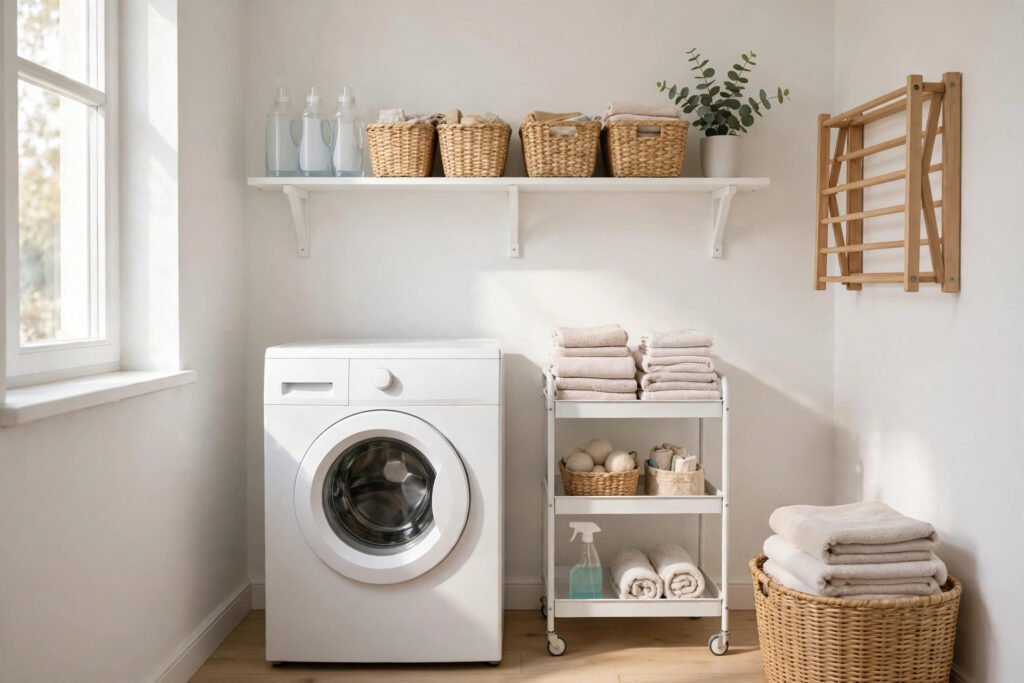

A laundry room is usually the smallest room in the house, yet it has to hold detergent, softener, stain remover, pegs, ironing supplies, cleaning products, and a mountain of clothes waiting to be washed. No wonder it turns into a dumping ground. The good news is that affordable laundry room storage ideas can transform even a cupboard-sized space without a renovation or a big spend — most of the fixes below cost less than a weekly shop.
The secret is to use the walls, the door, and the gaps you already have, rather than buying more furniture. A few shelves, some baskets, and a honest clear-out will do more than any expensive fitted unit. Here are seven practical ideas that actually work in real, cramped laundry rooms.
1. Start With a Clear-Out, Not a Shopping Trip
Before you buy a single basket, empty the room completely. Pull everything out, wipe the surfaces, and sort items into three piles: keep, move elsewhere, and throw away. Half-used bottles, dried-up stain pens, and cleaning products you bought three years ago and never used can go. Most laundry rooms hold a surprising amount of stuff that does not belong there at all.
Once you can see what is left, group it by how often you use it. Detergent, softener, and stain remover are daily items and deserve the easiest spot. Ironing spray, spare pegs, and seasonal cleaning products can live higher up or further back. This one free step makes every other storage idea work better, because you are organising what you actually use instead of building storage around clutter. For more small-space thinking, see our guide to how to organize a small closet on a budget — the same sort-first rule applies.
2. Add Shelves Above the Machines
The wall above a washer and dryer is usually empty, and it is the best storage spot in the room. A single sturdy shelf, fixed at a height you can reach without stretching, holds detergent bottles, a basket of pegs, and a jar of stain-remover sticks. Two shelves work even better: daily supplies on the lower one, spares and refills on the upper one.
You do not need fancy shelving. A plain pine board on two brackets costs very little, and a coat of white paint makes it look built in. If you rent, use heavy-duty adhesive strips or a freestanding shelf unit that sits behind the machines instead — no holes in the wall, and you can take it with you when you move. Keep the shelf shallow, about 25 to 30 centimetres deep, so bottles do not disappear behind each other.
3. Use a Folding Drying Rack That Disappears
A drying rack is one of the bulkiest things in a laundry room, and it is only in use half the time. A wall-mounted folding rack solves the problem: it folds flat against the wall when you are not using it and pulls down when you need it. These usually cost in the rough range of $20 to $50 depending on size — check the current price before buying.
If a wall-mounted rack does not suit your room, a slim concertina rack that slides behind the door or between the machines and the wall works just as well. A retractable washing line, strung across a corner, is another cheap option — it holds a surprising amount of washing and vanishes completely when retracted.
4. Baskets and Bins That Hide the Mess
Open shelves look tidy only if what sits on them looks tidy, and laundry supplies rarely do. Baskets fix that. A row of matching baskets on a shelf turns a jumble of bottles and packets into a calm, organised wall, and you can pull a basket down, carry it to the machine, and put it back without thinking.
You do not need expensive woven baskets. Plastic bins, fabric cubes, and even sturdy cardboard boxes covered in contact paper all work. The trick is to keep them the same colour or material so the shelf reads as one tidy unit instead of a random collection. Label each one — detergent, delicates, cleaning, spares — so everyone in the house puts things back in the right place. For basket ideas that work in every room, see our guide to the best budget storage baskets for every room.
5. Use the Back of the Door
The back of the laundry room door is free storage that most people ignore. An over-door rack with a few hooks holds the iron, the ironing board, a dustpan, and a spray bottle — all the awkward, oddly shaped items that never fit on a shelf. Over-door racks usually cost in the rough range of $10 to $30, and they need no screws, which makes them ideal for renters.
A simple row of adhesive hooks on the door works just as well for lighter items: a mesh bag for stray socks, a small basket for pegs, or a hanging shoe organiser with clear pockets. That shoe organiser is one of the best cheap storage tricks around — each pocket holds a different small item, from stain sticks to spare buttons, and you can see everything at a glance. Keep the heaviest items low on the door so it still opens and closes easily.
6. Fill the Gap Beside the Machines
Almost every laundry room has a narrow gap — between the washer and the wall, or between the washer and the dryer — that is too small for a shelf but perfect for a slim rolling cart. These carts are usually 15 to 25 centimetres wide, on wheels, and have three or four tiers. Slide one into the gap and it holds detergent, fabric softener, cleaning sprays, and spare sponges, all within arm’s reach of the machine.
Rolling carts usually cost in the rough range of $25 to $45 — check the current price before buying. Measure the gap before ordering, including the skirting board, and leave a centimetre or two of clearance so the cart rolls freely.
7. Label Everything and Keep a Routine
Storage only stays tidy if everyone knows where things go. Labels sound fussy, but they are the difference between a system that lasts a week and one that lasts a year. A label maker is nice, but masking tape and a marker work just as well.
Then give the room a five-minute weekly reset. Once a week, put everything back where it belongs, wipe the machines, and throw away empty bottles. It is a small habit, but it stops the slow slide back into chaos. A laundry room that is easy to keep tidy stays tidy — and that is really what affordable laundry room storage ideas are about: not buying more containers, but making the room work with less effort.
Small Changes, Big Difference
You do not need a big budget or a renovation to fix a messy laundry room. A clear-out, a shelf above the machines, a few baskets, and a rack on the back of the door will handle most of the clutter for very little money. Start with the clear-out, add one idea at a time, and stop when the room works for you. For matching decor ideas, see our guide to affordable laundry room decor ideas — and for storage tricks that work in the bathroom too, see our affordable bathroom storage ideas that actually work.
Frequently Asked Questions
How can I add storage to a very small laundry room?
Use the walls and the door. Shelves above the machines, hooks on the back of the door, and a slim rolling cart in the gap beside the washer add a lot of storage without taking any floor space.
What is the cheapest way to organise a laundry room?
Start with a clear-out, which costs nothing. Then add a few matching baskets or bins to hide clutter, label everything, and use adhesive hooks instead of drilling. Most rooms can be transformed for under $50 in total.
How do I store detergent and cleaning products safely?
Keep them on a shelf or in a basket, out of reach of small children and pets, with lids closed. Never decant cleaning products into unlabelled bottles, and store them away from heat sources like the dryer vent.
Can I add laundry room storage in a rental?
Yes. Use freestanding shelf units, over-door racks, adhesive hooks, and rolling carts — none of these need screws or holes in the wall, and you can take them with you when you move.
How do I stop my laundry room getting messy again?
Label every basket and shelf, keep only what you actually use, and do a five-minute reset once a week. A room that is easy to tidy stays tidy; a complicated system falls apart within a month.