
Disclosure: This article contains affiliate links. As an Amazon Associate, we earn from qualifying purchases. If you buy through these links, we may earn a small commission at no extra cost to you.
How to Mix Metals in Home Decor on a Budget
If you want a mix metals home decor budget that actually works, start with a plan, not a shopping trip. The old rule said every metal had to match, but that rule is long gone. Rooms that mix warm brass with cool chrome look richer for it. The secret is choosing one dominant metal, adding one contrast, and repeating both on purpose so the mix looks deliberate. These ideas are based on specs, features and customer feedback, not hands-on testing, and prices are rough ranges — check the current price before buying.
1. Start With One Dominant Metal
Every room needs a lead metal, the one that shows up most. Find the metal you already own most of — chrome taps, black handles, brass frames. It should make up roughly two-thirds of the metal you can see; the rest is accent.
Choosing one first saves money because you work with what you already have. If your kitchen already has stainless steel appliances and a chrome tap, stainless and chrome are your lead — do not fight them with a full set of brass fixtures. Add warmth somewhere else instead, in a small dose. Write it down before you shop: “chrome leads, brass accents.”
2. Add One Contrasting Metal
One contrast is enough. Two metals plus black is the combination that works in almost every room. Warm metals — brass, copper, gold — pair naturally with cool ones — chrome, nickel, steel — because the contrast makes each stand out.
Pick your contrast from something small and cheap. Brass candle holders on a coffee table, copper mugs on open shelves, or a gold mirror frame above a nickel vanity will tell you in a day whether the pairing works. If it feels wrong, you have spent very little and can move the piece to another room. Avoid a third shiny metal at the same time — brass, chrome and copper only work together when one is barely there. For lighting, often the biggest metal in a room, see our roundup of best budget wall sconces for fixtures in the finish you need.
3. Use Matte Black as the Peacemaker
Matte black gets along with every other metal, and it is the cheapest way to make a mixed room feel planned. Black frames, lamp bases, curtain rods and cabinet pulls act like punctuation between brass and chrome.
A can of matte black spray paint usually costs roughly $5–$10 — check the current price before buying — and can unify mismatched frames, an old lamp base or a tired plant stand in one afternoon. Spray light, even coats and let each one dry properly. Keep black to about a tenth of the room’s metal so it stays an accent. If your room already has black window frames or a fireplace surround, you already own your peacemaker — just repeat it once more in small pieces.
4. Repeat Each Metal at Least Three Times
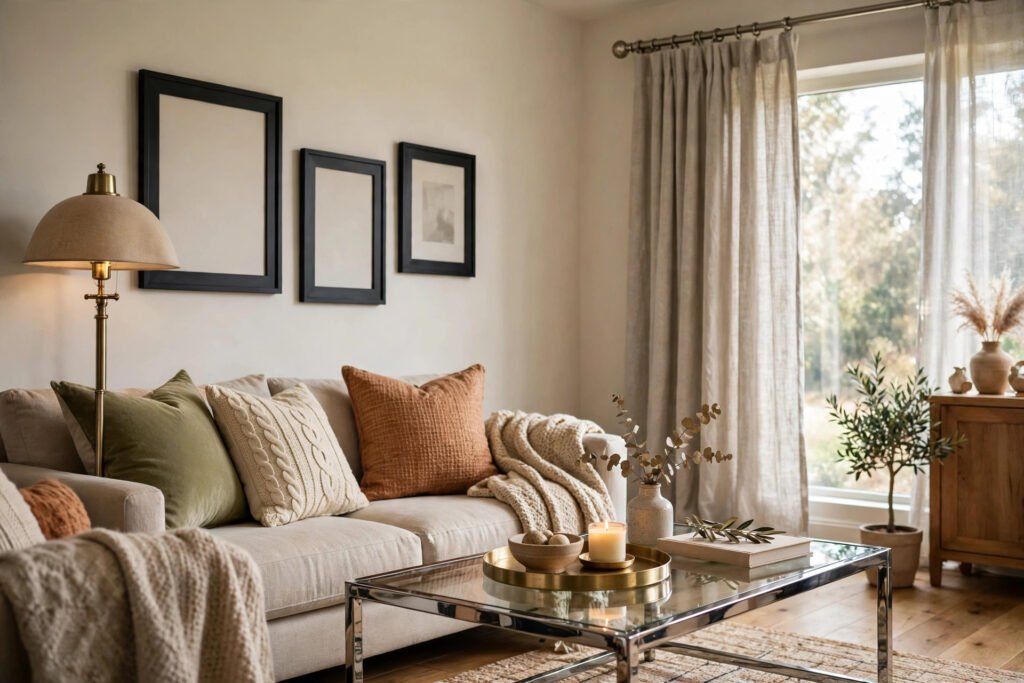
A single brass lamp in a chrome room looks like a mistake; three brass touches — a lamp, a frame and a tray — look like a decision. The eye needs to see a finish more than once before it trusts it belongs.
Spread the repeats around the room: one at eye level, one low, one high — a brass vase on the coffee table, a brass frame on the wall, a brass pendant above. Your dominant metal needs at least three spots too. A tray, a frame and a candle holder cost far less than a new tap or light fitting. On a shelf, group one metal object with wood or ceramic so it reads as part of a collection — our guide to how to style a bookshelf like a designer shows how.
5. Match Undertones, Not Exact Finishes
You do not need every brass piece to be the same brass. Brands make slightly different versions, and chasing an exact match is expensive and frustrating. What matters is the undertone: warm with warm, cool with cool.
Hold two pieces side by side in daylight: warm brass, gold and copper glow yellow or rosy; chrome, nickel and steel look grey or blue. Two warm metals from different brands sit happily together even if one is brushed and the other polished — the warmth is what the eye notices first. Mixing warm brass with cool nickel is fine too — that is the contrast from rule two — but do not mix two warm metals that fight, like yellow brass and pink copper, in equal amounts.
6. Swap the Hardware First
If you can only afford one change, change the hardware. Cabinet pulls, drawer knobs, curtain rods and switch plates are the cheapest metal in the house — and the metal you touch most. New pulls usually cost roughly $2–$8 each — check the current price before buying — a fraction of what new taps or lighting would cost.
Start with the room you use most: in the kitchen, swap the pulls and tap handles. In the living room, change the curtain rod — a slim black or brass rod changes the whole window; our roundup of best budget curtain rods lists rods in every finish at low prices. In the bedroom, swap the dresser knobs and one lamp base. Keep the old hardware in a bag if you rent. Measure the hole spacing before you order — standard sizes are 3 and 3.75 inches, and the wrong size means drilling new holes.
7. Carry the Same Metals Through the House
A mix that works in one room can still feel jumbled if every room uses different metals. Carrying the same dominant metal from room to room makes the whole house feel planned. If chrome leads in the kitchen, let it lead in the bathroom too, with the same brass accent in both.
It means repeating the idea, not the fixtures: a chrome tap in the kitchen and one in the bathroom, a brass tray in the living room and a brass frame in the bedroom. Hallways are the cheapest place to repeat a finish — one mirror or light fitting connects the rooms on either side. For overhead lighting, see our roundup of best budget pendant lights for fixtures that repeat your chosen finish at a low price. When in doubt, fall back on black — it works in every room and is the safest finish to repeat on a tight budget.
A Quick Mix-Metals Checklist
Before you buy anything, name your dominant metal and your one contrasting metal, and write both down. Each metal should appear at least three times — high, low and at eye level. Add a little matte black if the two metals sit too close together. Check undertones in daylight — warm with warm, cool with cool — and keep the sparkliest finish to one or two pieces. Swap the hardware first — pulls, knobs, rods and switch plates — before spending on taps or lighting. If a finish still feels wrong after a week, move the smallest piece to another room first; most mixed-metal problems are placement problems.
FAQs
How many metal finishes can you mix in one room?
Two main metals plus matte black is the safest combination for almost every room. Three shiny metals can work, but only when one appears in very small amounts.
Can you mix gold and silver in home decor?
Yes. Gold is warm, chrome or nickel is cool, and warm-plus-cool is one of the easiest contrasts to get right. Keep one dominant, repeat both at least three times, and put matte black or wood between them if they sit side by side.
Does mixing metals look cheap?
No — a deliberate mix looks more expensive than a matching set, because it looks collected rather than bought in one box. What looks cheap is one piece in a different finish with nothing to repeat it.
What is the cheapest way to mix metals in home decor?
Swap the hardware first: pulls, knobs and curtain rods cost a few dollars each and change the room straight away. Matte black spray paint, usually roughly $5–$10 a can, can also unify old frames and lamp bases in one afternoon.
Should kitchen and bathroom metals match?
They do not have to be identical, but the same dominant metal in both rooms makes the house feel calmer. If chrome leads in the kitchen, let it lead in the bathroom too, with the same accent in small pieces.
Mixing metals is not about buying more — it is about repeating what you already have on purpose. Pick one dominant metal, add one contrast, let matte black keep the peace, and repeat each finish three times. Start with the hardware and carry the same pairing through the house.