
Disclosure: This article contains affiliate links. As an Amazon Associate, we earn from qualifying purchases. If you buy through these links, we may earn a small commission at no extra cost to you.
Learning how to choose wall art size living room spaces need is mostly about proportion, not taste. A beautiful print can still look wrong if it is too small for the wall or too wide for the sofa underneath it. Sizing wall art is not guesswork: a few simple rules cover almost every living room, and once you know them, you can buy with confidence. These ideas are based on specs, features and customer feedback, not hands-on testing, and prices are rough ranges — check the current price before buying.
1. The Two-Thirds Rule for Above the Sofa
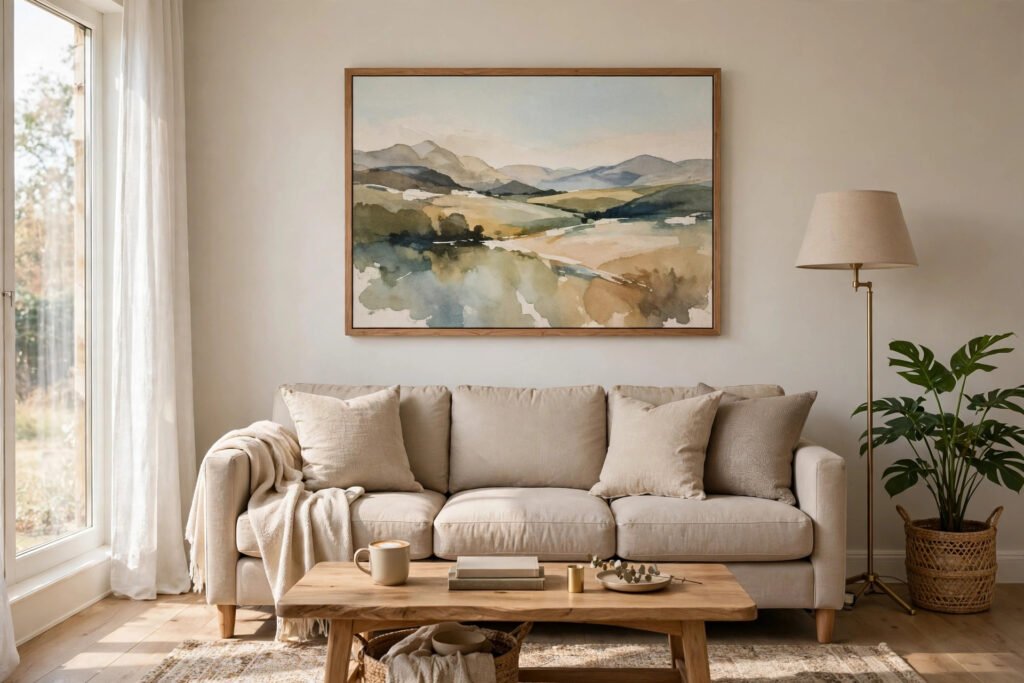
The most useful rule when you choose wall art size living room walls need is the two-thirds rule: the art above a sofa should be about two-thirds as wide as the sofa itself. A standard three-seater sofa is roughly 84 inches wide, so the art above it should be about 56 inches wide — one large piece, or a pair of frames whose combined width adds up to the same number.
This rule works because it ties the art to the furniture, not the wall. A small print floating above a big sofa looks lost, while a piece spanning two-thirds of the sofa looks like it belongs there. Below half the sofa’s width, art starts to look like an afterthought, so measure the sofa first, then shop for art that fits the number.
2. Measure the Wall First, Then the Art
Before you buy anything, measure the wall you plan to fill. A blank wall is usually wider than it looks, and most people buy art that is far too small for it. As a starting point, art should fill about two-thirds to three-quarters of the empty wall space above the furniture. On a wall with no furniture at all, a piece should cover roughly half to two-thirds of the wall’s width to look intentional.
Use painter’s tape to mark the outline on the wall before you order. Tape the width and height of the piece you are considering and live with it for a day. It costs nothing, takes five minutes, and stops the most common mistake in home decor: buying a lovely 24-inch print for a wall that needs a 48-inch one. If the taped outline looks small, it is small — trust the tape, not the product photo.
3. Height Matters: Where to Hang It
Width is only half the question; height decides whether the art feels connected to the room or floats on its own. The centre of the artwork should sit at eye level, about 57 to 60 inches from the floor — the standard galleries use, because it matches where people naturally look.
Above a sofa, the rule changes slightly: hang the bottom of the frame 6 to 8 inches above the back of the sofa. Any higher and the art drifts away from the furniture, leaving an awkward gap. Any lower and it crowds the people sitting there. When in doubt, hang it a little lower rather than higher — art hung too high is one of the most common mistakes, and it makes a room feel unfinished. For the general sizing rules that apply in any room, see our guide on how to choose the right size wall art for a room.
4. One Big Piece vs. a Gallery Wall
A single large piece is the easiest way to fill a big living room wall, and it usually costs less than several medium pieces. One statement canvas or framed print gives the room a clear focal point and needs only one set of fixings. Large canvas prints usually cost roughly $50–$150 depending on size — check the current price before buying.
A gallery wall is the better choice when you have a collection of smaller pieces, family photos, or prints you already own. Treat the whole arrangement as one piece: the combined width of the group should still follow the two-thirds rule, and the spacing between frames should stay even, about 2 to 3 inches apart. Keep the outer edges roughly even so the group reads as one shape. Our budget-friendly gallery wall ideas show how to plan the layout on the floor first.
5. Sizing for Different Living Room Layouts
Not every living room has a sofa against a long wall, and the rules bend to fit the layout. In a small living room, one medium piece above the sofa is usually enough — around 30 to 40 inches wide over a loveseat — because oversized art can crowd a small room. A large mirror above the sofa can work instead, and it makes the room feel bigger at the same time. In an open-plan living room, the art has to define the seating area rather than fill the whole wall, so keep it tied to the sofa’s width and let the rest of the wall breathe.
6. Common Sizing Mistakes to Avoid
The most common mistake is buying too small. Designers say it constantly because almost everyone does it: a 16-by-20-inch print above a three-seater sofa looks like a postage stamp, however pretty it is. If you love a small print, give it a wide mat and a bigger frame, or hang it as part of a group so the total width reaches the two-thirds mark.
7. Budget-Friendly Ways to Fill a Big Wall
Big art does not have to mean a big bill. Oversized frames with inexpensive prints inside are one of the cheapest ways to fill a wall — a large frame with a wide mat makes even a small print look substantial. Look for frames on sale or second-hand; a coat of matte black or gold spray paint, usually roughly $5–$10 a can, can make mismatched frames look like a set.
Printable art is another cheap option: digital downloads usually cost roughly $5–$15 and can be printed at a local copy shop in large sizes for far less than a ready-made canvas. Fabric wall hangings and tapestries also cover a lot of wall for very little money, and they add texture a flat print cannot. If you go the gallery route, matching frames matter more than matching art — our roundup of best budget picture frames lists frames that look far more expensive than they are.
A Quick Wall Art Sizing Checklist
Measure the sofa or the wall before you shop, and use the two-thirds rule for the width. Tape the outline on the wall and live with it for a day before ordering. Hang the centre at 57 to 60 inches from the floor, or 6 to 8 inches above the sofa back. Treat a gallery wall as one piece, with 2 to 3 inches between frames. If a print you love is too small, add a wide mat, a bigger frame, or hang it in a group — one correctly sized piece beats three small ones every time.
FAQs
What size wall art should go above a sofa?
Art above a sofa should be about two-thirds as wide as the sofa. For a standard 84-inch sofa, that means art around 56 inches wide, as one large piece or a group of frames adding up to the same width.
How high should wall art hang in a living room?
The centre of the artwork should sit about 57 to 60 inches from the floor. Above a sofa, hang the bottom of the frame 6 to 8 inches above the sofa back.
Is one large piece or a gallery wall better for a living room?
One large piece is simpler, cheaper and gives the room a clear focal point. A gallery wall is better when you already own several smaller pieces or want a personal, collected look — just keep the group’s total width close to the two-thirds rule.
How far apart should frames be on a gallery wall?
Keep 2 to 3 inches between frames, and keep the spacing the same throughout the arrangement. Even gaps make the group read as one piece; uneven gaps make it look accidental.
What is the cheapest way to fill a large living room wall?
Oversized frames with inexpensive prints, printable digital art, and fabric wall hangings are the cheapest options. A wide mat inside a large frame can make a small print look substantial for very little money.
Choosing the right size wall art for a living room comes down to two measurements and one rule: measure the sofa or the wall, keep the art about two-thirds as wide, and hang it at eye level. Get those three things right and almost any style of art will look like it was made for the room. For more ideas on the space above the sofa itself, see our guide to how to decorate above a sofa.