
Disclosure: This article contains affiliate links. If you buy through them, we may earn a small commission at no extra cost to you.
A small living room does not have to feel cramped. With the right small living room ideas, even a tiny rental living room can feel open, bright and calm — without a big budget or a renovation. Most of the change comes from light, layout and furniture choices, not from buying more things.
This guide is for renters and first-apartment owners in the US. Every idea is practical, affordable and renter-friendly, and most can be done in a weekend. Pick three or four to start with.
Before You Buy Anything: Measure and Plan
Measure the room first: length, width, doors, windows and the furniture you already own. Measuring prevents the most common mistake — furniture that is almost right, but too big. Try the sofa in two positions before moving anything heavy. Leave at least 30 inches clear on the main walking path and about 18 inches between the sofa and the coffee table.
12 Small Living Room Ideas That Make It Look Bigger
1. Hang a Large Mirror Opposite the Window
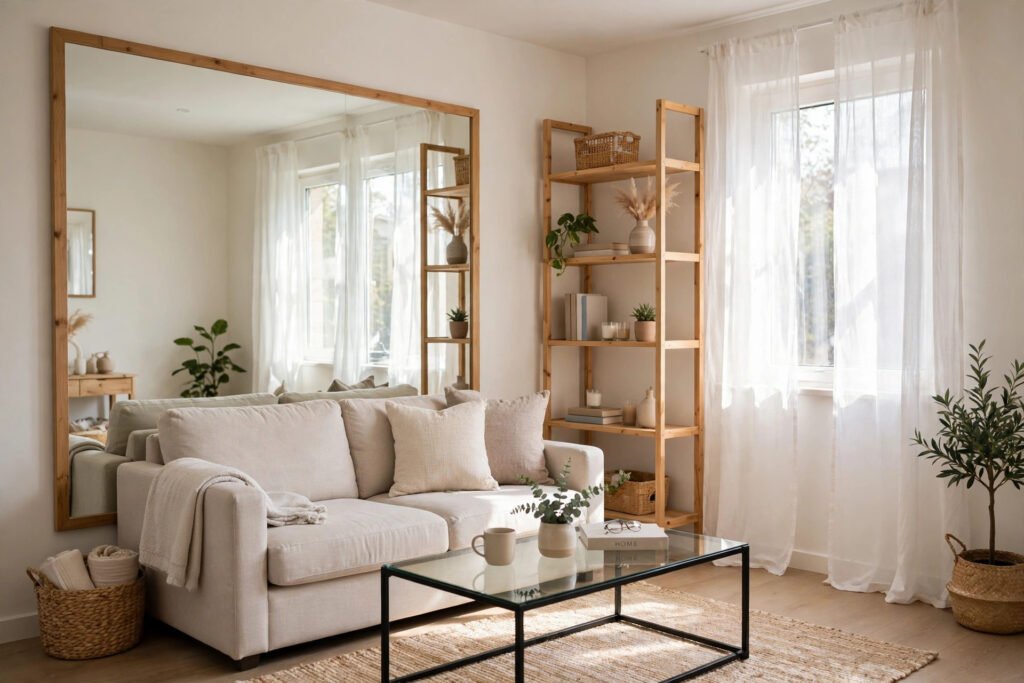
A mirror is the fastest way to make a small living room feel bigger. Hang one large mirror, rather than several small ones, opposite or next to a window. It reflects daylight and the view outside, so the room feels deeper and brighter. Aim for at least 24 by 36 inches.
2. Use Light Colours on Walls and Large Furniture
Light colours reflect light; dark colours absorb it. Keep walls, sofa, rug and curtains light, and add colour in cushions and throws. A light sofa cover and pale rug can transform a dark room for far less than new furniture.
3. Choose Furniture That Does More Than One Job
In a small living room, every piece should earn its floor space. A storage ottoman works as a footrest, extra seating and a place to hide blankets. A sofa bed gives guests a place to sleep. Before buying a single-use piece, ask: does it do two jobs? Multi-use furniture removes the need for extra storage pieces that crowd the room.
4. Go Vertical With Storage
Floor space is limited, but wall space usually is not. Tall, narrow bookcases, floating shelves and wall hooks store books, plants and everyday items without taking up floor space. Leave some empty space on every shelf — a shelf filled to the edge makes the whole wall feel heavy. Renters can use adhesive hooks instead of drilling.
5. Pick the Right Rug Size
A rug that is too small makes a living room look smaller and the seating area feel cramped. A 5-by-8-foot rug works well in most small living rooms; a 6-by-9-foot rug suits a standard three-seater sofa. The front legs of the sofa and armchairs should sit on the rug, with at least 6 inches of rug in front of them.
6. Layer Your Lighting
One harsh ceiling light makes a small room feel flat and smaller than it is. Layered lighting — a floor lamp, a table lamp and the ceiling light — makes the room feel warmer and gives it depth. Put a floor lamp in a dark corner and a table lamp beside the sofa. Use warm-white bulbs rather than cool, blue-white light.
7. Declutter Ruthlessly, Then Keep Surfaces Clear
No decorating trick works in a cluttered room. Start by removing everything that does not belong in the living room, then take out anything you have not used in the last month. After the clear-out, keep surfaces clear: a coffee table with one book and a candle looks calm, while the same table covered in mail, chargers and cups looks crowded.
8. Choose Low, Slim Furniture With Visible Legs
Bulky furniture with a solid base to the floor looks like a wall and blocks the view across the room. Furniture with slim, visible legs lets you see the floor underneath, and that small strip of visible floor makes the room feel larger. Look for a low-profile sofa, slim armchairs and a narrow coffee table. Avoid oversized recliners and deep sectionals in a small living room.
9. Hang Curtains High and Wide
Curtains hung just above the window frame make the window look small and the ceiling look low. Hang the rod 4 to 6 inches above the frame, or close to the ceiling, and extend it 6 to 12 inches wider than the window on each side. When open, the curtains sit on the wall, not over the glass, so more light comes in. Choose light, simple curtains in a colour close to the wall colour.
10. Keep One Cohesive Colour Palette
Too many colours and patterns in a small room make it feel busy and crowded. Choose three colours: one main light colour, one medium colour and one accent colour. Use the main colour for walls and large furniture, the medium colour for the rug and curtains, and the accent for cushions, throws and small decor. Mix textures in the same colours for a layered but uncluttered look.
11. Use Glass, Acrylic and Open Shelving
Solid, dark furniture blocks light and sightlines. Glass and acrylic do the opposite: a glass coffee table or a clear side table lets light pass through, so the room feels less full even when the furniture is the same size. Open shelving works the same way: an open, ladder-style shelf looks light and airy.
12. Define Zones Without Building Walls
A small living room often has to be a lounge, a workspace and a dining spot at the same time. Define each zone with a rug, a lamp or a piece of furniture, not with a wall or a tall divider. The rug marks the seating zone; a small desk and a lamp mark the work corner; a floor lamp and a chair mark a reading spot. When each area has a clear purpose, the room feels organised and larger.
Common Mistakes to Avoid in a Small Living Room
A few habits undo all the good work above. Do not push every piece of furniture flat against the walls — pull the sofa a few inches out, and the room will feel less like a waiting room. Do not buy a rug that is too small or a sofa that is too deep. Avoid too many small decorations: ten tiny objects on a shelf look like clutter, while two or three larger pieces look intentional.
Frequently Asked Questions
What is the best colour for a small living room?
White, warm cream, pale grey and light sage green work best, because they reflect light and make the walls feel further away. Keep the large surfaces light and add stronger colour with cushions, throws and art that you can change cheaply.
How do I make my small living room look bigger on a budget?
Start with the free changes: declutter, clear the walking path, and hang curtains high and wide. Then add a large mirror opposite the window and switch to warm, layered lighting. These five steps cost little and make the biggest visible difference.
What size rug should I use in a small living room?
A 5-by-8-foot rug suits most small living rooms, and a 6-by-9-foot rug works with a standard three-seater sofa. The front legs of the sofa and chairs should sit on the rug, with a few inches of bare floor showing around the edges.
Should I put my sofa against the wall in a small living room?
Not always. Pushing everything against the wall can make the room feel like a waiting room. Pull the sofa a few inches away from the wall and leave a clear walking path.
How can I add storage to a small living room without making it look cluttered?
Go vertical with tall, narrow shelves, use furniture with hidden storage such as a storage ottoman, and keep one basket for everyday clutter. Declutter first, then add only the storage you still need.
Conclusion
A small living room is not a problem to fix — it is a cosy space waiting for the right choices. Start with light, layout and decluttering, add one large mirror and the right rug size, and let your furniture do more than one job. These small living room ideas cost little, work in rentals, and make the room feel bigger.