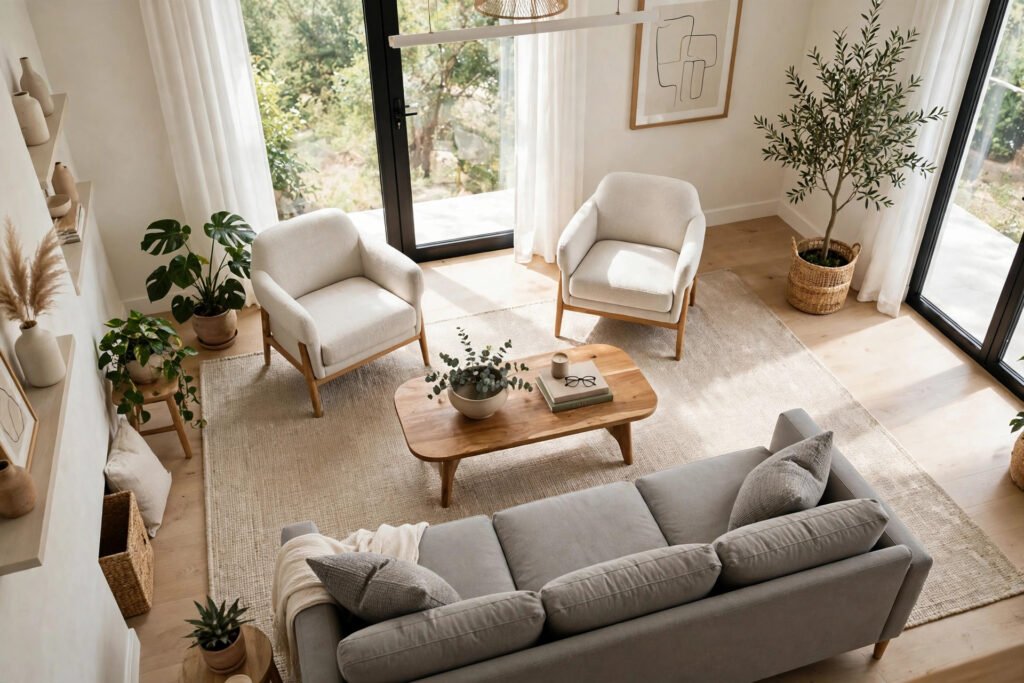

Choosing the right rug size for your living room is one of the easiest ways to make the whole room look finished — and one of the easiest things to get wrong. A rug that is too small makes your furniture look like it is floating. A rug that is too big can swallow a small room and hide a beautiful floor.
This rug size guide for your living room walks you through the standard sizes, a simple measurement chart, the rules for sofas and coffee tables, and the mistakes most people make. By the end, you will know exactly which size to buy for your room.
Why Rug Size Matters More Than Rug Style
A rug does three jobs in a living room. It defines the seating area, it adds warmth and texture underfoot, and it ties the furniture together visually. None of that works if the size is wrong.
Designers follow one golden rule: the rug should connect your furniture, not sit alone in the middle of the floor. That means the front legs of your sofa and chairs should sit on the rug. When all the furniture touches the rug, the room feels like one intentional space. When the rug floats in the middle with nothing on it, the room feels unfinished, no matter how expensive the rug was.
Size also affects how big your room feels. A larger rug makes a small room feel bigger because the eye reads one continuous surface. A small rug does the opposite — it chops the floor into pieces and makes the room feel cramped.
The Complete Rug Size Chart
Use this chart as your starting point. Measure your seating area first (the sofa plus chairs, not the whole room), then match it to the nearest rug size.
| Seating area (sofa wall) | Recommended rug size | Best for |
|---|---|---|
| Small loveseat, 2 chairs | 5′ x 8′ (152 x 244 cm) | Apartments, small living rooms |
| 3-seat sofa + 1 chair | 8′ x 10′ (244 x 305 cm) | Most average living rooms |
| Large sofa + 2 chairs | 9′ x 12′ (274 x 366 cm) | Large living rooms, open plan |
| Sectional sofa | 9′ x 12′ or 10′ x 14′ | Sectionals and family rooms |
| Small space / reading nook | 4′ x 6′ (122 x 183 cm) | Accent areas only, not main seating |
If you are between sizes, always go bigger. A rug that is slightly too large looks generous. A rug that is slightly too small looks like a mistake.
How to Measure Your Living Room for a Rug
You do not need anything fancy — a tape measure and a few minutes are enough.
- Measure your sofa. Write down its length and depth.
- Measure your seating group. Include the sofa, armchairs and coffee table as one group, with the gaps between them as you would normally arrange them.
- Add 6 to 8 inches (15–20 cm) on each side. The rug should extend at least that far beyond the furniture on all sides. This is what makes the seating area feel anchored.
- Leave a border of bare floor. Aim for 12 to 18 inches (30–45 cm) of floor showing between the edge of the rug and the walls. In a very small room, 8 to 12 inches is acceptable. The rug should never touch the walls.
- Mark it out. Use painter’s tape on the floor to outline the size you are considering. Live with the outline for a day and walk around it before you buy.
Rug Placement Rules for Sofas and Coffee Tables
The front-legs rule
The most reliable rule in rug placement: at least the front legs of every seat should be on the rug. The sofa’s front legs, the armchairs’ front legs, and the coffee table should all sit on the rug. This is the minimum that makes a seating area look pulled together.
All legs on the rug
If your room and budget allow it, the most luxurious look is to have all four legs of every piece of furniture on the rug. This works best in large rooms with a 9′ x 12′ rug or bigger. It defines the seating area clearly and feels generous underfoot.
Coffee table rule
Your coffee table should sit fully on the rug with at least 6 inches (15 cm) of rug showing on all sides of it. If the coffee table hangs off the edge of the rug, the rug is too small.
Rug Sizes for Different Living Room Layouts
Small living room
In a small living room, a 5′ x 8′ rug is the usual minimum, and an 8′ x 10′ often works better than people expect. Do not be tempted by a tiny 4′ x 6′ rug under the coffee table alone — it will make the room look smaller, not bigger. Keep the rug light in colour if the room is dark, and leave that border of bare floor so the room can breathe.
Average living room
The most common choice, and the safest one, is 8′ x 10′. It fits a three-seat sofa and one or two chairs with the front legs on the rug, and it suits most standard living rooms. If your sofa is longer than 7 feet (213 cm), step up to 9′ x 12′.
Large or open-plan living room
Big rooms need big rugs. A 9′ x 12′ rug is the starting point, and a 10′ x 14′ is often better for a sectional or a large open-plan space. In open-plan rooms, the rug also does the job of marking where the living area ends and the dining area begins, so size it to the seating group, not the whole open floor.
Sectional sofas
Measure the full footprint of the sectional, including the chaise or corner piece. A 9′ x 12′ rug usually fits an L-shaped sectional, but measure first — sectionals vary a lot. The rug should extend past the chaise by at least 6 inches so nobody steps off the rug onto bare floor when they stand up.
Common Rug Size Mistakes to Avoid
- Buying the rug before measuring. Always measure first, and use painter’s tape to test the size on the floor.
- Choosing a rug that only fits under the coffee table. This is the most common mistake. The rug must reach the furniture, not just the table.
- Letting the rug touch the walls. A rug that runs wall to wall reads as wall-to-wall carpet and shrinks the room visually. Leave a border of floor.
- Ignoring the room’s shape. A long, narrow room usually needs a rectangular rug placed lengthways. A square room can take a square rug, but rectangular rugs are more versatile in most living rooms.
- Forgetting the door swing. Check that doors open clear of the rug. A rug that catches under a door will bunch up and wear out fast.
- Going too small to save money. A too-small rug is money wasted, because it will never look right. If the right size is out of budget, wait, or choose a simpler rug in the right size rather than a fancy one in the wrong size.
How to Pick the Right Rug Style Once the Size Is Right
Once the size is decided, style becomes much easier. A few quick guidelines:
- Low-pile rugs are best for high-traffic living rooms and homes with pets — they are easier to clean and chairs slide on them more easily.
- High-pile or shaggy rugs feel soft and cosy but show footprints and are harder to vacuum.
- Patterned rugs hide stains and wear well, which makes them practical for family rooms.
- Light colours make a room feel bigger and brighter; dark colours hide dirt but can make a small room feel smaller.
For more affordable ways to refresh your living room, see our guide to 15 Affordable Home Decor Ideas to Refresh Your Space: https://somedecor.com/15-affordable-home-decor-ideas-to-refresh-your-space/
Frequently Asked Questions
What is the most popular rug size for a living room?
The 8′ x 10′ rug is the most popular living room rug size. It fits a standard three-seat sofa with one or two chairs and suits most average living rooms. If your room is large or your sofa is a sectional, go up to 9′ x 12′.
Should a rug go under the sofa?
Yes. At minimum, the front legs of the sofa should sit on the rug. In larger rooms, all four legs of the sofa and chairs can sit on the rug, which looks the most finished.
How much bigger should a rug be than the coffee table?
The rug should extend at least 6 inches (15 cm) beyond the coffee table on every side, and ideally 12 inches or more. If the coffee table hangs off the edge of the rug, the rug is too small.
Can a rug be too big for a living room?
Yes — if it touches the walls or covers almost the whole floor, it will make the room feel smaller and look like wall-to-wall carpet. Leave 12 to 18 inches of bare floor between the rug and the walls.
What size rug do I need for a sectional sofa?
Measure the sectional’s full footprint and choose a rug that extends at least 6 to 8 inches beyond it on all sides. For most L-shaped sectionals, that means a 9′ x 12′ rug, or 10′ x 14′ for very large sectionals.
Final Checklist Before You Buy
- Measure your seating group, not just the room
- Add 6 to 8 inches beyond the furniture on each side
- Leave 12 to 18 inches of bare floor at the walls
- Test the size with painter’s tape on the floor
- Check the door swing clears the rug
- If you are between sizes, go bigger
- Front legs of all seats on the rug, coffee table fully on the rug
Get the size right first, and everything else — colour, pattern, pile — becomes a much easier decision. A well-sized rug is the fastest way to make a living room feel finished, and it is a lot cheaper than buying new furniture.



Pingback: Budget Home Decor Mistakes: 10 to Avoid in Your First Apartment
Pingback: Home Decor Styles Explained: Modern vs Farmhouse vs Boho
Pingback: Best LED Floor Lamp Living Room: 2026 Picks for Every Budget
Pingback: Best Throw Pillows Amazon Under $25: 15 Picks for 2026
Pingback: 7 Best Affordable Wall Art Sets for Blank Walls