
Affordable Minimalist Living Room Decor Ideas
Affordable minimalist living room decor proves a beautiful room does not need a big budget or a house full of things. Minimalism is often misunderstood as cold, empty rooms with white walls. In reality, it is simply a room where everything has a purpose and a place.
This style suits a tight budget better than most. You buy less, choose carefully, and let light, texture and a calm colour palette do the heavy lifting.
What Minimalist Living Room Decor Really Means
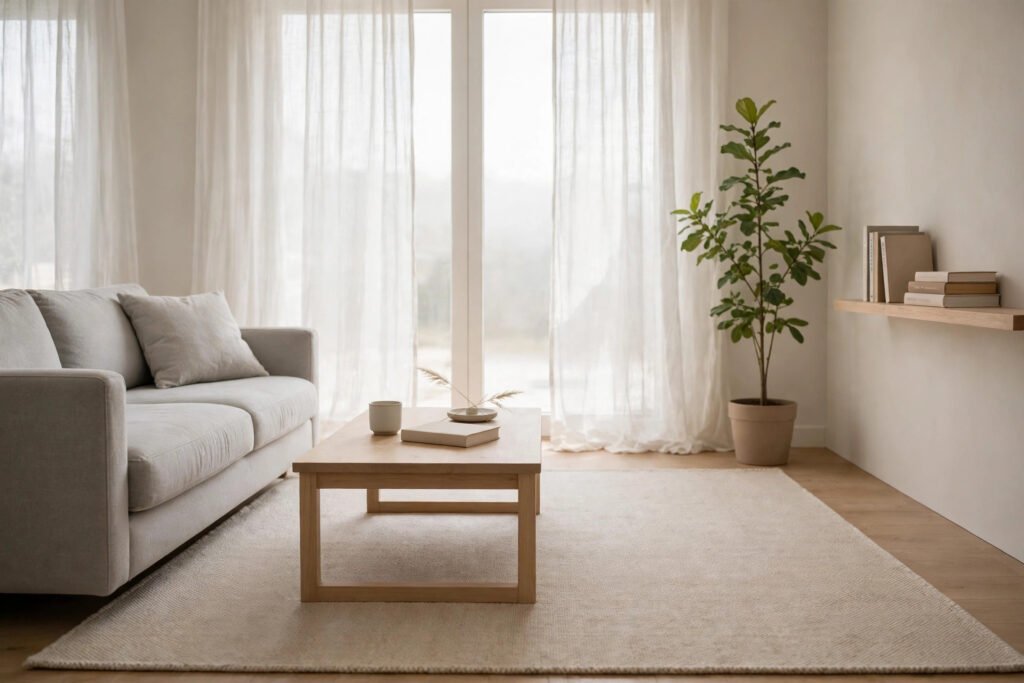
Minimalism is not about owning as little as possible. It is about owning only what you use, love or genuinely need, and giving each thing space to breathe. A minimalist living room usually has a simple sofa, one coffee table, a rug, a lamp or two, and a few decorative pieces. Everything else is stored out of sight.
This approach works brilliantly on a budget: instead of ten cheap ornaments, buy one good-looking vase; instead of three patterned cushions, choose two plain ones in a soft, natural fabric. Fewer purchases mean each one can be a little better quality. If your living room is small, minimalism helps there too. For more small-space tricks, see our guide on small living room ideas.
1. Start by Clearing the Visual Noise
Before you buy a single thing, clear the room. Minimalist decorating begins with subtraction, and subtraction is free. Walk around with a box and remove anything that does not earn its place.
Keep only what you use weekly or truly love, and store or donate the rest. Live with the emptier room for a few days before deciding what is missing. A useful rule is one-in, one-out.
2. Choose a Calm, Neutral Colour Palette
Colour is the cheapest decorating tool you have, and in a minimalist room it does most of the work. Start with warm white, soft grey or pale beige walls, then add two or three small accents: muted green, warm terracotta, soft navy or gentle mustard.
Keep the biggest surfaces neutral: a sofa, rug and curtains in calm tones give the room its peaceful base, and you can swap smaller accents like cushion covers cheaply. If the room looks flat, use different shades of the same colour rather than adding a new one. For ideas on making a compact room feel more open, read how to make a small living room feel bigger on a budget.
3. Pick Fewer, Better Pieces of Furniture
In a minimalist living room, each piece of furniture has to work hard. Choose a comfortable sofa in a plain fabric, a simple coffee table, and one or two side tables, and stop there. Three well-chosen pieces always look more considered than eight mediocre ones.
Measure before you buy: furniture slightly too big for the room kills a minimalist look, because it leaves no breathing space. Leave a gap between the sofa and the wall, and keep walkways open. If your budget is tight, buy second hand or wait for sales, and check the current price before buying.
4. Add Warmth with Texture, Not Clutter
The biggest fear about minimalism is that the room will feel cold. The answer is texture, not more objects. A chunky knit throw, a linen cushion, a woven basket, a wooden tray and a soft wool rug all add warmth without adding visual clutter.
Mix three or four textures in the same colour family: a smooth chair, a soft cotton throw, a rough jute rug and a matte ceramic vase. Your eye registers the variety, but because the colours stay calm, the room still feels restful. A rug is one of the best investments here: choose a plain one in a warm neutral, big enough for the sofa’s front legs to sit on. Our roundup of the best budget area rugs for living rooms will help you find one.
5. Use One Statement Piece per Zone
A minimalist room still needs a focal point, or it can feel unfinished. The trick is one per zone, not one per shelf. Above the sofa, hang one large piece of art or a round mirror instead of a cluster of small frames. On the coffee table, place one low stack of books with a small vase; in a corner, put one tall plant rather than three small ones.
A large mirror is especially useful: it bounces light around, makes the space feel bigger, and counts as decor on its own. Plants are the other easy win: one healthy green plant adds life and colour for very little money, and a snake plant or pothos in a plain pot is a forgiving place to start.
6. Let Light Do the Decorating
Natural light is free, and in a minimalist room it is the main decoration. Keep window treatments simple: sheer white curtains or plain linen panels that let daylight through while giving you privacy. Heavy patterned curtains fight the calm look and make the room feel smaller.
In the evening, use warm, layered lighting instead of one harsh ceiling light. A floor lamp beside the sofa, a small table lamp, and a couple of candles create a soft glow. Warm white bulbs, around 2700K, suit a living room far better than cold daylight bulbs. If your room gets little natural light, a large mirror opposite the window doubles what you have. For cosy evening layers, our guide to the best throw blankets for a cosy living room has budget-friendly picks.
7. Hide the Everyday Mess in Style
Minimalism only works if everyday clutter has somewhere to go. Remotes, chargers, board games and blankets all need a home that is not the coffee table. A lidded basket beside the sofa, a storage ottoman, or a sideboard with closed doors will hide them in seconds.
Choose storage that looks like decor: a woven seagrass basket or a plain wooden box in a neutral colour blends in instead of shouting “storage”. Cable management matters too: a tangle of wires behind the television ruins the calm, and a simple cable box hides them for a few pounds. If you need a small table for a lamp or a book, look at the best budget side tables for small living rooms for options with storage.
Common Minimalist Mistakes to Avoid
The most common mistake is going too far and removing everything that makes the room personal. Keep a few things that say something about you: a favourite book, a framed photo, a souvenir from a trip. Without them, the room feels like a showroom, not a home.
The second mistake is buying cheap imitations of expensive minimalist furniture that fall apart quickly. One solid piece beats three flimsy ones, so buy the best you can afford for items you touch daily, like the sofa. And do not forget function: a beautiful room with nowhere to put a cup of tea is not a room you will enjoy living in.
Frequently Asked Questions
Is minimalist decor expensive?
No, it is usually cheaper because you buy fewer things. The money you save by not filling shelves with ornaments can go towards one or two better-quality pieces. As a rough guide, a minimalist refresh can cost under £100 if you mostly declutter and swap soft furnishings.
How do I make a minimalist living room feel cosy, not cold?
Add warmth through texture and lighting rather than more objects. A soft rug, a knitted throw, linen cushions, warm wood and warm-toned lighting will make the room feel welcoming. One or two plants help too.
What colours work best for affordable minimalist living room decor?
Warm neutrals work best: warm white, soft beige, pale grey and light wood tones, with one or two muted accents like sage green, terracotta or dusty blue. Avoid bright colours on large surfaces; keep strong colours to small, cheap accents.
Can I do minimalist decor in a small living room?
Yes, small rooms suit minimalism well. Fewer objects and a calm palette make a small room feel larger and less cramped. Choose furniture that fits, keep walkways clear, and use a large mirror to bounce light around.
How many decorative items should a minimalist living room have?
There is no fixed number, but one statement piece per zone is a good guide: one piece of art above the sofa, one arrangement on the coffee table, and one plant or floor lamp in a corner. If a surface holds more than three small objects, it is too busy for this style.
Final Thoughts
Affordable minimalist living room decor is less about spending money and more about making clear choices. Clear the clutter, settle on a calm palette, choose fewer and better pieces, and add warmth with texture and light. Start with decluttering, then change one thing at a time. A calm, uncluttered living room is easier to live in, easier to clean, and easier on your budget too.