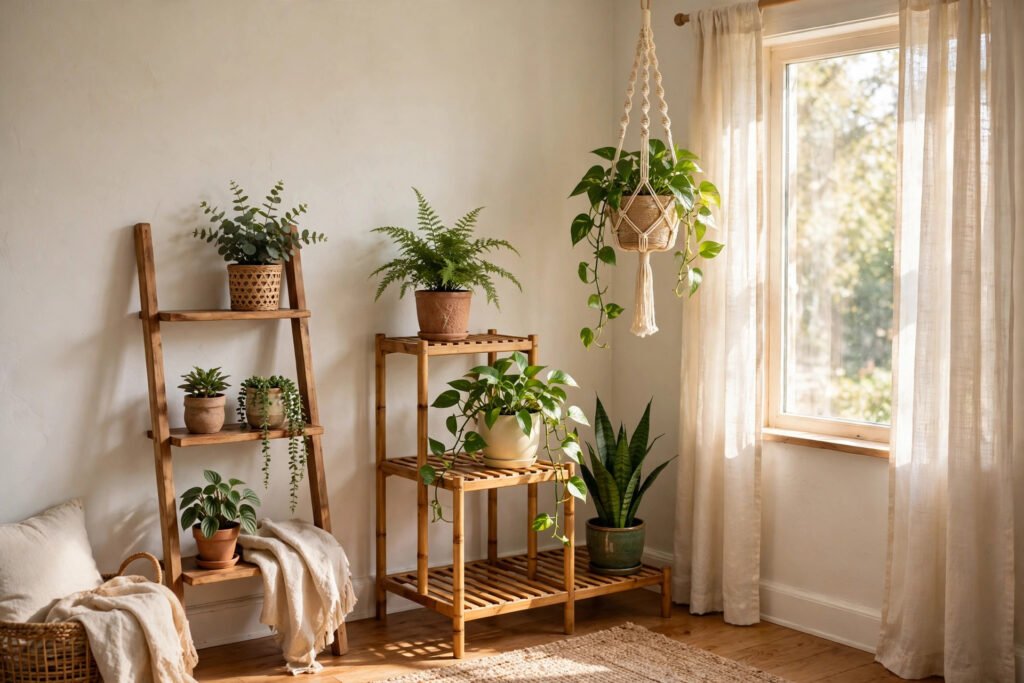

Affordable Plant Stand Ideas for Small Spaces
Plant stand ideas small spaces can turn even the tiniest flat into a green, lived-in home. The trick is not buying more plants — it is giving the ones you already have a proper place to live, up off the floor and out of the way. A good stand lifts a plant into the light and turns an empty corner into a feature instead of a dead spot.
The seven ideas below all work in flats, studios and small rooms, and none needs a big budget. Prices are rough ranges only — check the current price before buying.
1. Tiered Corner Stands
A tiered corner stand is the single best plant stand for a small space, because it uses vertical space that would otherwise sit empty. Most designs hold three to five pots in a stepped shape that tucks neatly into a corner, giving you a whole mini garden in about 30 centimetres of floor space.
Choose an open metal or bamboo frame rather than solid shelves, so light reaches the lower plants. A three-tier stand usually costs roughly $20–$40. Put sun-loving plants on top and shade-tolerant ones like pothos or snake plants below. Check the weight limit before you buy, and keep the heaviest pot at the bottom — five watered pots can make a cheap stand wobble.
2. Wall-Mounted Plant Shelves
If your floor is already full, the wall is your next best friend. Small floating shelves made for plants hold one or two pots each, and a pair above a desk or beside a window creates a display that takes up zero floor space at all.
Trailing plants look best here. A single floating shelf usually costs roughly $10–$25, and many come in packs of two or three. If you are renting, look for shelves that hang from a picture hook or adhesive strip rather than needing wall plugs. Our guide to affordable wall shelves for small spaces has more ideas for using wall space without drilling. Use pots with saucers and water sparingly, so you never get drips on the wall below.
3. Hanging Planters from the Ceiling
Hanging planters are the classic small-space trick, and they still work brilliantly. A macramé hanger or a simple metal hook lets a plant float in front of a window, where it gets the best light in the room, while the floor and the sill stay completely clear.
A basic hook costs a few dollars and a macramé hanger roughly $8–$18 — but check what your ceiling is made of before you screw anything in. In a rental, a tension rod across a window frame or a removable adhesive hook is a safer bet. If you are new to indoor plants, our roundup of the best indoor plants for beginners will help you pick something forgiving to hang. The main drawback is height: keep the plant within easy reach, or choose one that only needs watering once a week.
4. Windowsill Riser Stands
A windowsill is the sunniest spot in most small homes, but it is usually only wide enough for one row of pots. A small riser stand — essentially a mini shelf that sits on the sill — doubles that space by giving you a second row above the first.
Risers come in bamboo, metal and acrylic, and a two-tier version usually costs roughly $12–$25. Measure your sill first, since many risers are made for deep kitchen sills and will overhang a narrow one. If your sill is too narrow, a small plant stand on the floor directly beneath the window works almost as well — the plant still gets the light, and the sill stays free.
5. Ladder Shelves
A leaning ladder shelf is one of the most useful pieces of small-space furniture you can buy, because it does far more than hold plants. The narrow top shelf takes a small pot, the wider shelves below take bigger plants, books or baskets, and the whole thing leans against the wall with a footprint of about 40 centimetres.
A four-tier bamboo ladder shelf usually costs roughly $30–$60, which is good value when you consider it replaces a bookcase and a plant stand in one. Our best budget side tables roundup includes a few pieces that work as plant stands too. The catch is stability: a leaning shelf needs a flat wall and a level floor, and it is not the place for a very heavy pot on the top tier.
6. Rolling Plant Caddies
A rolling plant caddy is a low, wheeled platform that sits under a heavy pot. It raises the plant a few centimetres off the floor, which protects wooden floors from water marks, and it lets you wheel a big plant out of the way when you need the space — for cleaning, for guests, or to chase the sun across the room.
Caddies usually cost roughly $8–$20 each, and the wooden ones with castors look far smarter than the plastic ones for about the same money. Just make sure the caddy is rated for the weight of a watered pot, not just the dry plant, and lock the wheels once the plant is in place.
7. A Side Table as a Plant Stand
The cheapest plant stand idea of all is one you already own: a side table. A small side table, a stool, or even a sturdy stack of books raises a plant to eye level, which is where it looks best, and it costs nothing if the table is already in the room.
This works especially well beside a sofa or an armchair, where a plant on a side table fills the gap between the furniture and the wall. A simple wooden stool usually costs roughly $15–$30 if you need to buy one, and a thrifted one can cost far less. Group two or three plants of different heights on the same table for a fuller look, and add a small tray underneath to catch water. A cork mat or a ceramic saucer under the pot protects a good table from water marks for a few dollars.
How to Choose the Right Plant Stand for a Small Space
Before you buy anything, measure the spot where the stand will go — including the height. A stand that is too tall will block a window, and one that is too wide will eat into a walkway. The pot should sit about a third wider than the stand’s top, so the whole thing looks stable rather than top-heavy.
Match the stand to the light, not just the room. A sun-loving plant belongs on a windowsill riser or a hanging planter, while a snake plant or ZZ plant is happy in a dark corner on a tiered stand. And if you are short on time rather than money, consider a best affordable faux plant — it needs no light or watering at all, and on a good stand it is hard to tell from the real thing.
Frequently Asked Questions
What is the best plant stand for a very small room?
A tiered corner stand is usually the best choice, because it holds several plants in the floor space of one pot. Wall-mounted shelves and hanging planters are even better if you have no floor space to spare.
How do I keep a plant stand from damaging my floor?
Use a saucer under every pot, and put a felt pad or a cork mat under the stand’s feet. Rolling caddies also protect floors, since they lift the pot clear of the surface and make it easy to move the plant when you clean.
Can I use a plant stand outdoors on a balcony?
Yes, as long as the material suits the weather. Metal stands can rust and untreated bamboo can rot, so look for powder-coated metal or sealed wood, and bring lightweight stands inside during storms.
How many plants can a small room handle?
Three to five plants is a good number for a small room. More than that starts to look cluttered, and the plants will compete for the same light. Start small and add one plant at a time.
Do plant stands help plants grow better?
Yes, indirectly. A stand lifts a plant into better light, improves air circulation around the leaves, and keeps the pot off a cold floor in winter. It also makes watering and checking the soil much easier, so plants get looked after more often.
Final Thoughts
Plant stand ideas small spaces all come down to the same principle: go up, not out. A tiered stand, a wall shelf, a hanging planter or a simple stool can turn one plant into a display and a bare corner into the best-looking spot in the room. Pick the idea that fits your light and your floor space, and start with a single stand.


