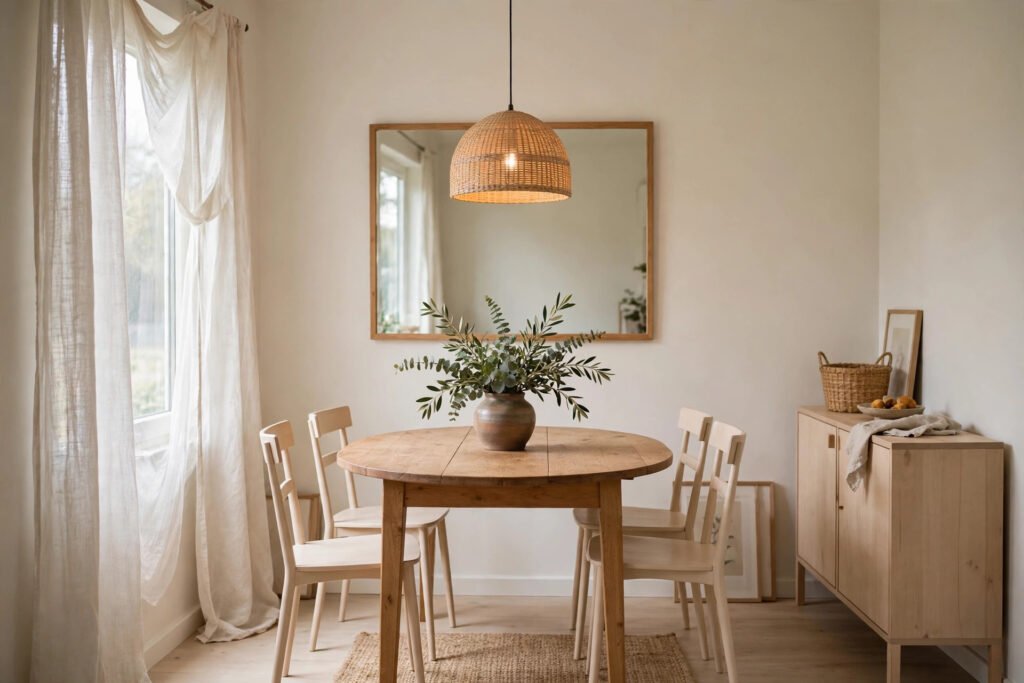

How to Decorate a Small Dining Room on a Budget
A small dining room can feel like a problem — too little space, too dark, too cramped for guests. But if you know how to decorate small dining room budget ideas properly, a tiny dining space can feel warm, welcoming and surprisingly generous.
1. Choose a Table That Fits the Room
The biggest mistake in a small dining room is a table that is too large. Leave at least 75 centimetres of clear space behind each chair so people can sit down and stand up without shuffling sideways. That usually means a round table or a rectangular table that seats four rather than six. Round tables suit small dining rooms: no corners to walk around, and everyone can see each other. A drop-leaf table stays small for everyday meals and opens up when guests arrive.
2. Use Chairs That Disappear Visually
Heavy, high-backed chairs eat up visual space. Choose chairs with a slim profile: low backs, open slats, or a simple moulded seat. Transparent chairs work well because the eye passes straight through them. Mixing chairs is another budget trick — buy two matching chairs for the ends of the table and use a bench on one side. A bench takes up less room than two chairs, slides under the table when not in use, and seats an extra person at a squeeze.
3. Paint It Light — But Not Necessarily White
Light colours make a small room feel bigger, but the room does not have to be plain white. Soft warm whites, pale greys, light sage and powdery blues all bounce light around the room. Avoid cool whites in a dim room — they look grey and flat. A warm white with a hint of cream keeps the room bright without feeling stark. Paint the ceiling the same colour as the walls to make it seem higher. For more affordable ways to refresh the whole space, see our guide to affordable dining room decor.
4. Hang One Good Light, Not Several Small Ones
A single statement pendant light over the table does more for a small dining room than three small fixtures scattered around the room. It draws the eye to the centre and defines the dining area. Hang it so the bottom of the shade sits about 75 to 80 centimetres above the tabletop. If a new pendant is out of budget, swap the shade on an existing fitting — a drum, rattan or paper shade costs very little. Our roundup of the best budget pendant lights has affordable options that suit small dining rooms.
5. Add a Mirror to Double the Light
A mirror is the cheapest way to make a small dining room feel twice as big. Hang a large mirror on the wall opposite a window and it will bounce daylight back into the room; hang it beside the table and it reflects the pendant light, doubling the glow in the evening. Choose one large mirror rather than several small ones — a single big mirror reads as a window. A simple framed mirror from a charity shop works just as well as an expensive one, and spray paint can turn a dated gold frame into a modern black or brass one.
6. Keep the Table Dressing Simple
A small table does not need a full table setting every day. A single centrepiece — a small vase of greenery, a bowl of fruit, or a low cluster of candles — is enough. Anything taller than about 30 centimetres will block conversation across the table. Use a table runner instead of a full tablecloth — it adds colour down the centre without covering the whole surface. For everyday styling ideas, our dining table decor ideas cover affordable centrepieces and table settings.
7. Use the Walls, Not the Floor
In a small dining room, floor space is precious, so move storage and decoration onto the walls. A slim floating shelf above a sideboard holds glasses, candles and a small plant without taking up any floor space. One medium-sized piece of wall art above a sideboard looks better than a gallery wall covering the whole wall — too many frames make a small room feel busy. A sideboard is the most useful piece of furniture in a small dining room after the table itself — it stores table linen and spare plates, and its top is a display surface. Choose a slim one, no deeper than 40 centimetres.
8. Pick the Right Rug Size
A rug can anchor a small dining room and make it feel like a proper room rather than a corner of the kitchen — but the wrong size rug makes the space feel smaller. The rug should be large enough that all four chair legs stay on it even when the chairs are pulled out, usually at least 60 centimetres wider than the table on every side. A low-pile, flatweave rug is the practical choice: it is easier to clean, chairs slide smoothly on it, and it does not trap crumbs. Our guide to choosing the right rug size for a dining room explains the measurements in detail.
9. Let the Curtains Do Some Work
Curtains in a small dining room should frame the window, not cover it. Hang the rod about 10 to 15 centimetres above the frame and extend it 15 to 20 centimetres beyond each side. This makes the window look larger and lets in more light, because the curtains hang against the wall rather than over the glass. Choose light, sheer or semi-sheer fabric: heavy curtains block light and add visual weight. A simple linen-look curtain in white or cream costs little, washes easily, and keeps the room bright. For more ideas on brightening the space, see our affordable dining room lighting ideas.
10. Add Plants — But Keep Them Small
One large plant in a corner is better than five small ones scattered around. A trailing plant on a shelf, a potted herb on the windowsill, or a tall, slim plant in a corner adds greenery without crowding the table. Herbs are the most practical choice: basil, mint and rosemary look good, smell good, and you can use them at dinner. Keep them in small matching pots so they look deliberate rather than accidental.
Layouts That Work in Small Dining Rooms
If your dining room is square, a round table in the centre with chairs on all sides uses the space best. If it is long and narrow, a rectangular table pushed against one wall — with a bench on the wall side and chairs on the other — leaves a clear walkway. Whatever the shape, leave a clear path through the room — a room with a clear route always feels bigger. That is the heart of every decorate small dining room budget plan — less furniture, better placed, with light doing the heavy lifting.
Mistakes to Avoid
The most common mistake is buying furniture before measuring the room. Measure twice, and check the dimensions again with the chairs pulled out. Another mistake is over-decorating: too many ornaments make a small room feel cluttered, not cosy. Choose two or three decorative elements and let the rest of the room breathe. Finally, do not block the light — heavy curtains, tall furniture in front of windows, and dark paint on the window wall all make a small dining room feel smaller.
FAQs
How do you decorate a small dining room on a budget?
Start with the layout: choose a table that fits with room to move around it, then add light colours, one good pendant light and a mirror. A table runner, sheer curtains and a low centrepiece make the biggest difference for the least money.
What size table is best for a small dining room?
A round table around 90 to 110 centimetres across seats four comfortably in most small dining rooms. For a rectangular table, allow at least 75 centimetres of clear space behind each chair.
Should a small dining room have a rug?
A rug can help, but only if it is large enough — at least 60 centimetres wider than the table on every side, so chair legs stay on it when pulled out. A rug that is too small makes the room look cramped, so skip it.
What colours make a small dining room look bigger?
Light, warm colours work best: warm white, pale grey, light sage and powdery blue. Paint the ceiling the same colour as the walls, and keep the darkest colour on the shortest wall.
How can I make a small dining room feel cosy without clutter?
Keep one low centrepiece, use a bench instead of extra chairs, and store clutter in a slim sideboard. One mirror, one pendant light and one or two plants are enough — a small room feels cosy when it is calm, not when it is full.